Buddha’s teaching is not to quieten one’s mind but to realise that one’s mind is already stillness itself.

©Boo Ahm
All writing ©Boo Ahm. All images ©Simon Hathaway


Buddha’s teaching is not to quieten one’s mind but to realise that one’s mind is already stillness itself.
©Boo Ahm
All writing ©Boo Ahm. All images ©Simon Hathaway
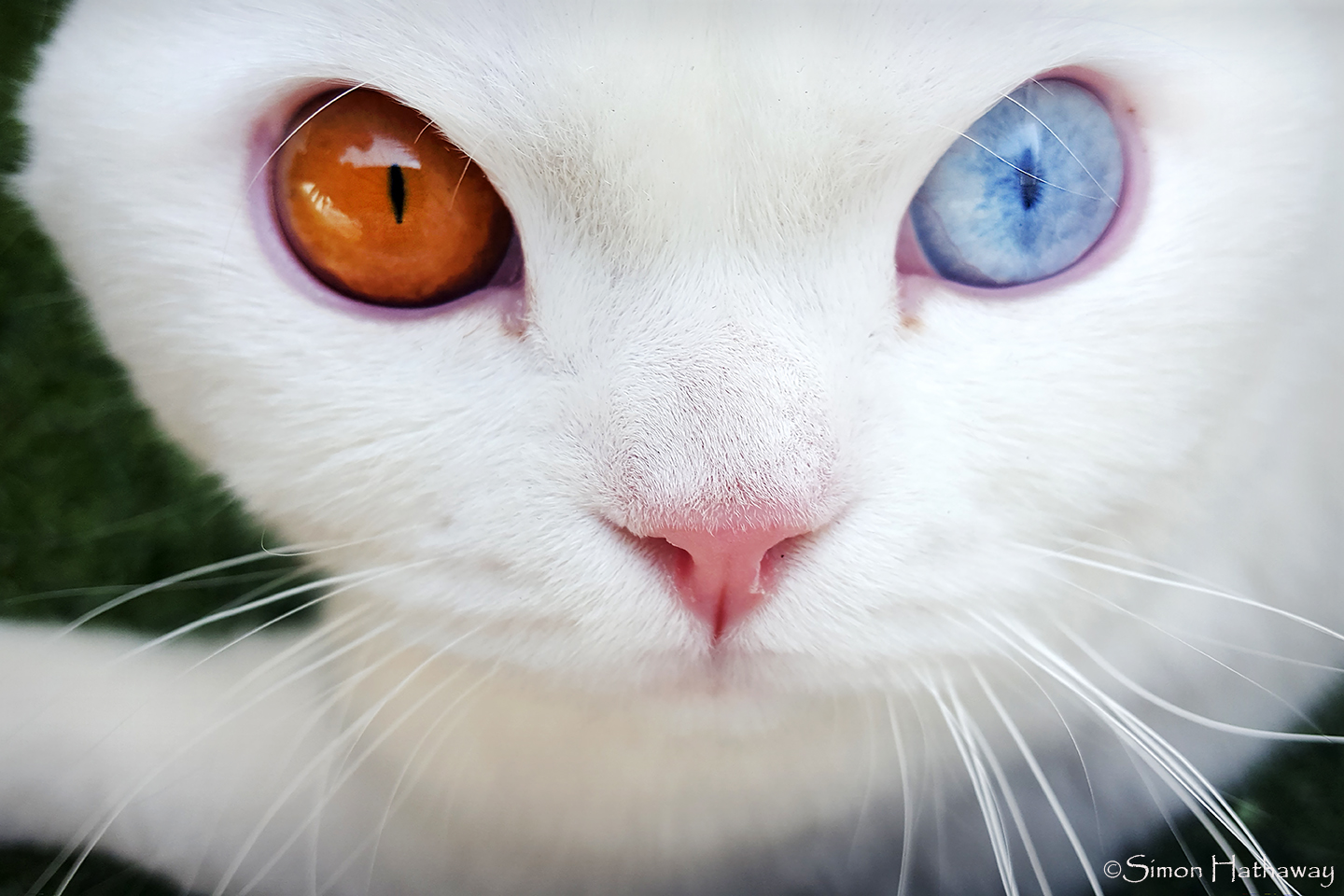
One day seeing his students quarrelling about the ownership of a cat, Namjun, holding the cat in one hand and a sword in the other, said, “If you can say, I’ll leave this cat alive, but I’ll cut it if you can’t say.” No one said, and he cut the cat into two. When he told the story to Joshu later, Joshu took off one of his shoes, put it on his head and went out of the room. Seeing it, Namjun said, “If you had been then, the cat could have been saved.”
Student: “Why did Namjun cut the cat?”
Master: “In order to show what can be neither divided nor broken.”
Commentary:
What can be divided is forms, and what cannot be divided is Emptiness.
©Boo Ahm
All writing ©Boo Ahm. All images ©Simon Hathaway

18-4
“What is the reason? Subhuti, the past mind cannot be grasped, the present mind cannot be grasped, and the future mind cannot be grasped.”

Commentary:
As the Buddha said in part 18-3, “All the minds that the Realised One has mentioned are not mind but they are just called as such,” minds are not real but just imaginary labels that are used as an expedient to point to the essence of our being that is the state perfectly free from illusions; images and words.
The mind that the Buddha meant to indicate through the word ‘mind’, represents the true-Self, Emptiness, or Oneness that is the state perfectly free from illusions; images and words. It, as previously discussed, is essentially nameless, boundless and formless. It is even neither existent nor non-existent. Everything is mind and there is nothing whatsoever that is not mind. Even we ourselves are also part of mind. We refer to it as mind, the true-Self, the Buddha, and Oneness just for the sake of convenience so that we may explain it. This is why it is said that the essence of mind is no-mind.
Mind can’t be divided into multiple parts; the past mind, the present mind and the future mind because it is formless, boundless and neither existent nor non-existent. Only things that exist with a certain form andboundary are possible to divide. Furthermore, we are not separate from mind but one with it. It is not only impossible but also makes no sense at all for a man to divide himself into multiple parts and to grasp them. So, it is said that mind, the true-Self can be neither given nor taken.
Student: “If the past mind cannot be grasped, the present mind cannot be grasped, and the future mind cannot be grasped, what is the mind?”
Master: “Don’t fail to miss the fragrance whilst being attracted by falling petals.”
©Boo Ahm
All writing ©Boo Ahm. All images ©Simon Hathaway

There is a saying that the worst enemy is one that doesn’t exist. The Buddha said that everything that we regard as real is not real but imaginary, and that trying to achieve, or avoid such illusions which are like a mirage created by ourselves is sentient beings’ lives.

According to the Buddha’s words, birth and death are also not real but illusionary. Death is an illusion that our imagination created, and we are scared of it in the same way that we are seized with fear of a ghost we have never seen in a deserted old house that is known to be haunted, all because of our imagination.
In summary, we cannot avoid death because it does not exist. The best way to avoid it is to realise that it is not real but merely illusionary.
©Boo Ahm
All writing ©Boo Ahm. All images ©Simon Hathaway
Master Wonmyo said, “The sun in the sky is shining, and there is nowhere its light can’t reach. Why is it covered by clouds?”
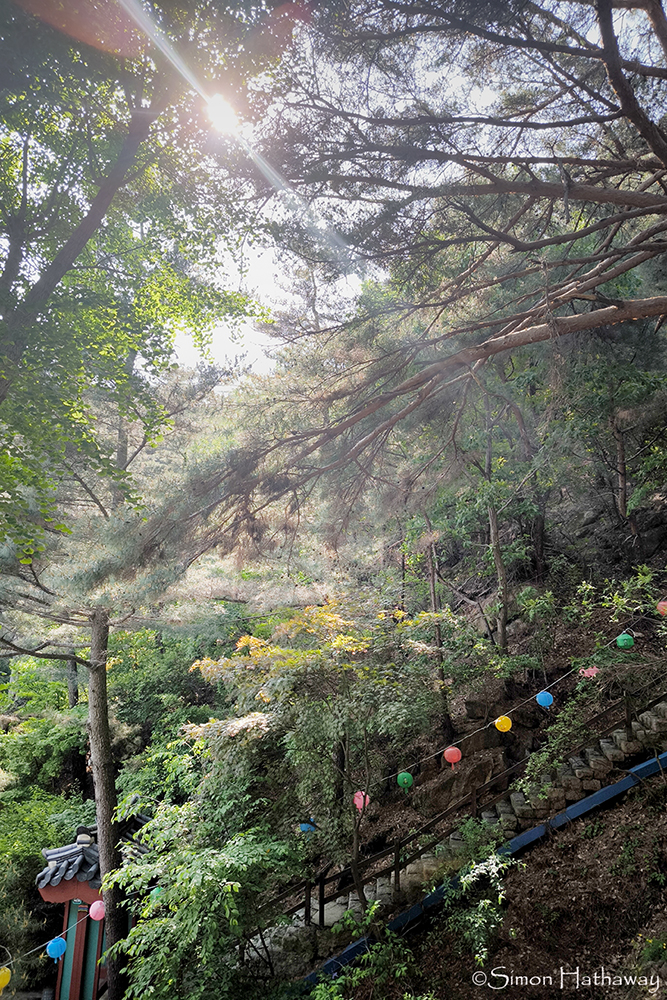
Student: “Why is it covered by clouds?”
Master: “Because the sun is a cloud.”
Commentary:
What can be covered is not the sun.
©Boo Ahm
All writing ©Boo Ahm. All images ©Simon Hathaway
Part 18-3
“What is the reason? All the minds that the Realised One has mentioned are not mind but they are just called mind.”

Commentary:
All things in this world that we think of as real require our words so as to be real because they become real only when we attach names to them. However, all that becomes real by means of the names granted by us is not real but illusionary. This is why the Buddha said, “All the minds that the Realised One has mentioned are not mind but they are just called mind.”
The true-Self, however, doesn’t need our words to be real, and it is neither existent nor non-existent because they are also words. This is why it is said that it is beyond words. Although the true-Self, Emptiness, the Buddha, mind and nirvana are used to express it, they are not real but no more than expedient means to indicate and point to it. This is why ancient masters would say, “Mind is not mind” when asked what mind is and answered, “Emptiness is not emptiness” when enquired about Emptiness.
In other words, all the names that signify the true-Self are to the true-Self as fingers pointing to the moon are to the moon. No matter how holy and attractive the fingers may look, we should look at the moon instead of being deluded by the fingers.
Student: “If the minds that the Buddha mentioned are not minds, what are they?”
Master: “Mind.”
©Boo Ahm
All writing ©Boo Ahm. All images ©Simon Hathaway
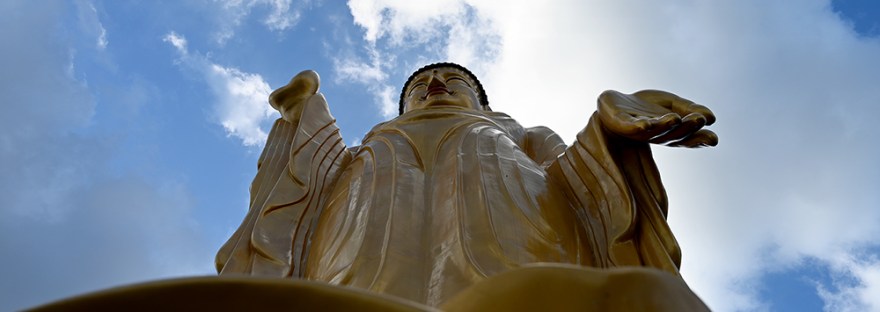
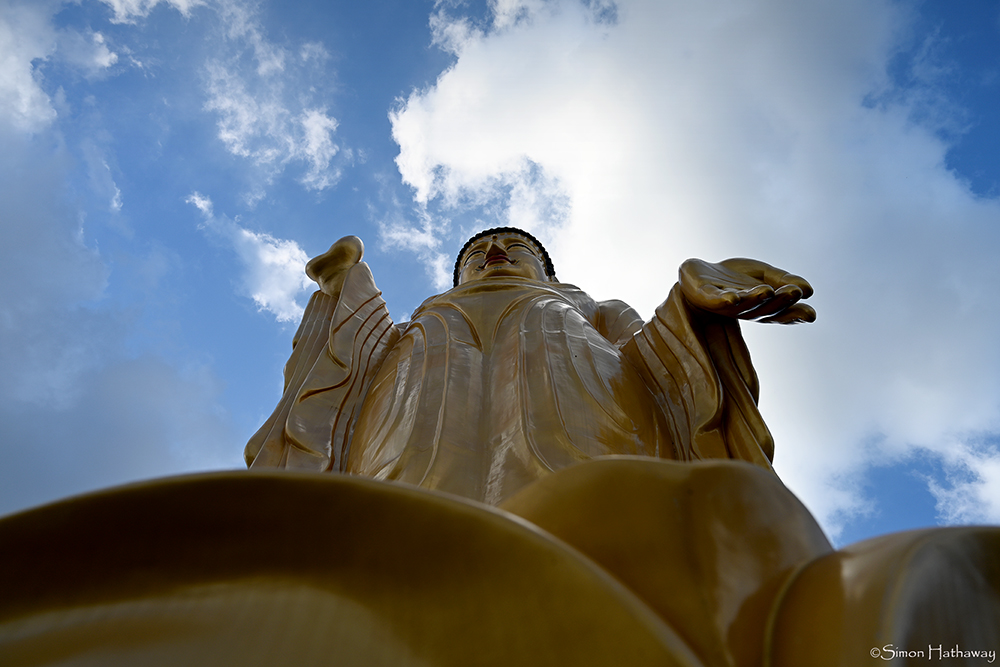
The Buddha’s teaching is not to remove illusions but to realise that they are the way the true-Self is.
©Boo Ahm
All writing ©Boo Ahm. All images ©Simon Hathaway
One day Yunyan said to the assembly, “There is a child in this household. If you ask a question, there is nothing he can’t answer.” Dongshan Liangjie then asked, “How large a library does he have?” Yunyan said, “Not a single word.” Dongshan said, “Then how come he is so learned?” Yunyan said, “He does not sleep day or night.” Dongshan said, “If we ask him about the single matter, can we get a response?”
Yunyan said, “Although he can speak, he won’t answer.”
Student: “Who is the child?”
Master: “He is not he anymore once you have recognised him.”
Student: “How can I recognise him?”
Master: “You cannot move even one of your fingers without his support.”
Student: “Why won’t he answer although he can speak?”
Master: “Because he says what cannot be done.”
Commentary:
All the Buddhas and patriarchs spoke only to themselves.
©Boo AhmAll writing ©Boo Ahm. All images ©Simon Hathaway
Part 18-2
“Subhuti, what do you think—has the Buddha mentioned the grains of sand in the Ganges River?” “Yes, World Honoured One, the Realised One has mentioned the sand.” “Subhuti, what do you think—if there were as many Ganges Rivers as there are the grains of sand in the Ganges River, and there were as many Buddha worlds as the grains of sand of all the Ganges Rivers, how many would all the Buddha-worlds be?” “Very many, World Honoured One.” The Buddha said to Subhuti, “The Realised One knows all kinds of sentient beings’ minds in the worlds.”

Commentary:
As stated by the Buddha earlier, this phrase means both that no matter how many various things there are, there is nothing that is not empty, and that the Buddha, as mentioned in the preceding part, has the six eyes with which He can see everything as empty, that is, as it really is.
Then, He can see the Buddha-worlds, sentient beings and sentient beings’ minds as empty. This is why the Buddha knows all kinds of sentient beings’ minds in the worlds.
Student: “What is a sentient being’s mind like who is a thousand miles away?”
Master: “It is not different from yours.”
©Boo Ahm
All writing ©Boo Ahm. All images ©Simon Hathaway
A. We should discard not only all things but also emptiness because what we can keep is not emptiness. Emptiness is the state that is free from images and words. It is neither existent nor non-existent because these are also words.
Things are to emptiness as right is to left. When the former disappears, the latter also disappears along with the former. If we try to keep one and discard the other, we will become far away from the truth forever.
©Boo Ahm
All writing ©Boo Ahm. All images ©Simon Hathaway

