zen

Prior to entering into the Sutras

The purpose of Buddhism is enlightenment. All the Sutras, including the Diamond Sutra that will be serialised from next week, are Dharma talks which are the words spoken by the historical Buddha for the purpose of leading people to enlightenment. So, the core of all the Sutras is just two things; how we can attain enlightenment, and how everything appears when we have attained enlightenment.

Enlightenment means being able to see and hear everything without being influenced by one’s preconceived notions and frame of thought which are made up of words and knowledge. That is to see and hear things without attaching any words, including names, which describe or explain them, to things.  Seeing things in this way is referred to as seeing them as they are, or seeing them as empty, which is called seeing the true-Self, or reaching the Pure Land. Accordingly, the core of all the Sutras, it can also be said, is how we can see the true-Self, or how we can reach the Pure Land and what the true-Self, or the Pure Land is like.

What matters here is that paradoxically, while telling us to detach all words from things when we see and hear them, the Sutras are explaining in words both how we can see things without being influenced by words and knowledge, and how they appear when we see them in this way. Put in other words, the Sutras are saying what cannot be explained in words and explaining in words what can’t be said. This means that we cannot appreciate the core of the Sutras through intellectual understanding based on words. This is why the historical Buddha said, “Not a word have I said” to prevent people from missing what he really meant by clinging to intellectual understanding, and why ancient masters invented expedients of koans which are Zen questions to help people to surmount the limitations of intellectual comprehension. So, reading the Sutras requires more than intellectual understanding, and taking intellectual understanding for true understanding is regarded as being deluded by words in Buddhism.

This is why the Sutras should not be read and taken in the same way that worldly literature is.

In the case of worldly books, the contents of them can’t be fully comprehended until at least half, if not all, of each book is read. However, in the case of the Sutras, if we appreciate even a single word correctly in the Sutra we are reading, it is no other than enlightenment and the same as having read all the other Sutras, not to mention the one we are reading at that moment because each word, each phrase and each sentence contains all that the Sutras say. In short, each of them is the gate to enlightenment and we have only to open and pass any one of them. This is why the Dharma talks refer to ‘a gate to enlightenment’ and not ‘a text on enlightenment’. This is also why ancient masters would even say that the Sutras are not supposed to be read but to be seen. So, we should regard each word, each phrase and each sentence as a gate to enlightenment instead of being deluded by words and clinging to intellectual understanding.

Therefore, you should keep it in mind that if you have not attained enlightenment, no matter how many times you have read or copied a Sutra, you have not understood even a single word correctly in the Sutra, that is, you have knocked hard on and touched the gate only to fail to pass the gate.

©Boo Ahm

All writing ©Boo Ahm. All images ©Simon Hathaway

zen

Q. Buddhism says that we should discard lust and greed and attain enlightenment. How is it possible to live without lust and greed in competitive societies?

A. It doesn’t mean that we should throw lust and greed away in the way we remove waste but that we should realise they are the seeds of enlightenment. Attaining enlightenment doesn’t mean to find it in a special place in the way we find diamonds or gold in mines but means to realise that everything, including lust and greed, is the function of the true-Self. When we don’t see lust and greed as they are, they are called illusions and when we see them as they are, they are called the Buddha, the true-Self. This is why an ancient master said that lust and greed are all Buddhas’ mother and that all Buddhas are children of lust and greed.

Student: “How can I discard lust and greed?”

Master: “Jade is hidden in stone, and a pearl is hidden in a shell.”

©Boo Ahm

All writing ©Boo Ahm. All images ©Simon Hathaway
zen

Bodhidharma’s ‘Truly seeing’ (3)

Truly seeing is not seeing what is seen, but seeing what is not seen. Truly knowing is not knowing what is known, but knowing what is not known.

Student: “What is it to know what is not known?”

Master: “It is to know that the sun is round.”

Student: “That is to know what is known. I know it, too. What is not known?”

Master: “The sun is cubic.”

Commentary:

What is known is just a tiny part of what is unknown.

©Boo Ahm

All writing ©Boo Ahm. All images ©Simon Hathaway
zen

Rinzai 238

Rinzai was about to die. Sitting up, he said, “After my death do not allow my True Dharma Eye to perish.”

Sansho burst out, “How could your True Dharma Eye perish?” Rinzai asked, “What then will you say when in the future people put questions to you?” Sansho gave a Katsu. “Who could know that my True Dharma Eye would perish through this blind ass,” said the master, and revealed his Nirvana.

Commentary:

Sansho’s words ‘How could your True Dharma Eye perish?’ means that his True Dharma Eye symbolising the true-Self can never perish. Then, in order to confirm Sansho’s enlightenment, Rinzai asked, “What then will you say when in the future people put questions to you?” Sansho, sensing Rinzai’s meaning to the core, gave a Katsu. Very satisfied with Sansho’s answer, Rinzai left his final beautiful words by saying, “Who could know that my True Dharma Eye would perish through this blind ass?” He approved Sansho’s enlightenment by referring to him as a blind ass, which meant that Sansho was so free from making a discrimination that he was above being deluded by the illusion of Rinzai’s True Dharma Eye. This is why he said that his True Dharma Eye would perish through Sansho. The true-Self is eternal and formless everywhere all the time. It cannot be either attained or lost. If you, attached to its illusion, try to attain and keep it, that is to be deluded by the illusion of the true-Self. This is to degrade Buddhism to superstition. This is why ancient masters would say, “Kill the Buddha if you see him.”

Student: “Rinzai told Sansho not to allow his True Dharma Eye to perish, and Sansho said that he wouldn’t. Why was Rinzai happy that his True Dharma Eye would perish through Sansho?”

Master: “Because making his True Dharma Eye perish is the best way to keep it.”

©Boo Ahm

All writing ©Boo Ahm. All images ©Simon Hathaway
zen

Q. Why does everything have its own unique shape while it is said that the true-Self is non-dual?

A. According to the Avatamsaka Sutra, the true-Self is revealing itself in numerous forms in accordance with the capacity of each sentient being. This is why we sentient beings have different perspectives even when seeing and hearing the same things. It follows that everything is essentially the same, just as all waves are the same as water although they appear to be different from each other, depending on our capacity of seeing and hearing. This is why the third Patriarch said, “Even if there is a difference as tiny as a small hair, there will be a gap as large as a gap between the sky and the earth.”

Student: “How is it when there is no difference at all?”

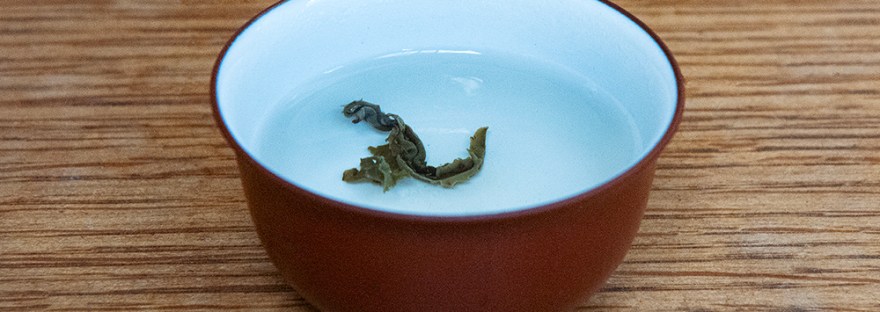
Master: “When you drink a cup of tea, the cloud in the sky comes along with it.”

©Boo Ahm

All writing ©Boo Ahm. All images ©Simon Hathaway
zen

Bodhidharma’s ‘Truly seeing’ (2)

Truly seeing is not seeing what is seen, but seeing what is not seen. Truly knowing is not knowing what is known, but knowing what is not known.

Student: “What is it to see what is not seen?”

Master: “It is to see the flower.”

Student: “The flower is what is seen. I can see it, too.”

Master: “I mean a flower that never withers.”

Commentary:

One who can see a flower that never withers will never age.

©Boo Ahm

All writing ©Boo Ahm. All images ©Simon Hathaway
zen

Rinzai 236 & 237

Rinzai 236

Rinzai came to Kingyu. Seeing him approach, Kingyu sat down at the gate barring it with his staff. Rinzai struck the staff three times with his hand, went into the monks’ hall and sat himself down in the first place. Kingyu came after, saw him, and remarked, “When guest and host meet, the usual courtesies are observed. Elder, where have you come from to be so ill mannered?” Rinzai retorted, “What are you mumbling, old venerable?” When Kingyu was about to open his mouth. Rinzai hit him. As Kingyu pretended to fall down, Rinzai hit him again. Kingyu observed, “It’s not my day today.”

Commentary:

Kingyu tested Rinzai by sitting down at the gate barring it with his staff, by which he meant ‘Do you know what I am revealing through these actions to you?’ Rinzai, sensing his intention, responded by tapping the staff three times with his hand, going into the monks’ hall and sitting himself down in the first place. This means, ‘I know that you want to see if I am aware of the true-Self. The actions of my tapping your staff, going into the monks’ hall and sitting down in the first place are the functions of the true-Self’. Kingyu tested Rinzai again with ‘When guest and host meet, the usual courtesies are observed. Elder, where have you come from to be so ill mannered?’. Rinzai’s response ‘What are you mumbling, old venerable?’ means ‘I am not deceived by your words since I know that you are revealing the true-Self to see whether I can recognise it or not’. When Kingyu was about to open his mouth to reveal the true-Self by saying something, Rinzai, sensing his intention, hit him, by which he meant ‘I know that you mean to show me this’. In the end, Kingyu played a trick on Rinzai by pretending to fall down, but Rinzai, not being fooled by his trick, responded wisely by hitting him again. Kingyu, realising that he couldn’t deceive Rinzai, approved Rinzai’s enlightenment by observing, “It’s not my day today.”

Rinzai 237

Issan asked Gyosan, “Who of those two masters won and who lost?” Gyosan replied, “If one won, the other won, too. If one lost, the other one lost, too.”

Commentary:

Later Issan asked Gyosan about what had happened between Kingyu and Rinzai. Gyosan meant that there was no winner and no loser because both of them were enlightened and because there is no difference when everything is one as Emptiness.

©Boo AhmAll writing ©Boo Ahm. All images ©Simon Hathaway
zen

Q. Ancient masters said that we should not follow the Buddha and not avoid Mara. How can we distinguish between the Buddha and Mara?

A. The core of Buddhist teaching is non-duality, that is, everything is one. Buddha and Mara are not separate but one. Whether someone or something is the Buddha or Mara depends on how you behold it.

Seeing what you see as real is being deluded by Mara and seeing it as empty is seeing the Buddha because Emptiness is another name of the Buddha. This is why the historical Buddha said in the Diamond Sutra, “If you see everything not as real but as empty, you can see the true-Self.”

©Boo Ahm

All writing ©Boo Ahm. All images ©Simon Hathaway

zen

Joshu’s ‘I meet it like this’

A monk asked Joshu, “What will you do if the true-Self comes like this?” Joshu answered, “I meet it like this.” The monk said, “What will you do if it doesn’t come like this?” Joshu said, “I meet it like this.” The monk said, “Meeting it like this when it comes like this makes sense, but what do you mean by meeting it like this when it doesn’t come?” Joshu said, “That’s enough. We need not talk. My Dharma is so subtle and profound that it is beyond thinking.”

Student: “Why did Joshu say that he met the true-Self like that when it didn’t come.”

Master: “Because it came.”

Student: “When did it come?”

Master: “Not only when the monk said, ‘If the true-Self comes’ but also when he said, ‘If it doesn’t come’.”

Commentary:

Asking and answering is the function of the true-Self.

©Boo Ahm

All writing ©Boo Ahm. All images ©Simon Hathaway

zen

Rinzai 235

Issan asked Gyosan, “It is said that a spark from flint cannot catch up with it, nor can a flash of lightning get through it— but what did the old masters teach people with?” Gyosan asked, “How do you understand it?” Issan said, “Mere words, there is no true meaning whatsoever.” Gyosan disagreed, “No, not so.” Issan said, “Then how do you understand it?” Gyosan said, “Officially not a needle can pass. Unofficially carriages go through.”

Commentary:

Issan asked his favourite student Gyosan about the poem Rinzai made before Horin so that he might see how well Gyosan understood it. Issan’s answer to Gyosan’s question ‘Mere words, there is no true meaning whatsoever’ means that the true-Self reveals itself clearly if people are not deluded by words. Gyosan’s ‘No, not so’ never means negating Issan’s answer but means that he has another answer with the same meaning.

Gyosan’s ‘Officially not a needle can pass. Unofficially carriages go through’ means that from the perspective of the realm of Emptiness even a single word is allowed to be said but that once you have realised that everything is empty, whatever words may be said never matter. In other words, not a word should be said to one who is deluded by words, but any word can be said freely to one who sees each word as the function of the true-Self.

©Boo Ahm

All writing ©Boo Ahm. All images ©Simon Hathaway