Questions & Koans

Uncategorized

Hsin Shin Ming: “26. The host vanishes along with guests and guests disappear along with the host. The host is a host because there is a guest and a guest is a guest because there is a host.”

Hsin Shin Ming: “26. The host vanishes along with guests and guests disappear along with the host. The host is a host because there is a guest and a guest is a guest because there is a host.”

‘The host’ means the discriminating subject and ‘guests’ means discriminated objects. In other words, the former is ‘I’ and the latter is everything and everybody that ‘I’ see and hear other than ‘I’. The host is to guests as the right is to the left. There couldn’t be a host without a guest just as there couldn’t be the right without the left. When one vanishes, the other disappears automatically along with it in the same way as the right is not the right any longer when the left vanishes, and the left is not the left any longer when the right vanishes. This is just like there is the right because there is the left and vice versa.

An ancient master used to say to his students, “You should make yourselves oneness with all mountains and rivers if you are to get enlightened.” One of his students asked, “How can I make myself oneness with all mountains and rivers?” The master answered, “Kill yourself.”

Student: “How can I kill myself?”
Master: “See yourself as you are.”
Student: “What is everything like when the host vanishes along with guests?”
Master: “I am wrong if I answer your question.”

©Boo Ahm

All writing ©Boo Ahm. All images ©Simon Hathaway

#zen #meditation #zenfools http://ow.ly/i/DuGjF

Uncategorized

Q. If a wandering mind is an unhappy mind then do the dreams we have when we sleep make us unhappy?

Q. If a wandering mind is an unhappy mind then do the dreams we have when we sleep make us unhappy?

A. Your unhappy mind when you are awake, not always, but sometimes can turn into your unhappy dreams during your sleep because both your unhappy mind during the day time and your dreams are the actions of your one mind. That is why people with trauma suffer from nightmares during their sleep. This is a good example which shows that we are deluded by illusions. Your dreams, whether good or bad, are just illusions. Leave them alone. If you feel flattered or discouraged by them, it means that you are deluded by them one more time. If you practise Zen meditation hard, you can get mental strength to realise the fact that you are dreaming when you dream and therefore control your dreams.

©Boo Ahm

All writing ©Boo Ahm. All images ©Simon Hathaway

#zen #meditation #zenfools http://ow.ly/i/DqosM

Uncategorized

Un-mon’s Dried dung

Un-mon’s Dried dung

A monk asked Un-mon,”What is Buddha?” Un-mon answered him, “Dried dung.”

Student: “Why on earth did the master say such dirty words as ‘Dried dung’ out of so many words?”
Master: “Because you heard it as such.”

Commentary:
If you say that Un-mon said, ‘Dried dung’, not only will you lose your face but also humiliate your master.”

©Boo Ahm
All writing ©Boo Ahm. All images ©Simon Hathaway
#zen #meditation #zenfools http://ow.ly/i/Dmp25

Uncategorized

Hsin Shin Ming: “25. When things are no longer faulty, it is as if there were no things. When no discrimination comes into being, there is nothing to be called mind.”

Hsin Shin Ming: “25. When things are no longer faulty, it is as if there were no things. When no discrimination comes into being, there is nothing to be called mind.”

‘Things are no longer faulty’ means to see everything as empty. ‘When things are no longer faulty’ means ‘when you see things as empty’. To see emptiness as forms, or things, is to divide oneness as emptiness into many, by drawing imaginary lines or making labels, which is to make things appear. Conversely, to see things as emptiness is to make many into oneness as emptiness, by erasing imaginary lines or labels, which is to make things disappear. So, when you see things as empty, it is as if there were nothing. In other words, when you see things as empty, things are not things but emptiness. If things are not things, what is faulty?

‘Mind’ in the end of the scripture means the true-Self. When no discrimination comes into being, there is nothing but emptiness. In the situation in which there is only oneness, non-duality as emptiness, there is nothing to be called mind and no one to name the situation mind. We refer to the emptiness as the true-Self for the sake of convenience.

Student: “How is everything when things are not faulty?”
Master: “You are answering your question.”

©Boo Ahm

All writing ©Boo Ahm. All images ©Simon Hathaway

#zen #meditation #zenfools http://ow.ly/i/DhJ8b

Uncategorized

Q. Why should we bow and pray to a statue of Buddha?

Q. Why should we bow and pray to a statue of Buddha?

A. You should not pray to it. It is a lifeless thing made of wood, steel, stone, or clay by people. Whatever you say to it, it doesn’t make any answer or reaction to your prayer, let alone comply with your request. Praying to a statue of Buddha is no more than idol worship, which is not a religion but a superstition or a kind of primitive belief like the worshipping of natural things such as the sun, the moon, huge rocks, big trees and so on.

If you are to pray to Buddha, then you had better treat people around you with the same mental attitude that you have during prayer to a Buddha statue. This is true prayer, and you will never fail to be rewarded for your prayer. The purpose of Buddhism is not to idolise a statue of Buddha but to realise that people around you are the holy and valuable being that you should treat in the same way you worship a statue of Buddha. So, the first Patriarch Bodhidharma said, “Don’t make your living Buddha worship a dead Buddha.”

©Boo Ahm

All writing ©Boo Ahm. All images ©Simon Hathaway

#zen #meditation #zenfools http://ow.ly/i/DdIhG

Uncategorized

Baofu’s Blocking of the Eyes, Ears, and Mind

Baofu’s Blocking of the Eyes, Ears, and Mind

Dizang asked a monastic from Baofu Monastery, “How does your master teach the true-Self?” The monastic said, “Once Master Baofu told the assembly, ‘I cover your eyes to let you see what is not seen. I cover your ears to let you hear what is not heard. I restrain your mind to let you give up thinking.’” Dizang said to the monastic, “Let me ask you, ‘When I don’t cover your eyes, what do you see? When I don’t cover your ears, what do you hear? When I don’t restrain your mind, what do you discern?’” Upon hearing these words, the monastic had realisation.
Student: “Why did Master Baofu cover the monk’s eyes and ears?”

Master: “In order to enable him to see and hear what can’t be seen and heard when they are not covered.”
Student: “Why didn’t Dizang cover the monk’s eyes and ears?”
Master: “In order to enable him to see and hear what can’t be seen and heard when they are covered.”

_SRH9151a_thumb


Commentary:
Covering your eyes and ears, you can’t see and hear what is seen when they are not covered.
Not covering your eyes and ears, you can’t see and hear what is seen and heard when they are covered.
What you should see and hear is what is seen and heard both when your eyes and ears are open and when they are closed.

©Boo Ahm

All writing ©Boo Ahm. All images ©Simon Hathaway

#zen #meditation #zenfools http://ow.ly/i/D9aJn

Uncategorized

Hsin Shin Ming: “24. When a mind doesn’t come into being, everything is without fault.”

Hsin Shin Ming: “24. When a mind doesn’t come into being, everything is without fault.”

‘A mind’ here means a thought, and a thought is a discrimination. ‘A mind doesn’t come into being’ means ‘you don’t make a discrimination’. So, the scripture says that everything is without fault when you don’t make discrimination. This means that everything is faulty because you make discrimination.

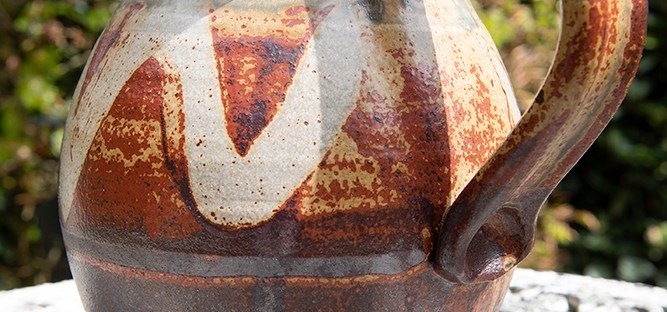
As mentioned earlier, to make discrimination is to create labels like ‘a cup’, ‘good’ or ‘poor’. The moment the thought ‘This is a cup’ comes into being upon seeing something, the thought ‘a cup’ gives birth to subsequent thoughts such as a plastic cup or a ceramic cup, a white cup or a red cup, a small cup or a large cup and so on. These thoughts produce their subsequent thoughts. Each of these thoughts always has subsequent thoughts that are contrary to each other: ‘A cup is good for drinking water but bad for knocking in a nail’, or ‘A plastic cup is good for a picnic but poor for entertaining an important guest’. In this way, everything becomes faulty when you make discrimination.

SRH_0459a_thumb

In fact, the cup is not a cup before the thought ‘a cup’ comes into being, or you label it a cup. It is not ‘plastic’ not ‘poor’, but perfect just as it is until a thought comes into being. It becomes faulty, like being ‘poor’, only because you make such a discrimination. It is not due to the imperfection of a thing but due to your discrimination that things look faulty. Accordingly, everything is without fault when a mind (i.e. a thought) doesn’t come into being.

©Boo Ahm
All writing ©Boo Ahm. All images ©Simon Hathaway
#zen #meditation #zenfools http://ow.ly/i/D5tFa

Uncategorized

Q. They complain that they still have as many vexations as they did before the experience. Did they truly experience enlightenment? Does it have any lasting effect?

Q. They complain that they still have as many vexations as they did before the experience. Did they truly experience enlightenment? Does it have any lasting effect?

A. People can have a variety of minor experiences before coming to realisation of the true-Self. They often mistake these for enlightenment. One of the most common sayings among such people is that they forgot enlightenment because they didn’t continue to practise after enlightenment. However, enlightenment, once attained, can neither be discarded, be forgotten nor be escaped from forever.

To attain enlightenment means to have our views of things, or the angle of our view of things changed. When your view is changed, your way of thinking is changed. When your way of thinking is changed, your acts are changed. When your acts are changed, your life is changed. In other words, if your view is changed, your life can’t but be changed, just as your life is changed when you’ve recovered from chronic illness after taking good medicine. Whatever experience you may have, you are not enlightened unless your view is changed, just as you can’t be said to have recovered from your illness if you still feel unwell no matter what experience you may have had after taking medicine.

©Boo Ahm
All writing ©Boo Ahm. All images ©Simon Hathaway
#zen #meditation #zenfools http://ow.ly/i/D1Gen

Uncategorized

In a dream Kyozan went to Maitreya’s Pure Land and sat in the third seat.

In a dream Kyozan went to Maitreya’s Pure Land and sat in the third seat.

In a dream Kyozan went to Maitreya’s Pure Land and sat in the third seat. A monk there beat the gavel and said, “Today the one in the third seat will give a sermon.” Kyozan arose, hit the gavel and said, “The truth of Mahayana is beyond any verbal expression! Listen, listen!”

Student: “Why did Kyozan hit the gavel and say, ‘Listen, listen!’ when he was asked to give a sermon in his dream?”
Master: “Listen and you will understand what he meant.”
Student: “He hit the gavel in his dream long ago. How can I listen to it now?”
Master: “How can you ask me about what happened in his dream long ago if you can’t listen to it?”
Student: “What happens if I listen to it?”
Master: “You come to awaken from your dream.”

Commentary:
Don’t mistake his showing the true-Self for telling an account of a dream.
Why do you divide Oneness into reality and dream?

©Boo Ahm
All writing ©Boo Ahm. All images ©Simon Hathaway

#zen #meditation #zenfools http://ow.ly/i/CXfT4

Uncategorized

Q. Is it possible, without attaining enlightenment, to stop creating karma? If it is possible, then how?

Q. Is it possible, without attaining enlightenment, to stop creating karma? If it is possible, then how?

A. First of all, don’t think that the enlightened don’t create karma. No one, even Buddha, can cease to be subject to karma. Every moment of our life is the effect of past karma and the cause of future karma at the same time. What you are today is the result of how you lived yesterday, and how you live today based upon what you are is the cause of what you will be tomorrow.

To escape from karma doesn’t means to stop creating karma but to realise that everything, including karma, is empty. When everything is empty, not only karma but also the creator of karma is empty. To realise this is to attain enlightenment. So, without enlightenment, we can’t be free from karma.

Student: “How can I escape from karma?”
Master: “Realise who tries to escape what clearly.”

©Boo Ahm

All writing ©Boo Ahm. All images ©Simon Hathaway

#zen #meditation #zenfools http://ow.ly/i/CTHRi