A monk asked Master Ja-myung, “What is the meaning of Bodhidharma’s sitting facing the wall for nine years?”
Ja-myung answered, “There was no reward despite many years of effort.”
The monk asked the same question of Master Yang-ki, who answered, “He didn’t know Chinese because he was an Indian. The monk asked the same question of Master Hoe-dang, who responded, “He had no blanket to cover himself in spite of cold weather.”
Student: “Each of three masters made a different answer to the same question. Which is a right answer?”
Master: “All their answers are wrong.”
Student: “What is the right answer?”
Master: “It was not said.”
Commentary:
Calamity comes in taking what was not said as what was said.
Followers of the Way, right now realise the four shapeless boundaries and don’t be entangled in them.
One asked,“What are these four boundaries?”
The master said,“A moment of doubt in your heart is your being obstructed by earth; a moment of desire in your heart is your drowning in water; a moment of anger in your heart is your burning in fire; a moment of joy in your heart is your being carried away by the wind. If you can realise this, you will no longer be at the mercy of circumstance but will make use of circumstances wherever you are — rise in the east and set in the west, appear in the south and vanish in the north, rise in the middle and disappear at the circumference, appear at the circumference and vanish in the centre. Then you will walk on water as if it were land and on land as if it were water.”
Commentary:
Earth, water, fire and wind are said to be the four elements which our physical body is composed of in Buddhism. Master Rinzai compared them to our typical illusions; doubt, desire, anger and joy, which are thought to lead people to suffering. If you realise that they are all illusions by seeing them as they are, you will be above being deluded by them. Rather, you will be able to take advantage of them as you please. ‘Rise in the east and set in the west, appear in the south and vanish in the north, rise in the middle and disappear at the circumference, appear at the circumference and vanish in the centre. Then you will walk on water as if it were land and on land as if it were water’ are the metaphors that show how free we are to see things in both ways; with land implying Emptiness and water implying forms, when we are free from being deluded by illusions. Similar phrases are found in the Bible as well: Matthew 14:25 “Jesus came to the disciples, walking on the water.” Matthew 14:29 “So Peter got out of the boat and started walking on the water to Jesus.” Here, walking on the water implies not sinking in the ocean of illusions.
A. Sound faith is based on reasonable doubt. World history shows well what suffering blind faith, accepted without doubt, has caused mankind. Our preposterous behaviour of sacrificing our visible siblings and neighbours in order to please invisible, imaginary figures results from the blind faith that comes from belief without doubt.
True faith comes only after we see what the object of faith is in person. The duty of religion is not to encourage people to worship the object of faith but to help them to realise what it is. To achieve this, all doubts should be admitted of and thought through with sensible explanations given. The Buddha would not fail to say at the end of his talk, “Never accept my words blindly. Return to your places and think through what I’ve talked about. Accept it only when you understand it, but bring it back to me and ask again if it is not understood.”Keep doubting.
A monk asked Master Daegwang, “Is Bodhidharma also a Patriarch?” Master said, “No, he isn’t.” The monk said, “Why did he come if he was not a Patriarch?” Master said, “Because you don’t recognise a Patriarch.” The monk said, “How is it after I recognise a Patriarch?” Master answered, “Only then can you know that Bodhidharma is not a Patriarch.”
Student: “How can I know that Bodhidharma is not a Patriarch?”
Master: “The Patriarch was already there before Bodhidharma came from India.”
Commentary:
To see the immovable in the moving is to see the Buddha.
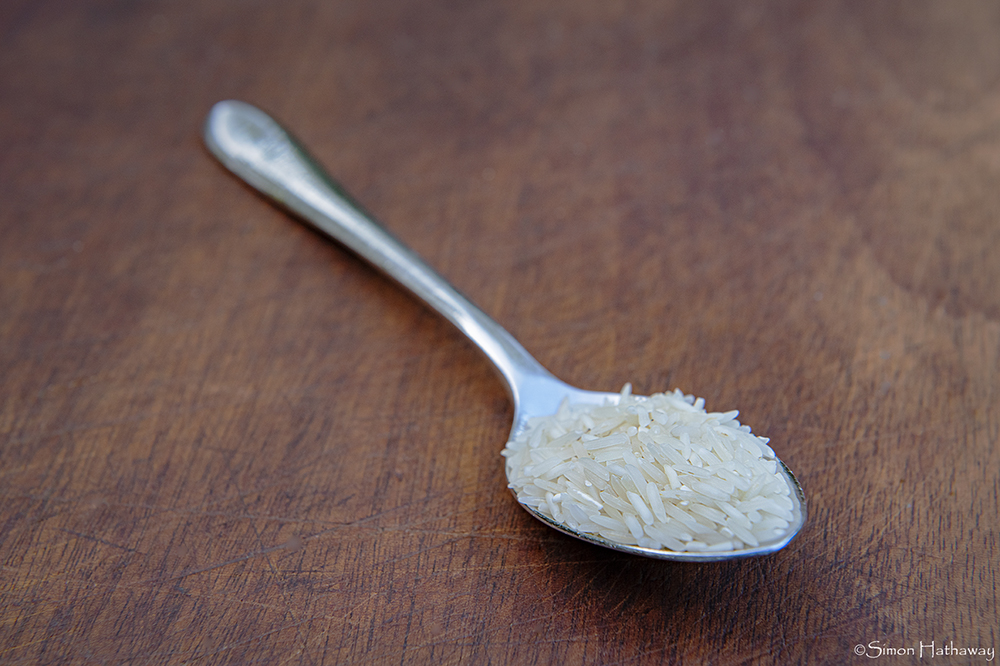
Followers of the Way, do not trust yourselves to a companion that is only a phantom and a dream (the body). Sooner or later, it will return to impermanence. What means of deliverance can you find in this world? Leading your life eating a spoonful of rice and sewing tattered clothes, you should see a good teacher without losing time in chasing after pleasures. Time is precious, and the moments are fleeting. On the material plane you are obstructed by earth, water, fire and air; on the mental plane you are pressured by the four conditions of all compounded forms, birth, being, change, and extinction.
Commentary:
‘Do not trust yourselves to a companion that is only a phantom and a dream (the body)’ means that we should not be attached to our physical bodies, seeing them as our true ‘I’. ‘Sooner or later, it will return to impermanence’ means that your physical body will perish soon’. ‘Leading your life eating a spoonful of rice and sewing tattered clothes, you should see a good teacher without losing time chasing after pleasures’ means that we should live a simple and frugal life without craving for rich food and expensive clothing and practise under a good master’s teaching.
‘You are obstructed by earth, water, fire and air’ means that death is coming closer to us as the bond of the elements of our physical bodies; earth, water, fire and air, is loosening with time. ‘You are pressured by the four conditions of all compounded forms, birth, being, change, and extinction’ is, as an added explanation, implying that we cannot escape the yoke of birth, living, ageing and death. In other words, every moment death keeps nearing us, and what is worse, no one knows when we will encounter it because it never asks anyone’s permission. Therefore, we should practise hard without wasting precious and fleeting time on worldly pleasures.
A.‘The voice in my head is very frustrated about how nonsensical it is’ makes sense. In fact, many people, when considering a Zen question, koan, think of it as nonsensical and have the same trouble as you do because it sounds illogical and unreasonable. The reason why you feel that way is that you have not had enough teaching before tackling the question. You should have been taught logically why you should solve the question and how you should approach the question, which would make you, instead of being frustrated about how nonsensical it is, convinced that the question is reasonable and logical.
After taking a question from a master, you need sufficient communication with him and continuous instruction on how to deal with the question. Anyway, if you continue to feel frustrated about how nonsensical the question is, you had better start again from the beginning since you cannot solve the question with distrust whilst regarding it as nonsensical.
One day a monastic asked Rinzai, “When two monks shout ‘Katsu’ to each other, is there a host and a guest?” Rinzai said, “Very clear.” The monastic said, “Which is a host, and which is a guest?” Rinzai answered, “Why don’t you go and ask the two monastics in person?”
Student: “Why did Rinzai tell the monastic to go and ask the two monastics instead of giving an answer?”
Master: “Because it was the best he could do.”
Commentary:
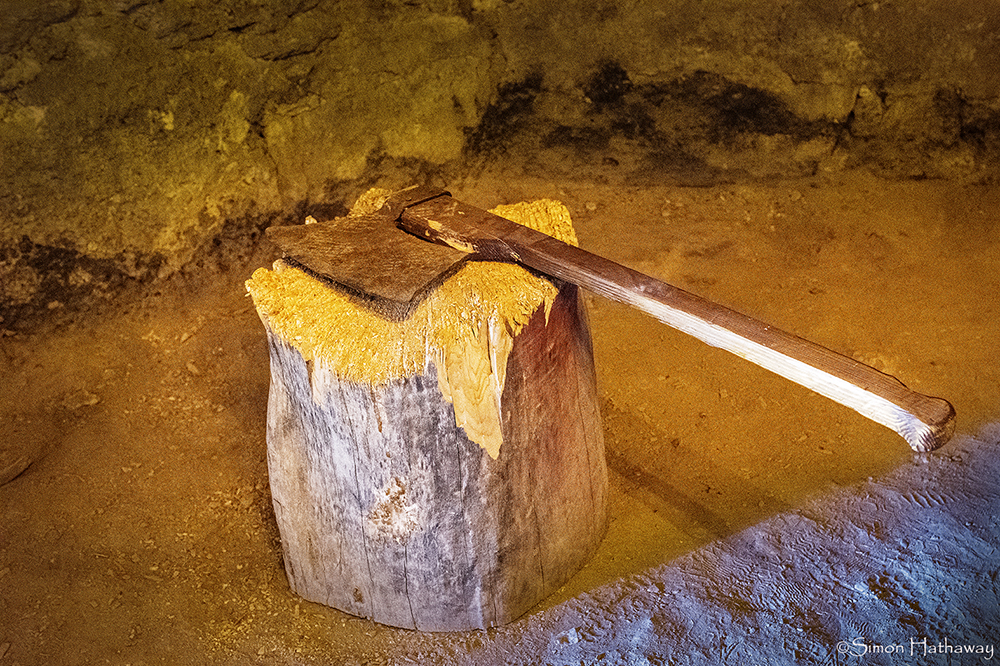
A host and a guest cannot be separated even with the sharpest axe.
If you want to get free from birth and death, from coming and going, from taking off or putting on like clothing, know and take hold of him who is now listening to the Dharma. He has neither form nor shape, neither root nor trunk; nor does he have a dwelling place; he is as lively as a fish leaping in the water, and performs his function in response to all situations. However, the place of his functioning is not a locality. Therefore, if you search for him, he eludes you. The more you seek him, the farther away he is. That is why he is called ‘mysterious’.
Commentary:
‘Coming and going’ and ‘taking off or putting on like clothing’ are other expressions of birth and death. ‘Taking off or putting on like clothing’ means to take off or put on our physical bodies; taking off one’s body implies death, and putting on one’s body birth. ‘Him who is now listening to the Dharma’ implies the true-Self. He is formless and has no dwelling place because there is nothing that is not him, which means that everything is his form and that everywhere is his dwelling place. All forms are the functions of him. This is why Rinzai said, “The place of his functioning is not a locality. Therefore, if you search for him, he eludes you. The more you seek him, the farther away he is.”
Seen from the perspective of form, he is ceaselessly active and as brisk as a fish leaping in the water. Seen from the perspective of Emptiness, he is motionless and nothing happens in him. If you want to get free from birth and death, you should not fail to see him who is reading this writing.
Student: “Who is he that is listening to the Dharma?”
Master: “Why do you ask me what is in your mouth?”
A. This time I will answer the question based on the Bible. According to the Bible, God created everything. If God created everything, what was there before things were created by God? There was nothing else but God, or there was only God and nothing else. Then, God was not God because there was no one else and nothing else to distinguish him from, and no one who would call him God. There was just oneness that was nameless. We nowadays refer to the oneness as God for the sake of convenience.
What do you think God created, or made everything out of? He could not help but make everything out of part of God himself, since there was nothing else but God himself before he started to create things. This means that everything, including human beings, is part of God. Therefore, Jesus said, “When the day comes, you will know that I am in my father and that you are in me, just as I am in you.” (John 14:20)
How can we return to the state prior to creation, the state of oneness that was the figure of God before we were made into human beings? We can do this if we do in reverse what God did when he created us. To do in reverse what God did when creating us, we must know how He created everything. The Bible has the answer to this as well. John1:2-3 says, “From the very beginning the Word was with God. Through him God made all things; not one thing in all creation was made without him.”
It is apparent that everything was made through word. Then, doing in reverse what God did when creating everything is removing or detaching all the words. What will happen if all the words that define the boundary and identity of everything are removed? Everything becomes oneness, the state prior to creation. We return to the nameless oneness which we call God for the sake of convenience. In Buddhism it is called the Buddha, the true-Self, or Oneness. Enlightenment means returning to the nameless oneness.








 Zen Fools