Zen

Rinzai 135

Or it may be that the teacher does not posit anything at all, but follows the student’s lead, and then snatches the question away from him. Though robbed, the student cannot drop it and clings to it till death. This is called ‘a host sees through a guest.’

Commentary:

This paragraph shows how a master sees through a student. A master just waits and sees what the student says and how he acts. When the student asks him a question, the master answers his question by revealing the true-Self with words that are beyond literal meaning instead of giving a doctrinal explanation. This is to snatch the question away. Words such as these that masters use in order to reveal the true-Self are referred to as words that cannot be put into action. I will give you an example. One day a monastic visits a master and asks him for teaching:

Student: “Sir, what is the true-Self?”

Master: “How long did it take to come here?”

Student: “It took three days.”

Master: “Thank you for coming such a long way, but I am sorry I cannot answer your question.”

Student: “Why can’t you answer?”

Master: “Because I don’t know.”

In this dialogue the student is just following the literal meaning without grasping the key point of the master’s answer. In other words, the monastic is fooled by the master’s words even though the master gave him a correct answer. In this way, when a monastic clings to the literal meaning of the master’s words, we say that he cannot drop it and clings to it. This is called ‘a host sees through a guest.’

©Boo Ahm

All writing ©Boo Ahm. All images ©Simon Hathaway

#zen #meditation #zenmeditation #enlightened #enlightenment #zenfools #photography

Zen

Q. Why do sentient beings have poor behaviour?

A. It’s not because sentient beings have poor behaviour but because you see their behaviour as poor. That is, you cannot see their behaviour as it is because you are deluded by illusions.

As long as you remain unable to see things as they are, even if the historical Buddha who passed away about 2500 years ago were to come to life, you would not recognise him because his behaviour would appear to be as poor as sentient beings’ behaviour to you. That’s why I always say that the Buddha is not enlightened until you are.

©Boo Ahm

All writing ©Boo Ahm. All images ©Simon Hathaway

#zen #meditation #zenmeditation #enlightened #enlightenment #zenfools #photography

Zen

Joshu visits two shrines

Once Master Joshu said to his students, “During one of my expeditions, when I visited a shrine, the head monk of it lifted his fist before my face, and I said, ‘The water here is too shallow for a ship to dock’. When I went to another shrine, the head monk of it also lifted his fist before my face, and I said, ‘The water here is deep enough for a big ship to dock’”.

Student: “Why did Master Joshu distinguish the two head monks from each other by saying the former was inferior to the latter even though both performed the same action?”

Master: “Because Joshu was so exhausted from his long journey that he spoke deliriously.”

Commentary:

Make the smallest distinction and you will be as far apart from the truth as heaven is from earth.

©Boo Ahm

All writing ©Boo Ahm. All images ©Simon Hathaway

#zen #meditation #zenmeditation #enlightened #enlightenment #zenfools #photography

Zen

Rinzai 134

In case a true student puts out a pot with sticky glue by shouting a Katsu, the master, not sensing that it is a trick, add various theories to it. Then, the student gives a Katsu one more time, but the master still doesn’t let go of his theories. This is a chronic disease that even a doctor cannot cure. This is called ‘a guest sees through a host.’

Commentary:

This paragraph shows how a nominal master, who is not enlightened, is seen through by a true practitioner. When a young enlightened practitioner raises the question ‘Do you know that this is the true-Self?’ by revealing the true-self through shouting a Katsu, the nominal master, missing the core of the question, tries to explain the true-Self with his knowledge, quoting from well known books on enlightenment such as the Sutras. Then, the practitioner gives a Katsu once more, which means ‘Sir, show me the true-Self directly instead of narrating such a redundant doctrinal explanation.’ However, the nominal master clings to his intellectual comprehension since he has no experience of enlightenment, that is, he cannot see things as they are. This is called a chronic disease that even a doctor cannot cure because he, lost in the belief in his enlightenment, has no intention to see a doctor to be cured of the disease. In this way, when a good student sees through a fake master, it is called ‘a guest sees through a host’.

©Boo Ahm

All writing ©Boo Ahm. All images ©Simon Hathaway

#zen #meditation #zenmeditation #enlightened #enlightenment #zenfools #photography

Zen

Q. Why don’t I get enlightened even though I have perfect understanding when a koan is explained?

A. You may think that you have perfect understanding, but the fact is that you are mistaking intellectual comprehension for perfect understanding, which is achievable only through experience. The former is different from the latter just as having perfect intellectual understanding of how to swim is one thing and being able to enjoy swimming freely in a deep river is another. 

If you had had perfect understanding of a koan as you said, you should be able to grasp other koans without explanation, just as you can solve other arithmetic problems easily once you have perfect understanding of arithmetic rules through an arithmetic question.

©Boo Ahm

All writing ©Boo Ahm. All images ©Simon Hathaway

#zen #meditation #zenmeditation #enlightened #enlightenment #zenfools #photography
Zen

Master Sooyu’s stake

Master Sooyu said to an assembly, “You should not drive a stake into the air.” Then, a monastic named Younghau, standing up in the assembly, responded, “The air is no other than a stake.”

Student: “If the air is a stake just as the monastic said, what is the stake?”

Master: “It’s a stake, too.”

Student: “What is not a stake?”

Master: “I don’t know.”

Commentary:

A stake is not a stake until you name it a stake.

©Boo Ahm

All writing ©Boo Ahm. All images ©Simon Hathaway

#zen #meditation #zenmeditation #enlightened #enlightenment #zenfools #photography

Zen

Rinzai 133

Followers of the Way, as the Zen school sees it, life and death rotate over and over. Practitioners should take a close look at this. When a host meets a guest, there is an exchange of discourse. Sometimes they reveal the body according to the circumstances. Sometimes the whole body is brought into function. Sometimes they show pleasure, or anger on purpose as an expedient according to karma. Sometimes they reveal half the body. Sometimes they mount the lion, sometimes they mount the elephant.

Commentary:

In ‘life and death rotate over and over’, ‘life and death’ means the realm of form, and ‘rotate over and over’ implies seemingly ceaseless change. The reason why Rinzai tells practitioners to take a close look at this is that seeing the realm of form as it is, is no other than enlightenment.

This part shows how masters teach people depending on circumstances and students’ capacity. ‘They reveal the body according to the circumstances’ means that masters reveal the true-Self according to the circumstances with words, or actions which are called koans. A master answered, “Dry shit” when he was asked what the true-Self is by a monastic, and another master responded, “A cypress in the garden.” These are examples of revealing the body, the true-Self by using words. Some masters would reveal the true-Self by actions such as brandishing their sticks, hitting monastics with their sticks, or feigning anger or pleasure. In fact, all koans are no more than expedients to reveal the true-Self. ‘They reveal half the body’ means that masters reveal the true-Self with plausible words that make people fail to recognise the true-Self by alluring them into following their literal meaning. This is the same as ‘they hide half the body’. However, the true-Self is revealing itself wholly all the time, and it is impossible to hide or cover even the slightest part of it because the action of hiding or covering it is no other than the function of the true-Self.

‘They mount the lion’ means that they give people strict teaching of wisdom, and ‘they mount the elephant’ means that they show compassion through abiding effort to lead them to enlightenment.

©Boo Ahm

All writing ©Boo Ahm. All images ©Simon Hathaway

#zen #meditation #zenmeditation #enlightened #enlightenment #zenfools #photography

Zen

Q. We say that the true-Self is perfect, yet physical experiences shape our lives in different ways. So, is there a risk that the true-Self can become imperfect after negative physical experiences in our life? Furthermore, what is the purpose of physical experience if our true-Self is already perfect?

A. When people make flowers out of gold, the forms of flowers are as various as the number of the people in size, shape and completeness depending on their skill, taste and their working conditions. However, the gold itself that is the essence of the flowers never changes and remains perfect as gold all the time irrespective of how ugly and beautiful their works are. No matter how diverse our physical experiences may be, the true-Self, the essence of our being never changes at all just as the shapes of the flowers cannot change the gold itself.

The reason why I accentuate physical experience is that ‘our true-Self is perfect’ can be grasped only through direct experience because it is beyond words. Not until you have a physical experience of the true-Self in person can you understand the meaning of ‘our true-Self is perfect’.

©Boo Ahm

All writing ©Boo Ahm. All images ©Simon Hathaway

#zen #meditation #zenmeditation #enlightened #enlightenment #zenfools #photography
Zen

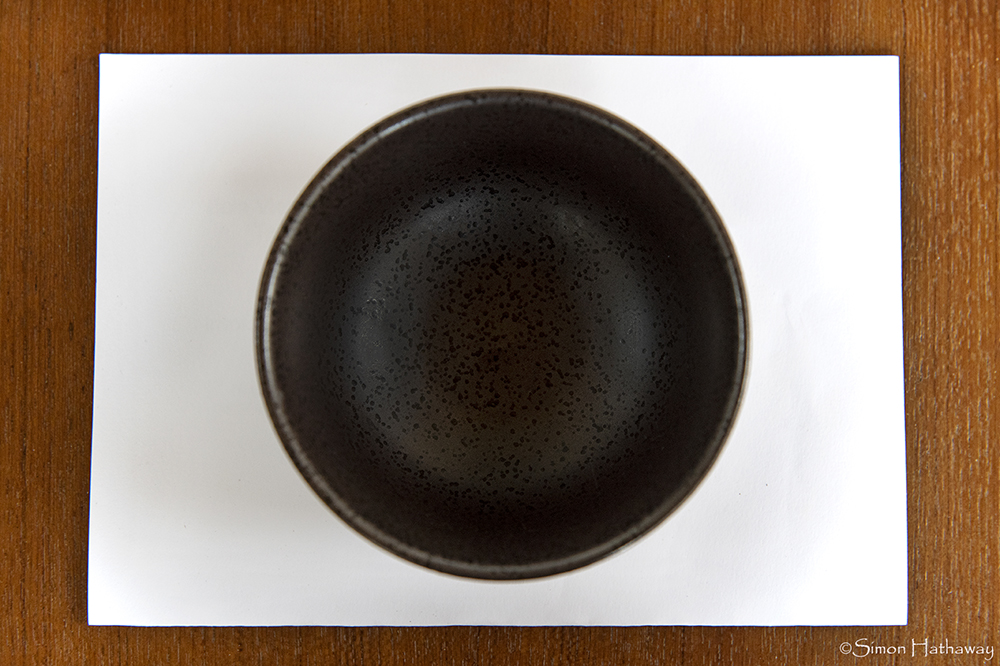
Joshu’s pitch-black lacquered bowl

A monastic asked Joshu, “How is it when two masters meet each other?” Joshu answered, “They offer a pitch- black lacquered bowl to each other.”

Student: “What is the pitch-black lacquered bowl two masters offer to each other.”

Master: “Nothing is as valuable as it.”

Student: “What is it like?”

Master: “Don’t break it.”

Commentary:

The pitch-black lacquered bowl is not valuable any more once you’ve attained it.

©Boo Ahm

All writing ©Boo Ahm. All images ©Simon Hathaway

#zen #meditation #zenmeditation #enlightened #enlightenment #zenfools #photography

Zen

Rinzai 132

Followers of the Way, what should a real man doubt? Who is he who freely functions right before the eyes? Seize and use him—but do not attach a name to him. This is referred to as deep meaning. If you can see everything like this, there is nothing to avoid. An old master said: “The mind changes with ten thousand phenomena; its changes are truly profound. Once the mind is realised, following birth and death, there is neither joy nor sorrow.”

Commentary:

‘Who is he who freely functions right before the eyes?’ means that everything you see and hear is the function of the true-Self. ‘Seize and use him—but do not attach a name to him’ implies that the true-Self cannot be separated from your hands even for a moment since you are oneness with the true-Self when you are not deluded by names that are merely illusions. ‘This is referred to as deep meaning’ means that not being deluded by words is referred to as enlightenment. When you can see everything in this way, there is nothing to avoid and no one who will avoid because there is just Oneness, the true-Self.

The true-Self functions ceaselessly;

its functions are profound and subtle.

Once you have realised the true-Self amidst illusions,

you will be perfection itself.

©Boo Ahm

All writing ©Boo Ahm. All images ©Simon Hathaway

#zen #meditation #zenmeditation #enlightened #enlightenment #zenfools #photography