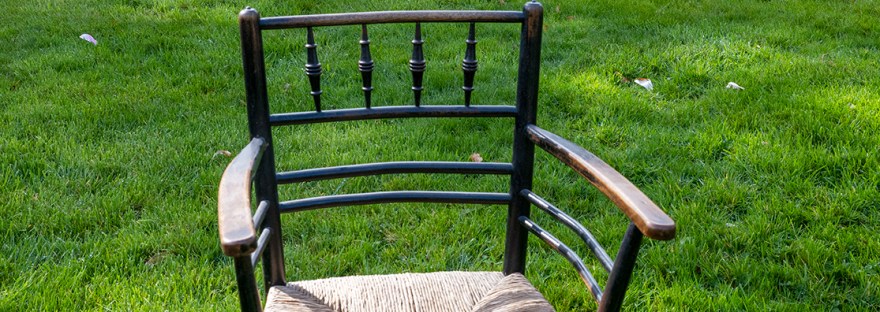
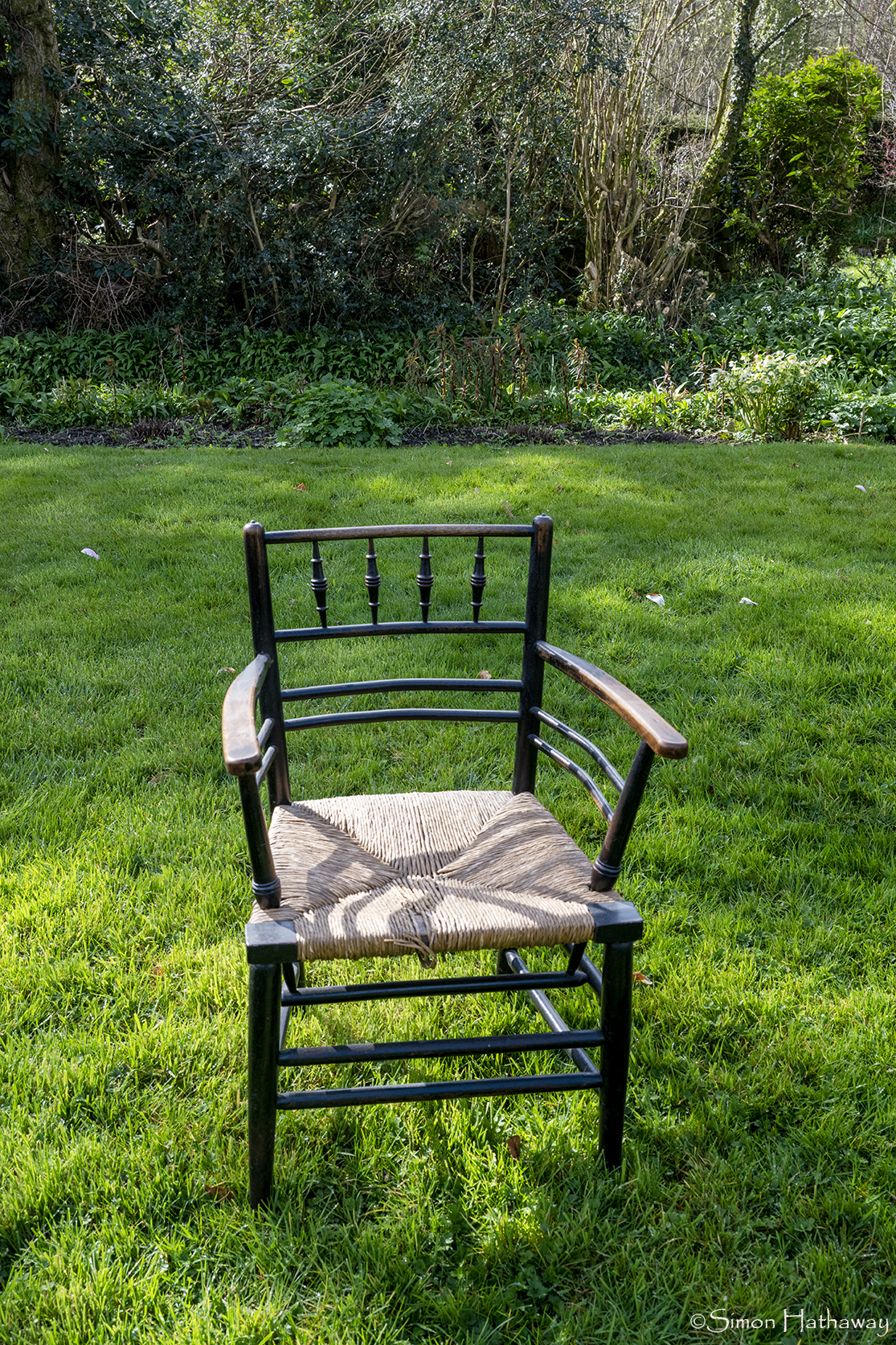
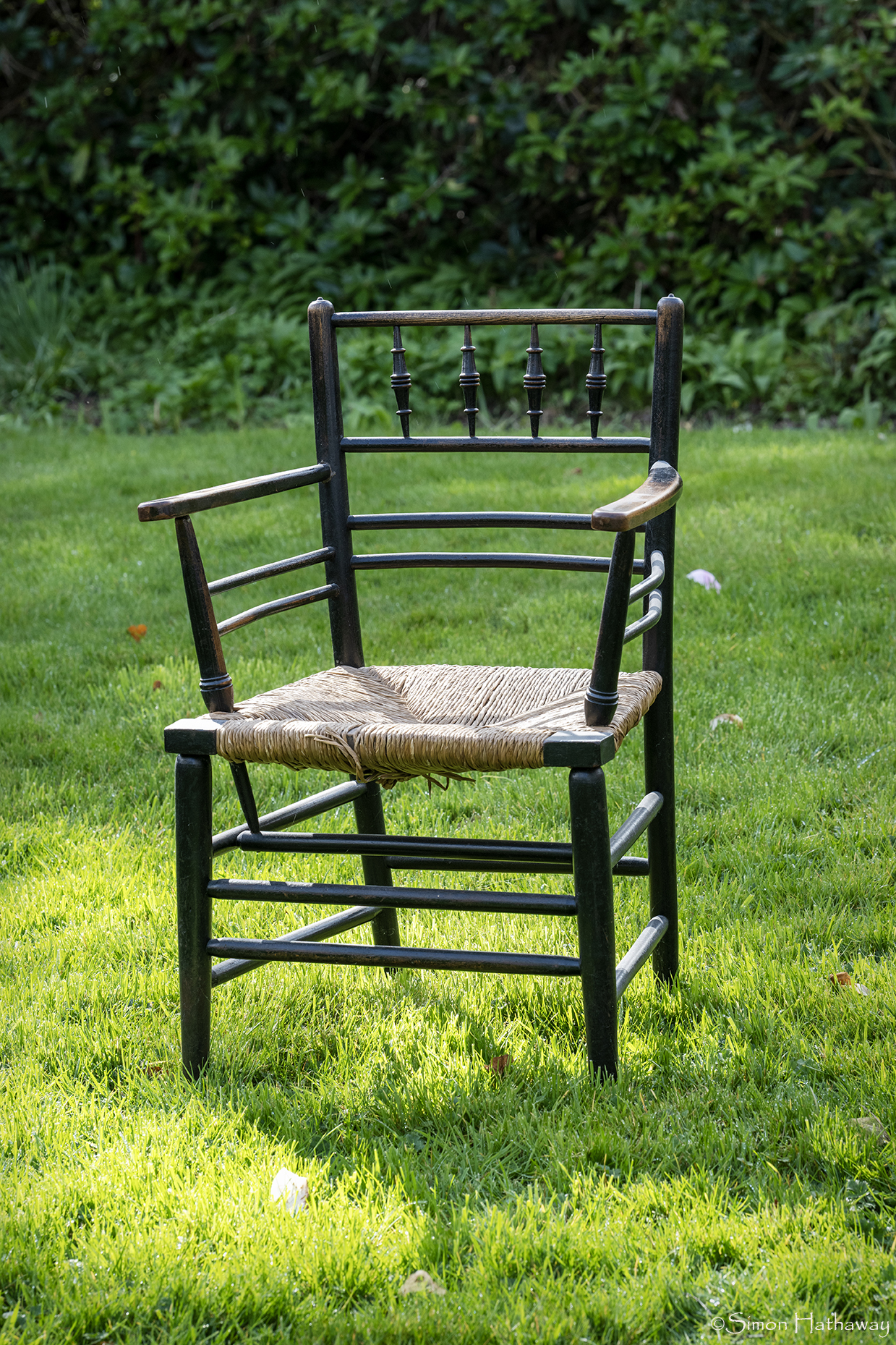
Master Buban, pointing to a chair, said to his disciples, “If you know the chair, it is more than enough to encompass the universe.” Later Master Woonmoon said, “If you know the chair, it is far apart as the heaven and earth.”
Student: “Why did Master Woonmoon say, ‘If you know the chair, it is far apart as the heaven and earth’?”
Master: “When it is more than enough to encompass the universe, it is not a chair anymore.”
Commentary:
Everything is the gate to the Buddha land, but once you pass it, there is no gate in the Buddha land.
“World Honoured One, if there is anyone who, on hearing this sutra, conceives pure faith, he will realise the true form of everything. One should know that such a person has accomplished the rarest merit.”
“World Honoured One, this true form of everything is not a form: therefore, the Realised One says it is called the true form of everything.”
Commentary:
Here, the phrase ‘pure faith’ means seeing and hearing everything as it truly is. The phrase ‘realise the true form of everything’ means that the Emptiness (the true-Self, Buddha-nature), which is the true nature of all things, is revealed—signifying the enlightenment to the true-Self.
While mentioning that realising the true-Self is the achievement of the rarest merit, the Buddha also warned against falling into the trap of the concept of the true-Self. To prevent sentient beings from being deceived by the word ‘true-Self,’ imagining a specific form and seeking it externally, he stated: “The true-Self is precisely not a form; therefore, the Buddha called it the true-Self.”
As mentioned several times, the true-Self, the essence of all things—much like how the reality of wind is air, which includes all winds—has no fixed form yet contains every wind. It is not rare or difficult to obtain; rather, it is so abundant and pervasive that we ourselves are part of it. There is nothing that is not ‘It’, and we cannot escape it for even a moment. The difficulty arises because we ignore what is seen, heard, and felt in every moment, and instead try to find a phantom created by our imagination. The Buddha’s teachings are merely an expedient means to point to the true-Self. We must see it within his words without being deceived by the words themselves.
Regarding those who are still deceived by words and forms, it is said: “The ignorance of sentient beings turns the lush forest of the True Dharma Realm into a thicket of thorns and weeds.” If one seeks the true-Self through forms and words, one will not find it even if the ‘Year of the Donkey’ (a time that never comes) arrives.
We must keep in mind that the essence of everything, down to a single grain of dust, is the true-Self (Emptiness), and we ourselves are the very true-Self. If you worship and rely on a Buddha as a being greater than yourself because you think you are not a Buddha, that is idolatry—no different from serving a thief as your parent.
Thus, Master Bodhidharma said:
“If you know that your own mind is the Buddha,
You will not seek the Buddha outside the mind;
A Buddha does not expect or seek another Buddha.
If you use your mind to seek a Buddha externally,
you do not know the Buddha.”
“Those who seek the Buddha outside the mind
Do not realise that their own mind is the Buddha.
Furthermore, you should not get the Buddha to bow to a Buddha,
Nor should you use the mind to think of another Buddha.”
As the Buddha said in the Avatamsaka Sutra: “I now see all sentient beings everywhere, and they all possess the wisdom and virtuous appearance of the Buddha. It is only because of their deluded thoughts and attachments that they do not realise it.” The core of Buddhism is not worshipping a virtual Buddha imagined to be somewhere beyond the clouds or inside a temple, but realising the fact that ‘I am the Buddha itself.’
Disciple: “What is the essence of everything?”
Master: “What is it not?”
Disciple: “Please be more specific.”
Master: “You.”
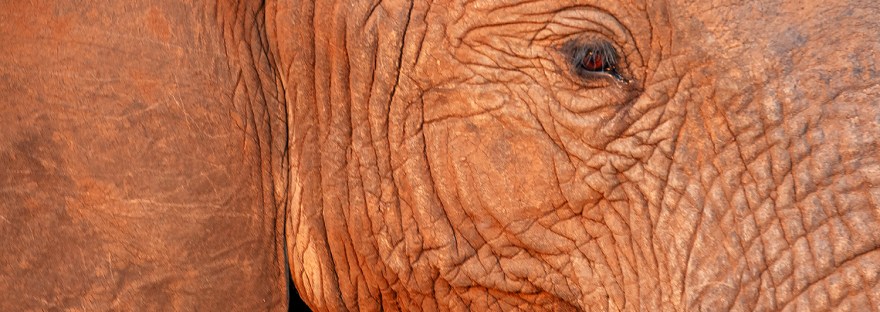
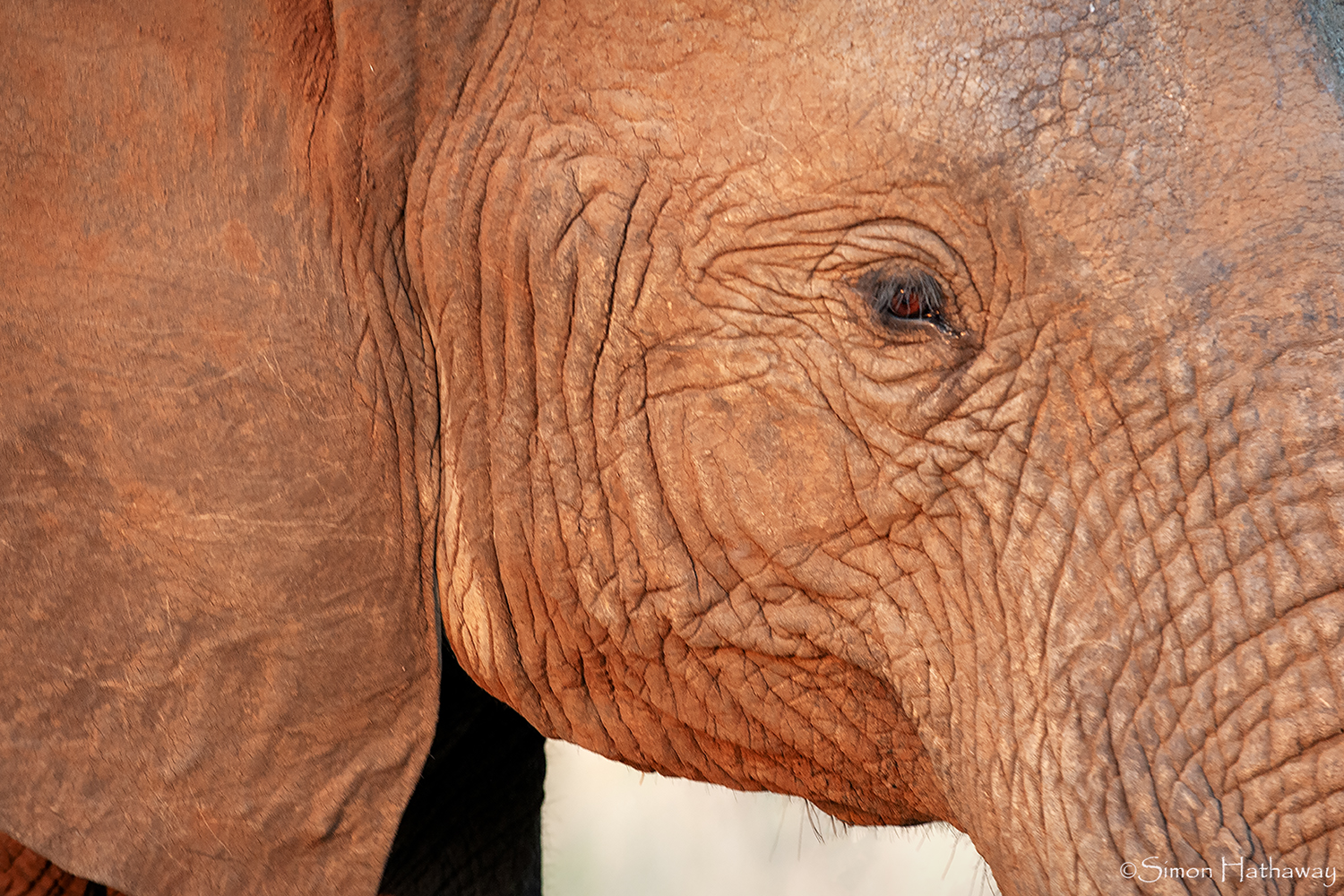
Seeing a flea on an elephant’s body,
One fails to see the elephant.
Hearing the buzz of a mosquito,
One fails to hear the thunder.
It cannot be hidden or covered;
It is always revealed before one’s face.
Yet, because it cannot be seen,
It is called an ‘open secret’.
Koan:
Sosan asked Youngchun, “It is said that only when flowers bloom on a withered tree does one harmonise with ‘That’. Is this a phrase of ‘this side’ (Form) or ‘that side’ (Emptiness)?”
Youngchun replied, “It is still a phrase of this side.”
Sosan asked again, “Then what is a phrase of that side?”
Question 1: What is the meaning of Youngchun’s reply, “It is still a phrase of this side”?
Question 2: How would you answer Sosan’s question, “What is a phrase of that side?”
It is true that there is nothing to cut, or attain because everything is an illusion. The difference between sentient beings and the enlightened is that the former, deceived by illusions, struggle to attain and cut the illusions like rabbit horns, whilst the latter, not deluded by illusions through seeing things as they really are, are aware that there is nothing to attain, or cut.
In short, the sentient beings, fooled by illusions, become happy, or unhappy depending on whether or not they can cut and attain illusions as they please. The enlightened, not deluded by illusions, can enjoy all illusions in the same way they enjoy movies.
Master Buban, pointing to a chair, said to his disciples, “If you know the chair, it is more than enough to encompass the universe.” Later Master Woonmoon said, “If you know the chair, it is far apart as the heaven and earth.”
Student: “Why did Master Buban say, ‘If you know the chair, it is more than enough to encompass the universe’?”
Then, Subhuti, hearing the exposition of this sutra, profoundly understood the import and weeping, said to the Buddha, “How rare it is, World Honoured One! I have never heard you expound such an extremely profound scripture as this is, from the eye of wisdom I have obtained.
Commentary:
It is said that Subhuti heard such a profoundly deep dharma talk for the first time.
However, the Avatamsaka Sutra states:
“The Buddha, with a single word,
Constantly preaches with a subtle voice
That fills the universe for infinite eons,
Speaking all the Dharma talks.”
“The Buddha’s great voice always resounds,
Revealing the true-Self free from worry;
All sentient beings who hear it are filled with joy.”
“Any sentient being who approaches the Buddha
And hears his subtle voice,
There is none whose heart does not rejoice.”
As shown above, the Buddha did not preach this Dharma for the first time; he has always been preaching this deep Dharma without change. However, at this moment, Subhuti moved beyond his previous intellectual knowledge. He saw the true Buddha (the true-Self) rather than the physical body of Shakyamuni Buddha. He understood the wordless word and expressed the rapture in his heart.
As Master Bodhidharma said: “If the eyes are not stained by colour when seeing, and the ears are not stained by sound when hearing, that is liberation. If the eyes do not cling to colour, the eyes are the Gate of Zen; if the ears do not cling to sound, the ears are the Gate of Zen.” To see and hear clearly without being deceived by the forms and sounds of what we perceive—that is Enlightenment. If we can see and hear things as they truly are, then everything we see and hear becomes a gateway to the Pure Land. Thus, it is said that in our daily lives, if we truly see just one thing or truly hear just one word, our spiritual practice is completed.
Subhuti heard as it truly is at this point. If we were to see and hear this part as it truly is, how would it appear to us? An old master said, “If you harbour the duality of you and I, you will not recognise the Buddha even when facing him.” As the Buddha mentioned earlier, “Shakyamuni Buddha is not Shakyamuni Buddha, but is merely named Shakyamuni Buddha; Subhuti is not Subhuti, but is merely named Subhuti; and tears are not tears, but are merely named tears.
Seeing and hearing everything as empty and as one is seeing it as it truly is. Hearing all these words as the manifestation of the true-Self, so that Shakyamuni Buddha, Subhuti, and I become one—that is truly understanding this Sutra and meeting the Buddha.
Therefore, Master Yabo said that Subhuti’s crying should be seen as not different from laughter, as it is simply the functioning of the true-Self. If one is deceived by the word or the form of crying, one fails to recognise the true-Self. Thus, he spoke in metaphor: “He should have laughed heartily, yet he hid it while facing the face.”
Disciple: “What on earth did Subhuti hear?”
Master: “Everyone hears it.”
Disciple: “What is it?”
Master: “Subhuti burst out laughing.”
Disciple: “No, it says in the sutra that he wept.”
Master: “You have misread the sutra.”
Everyone knows
That Subhuti wept sadly,
But since they do not know that Subhuti laughed,
How could they understand the four-line verse?
Koan:
When Baizhang returned from a mountain walk with Master Mazu, he suddenly began to wail.
A fellow monk asked him, “Are you thinking of your parents?”
Baizhang said, “No.”
The monk asked, “Did someone insult you?”
Baizhang said, “No.”
The monk asked, “Then why are you crying?”
Baizhang said, “Go and ask Master Mazu.”
The monk went and asked Mazu, and Mazu said:
“Go and ask Baizhang.”
When the monk returned to Baizhang’s room, he found Baizhang laughing loudly. The monk asked, “A moment ago you were crying, so why are you laughing now?”
Baizhang said, “Earlier I was crying, but now I am laughing.”
The monk was utterly bewildered.
Question 1: Why did Baizhang wail?
Question 2: Why did Baizhang tell him to ask Master Mazu?
Question 3: Why did Mazu tell the monk to go ask Baizhang?
Question 4: Why did Baizhang say, “Earlier I was crying, but now I am laughing”?
If there is no mind, what is it that is controlling your body to ask this question at this moment? If there is mind, what is it like? It is formless, changeless and intangible. Considering the former, we can’t say that there is no mind, but judging from the latter, we can’t say that there is mind.
This is why the Buddha said that mind is neither existent nor non-existent. The truth is that there is only mind and there is nothing that is not mind. It follows from this that we can’t say it is mind, because there is nothing to distinguish it from. Accordingly, no-mind means not that there is no mind but that there is nothing but mind.
When a monk asked Master Majo, “What is nirvana?” Majo said, “Hurry up!” The monk asked, “What should I hurry up.” Majo answered, “Have a look at the water.”
Student: “What did Majo mean by ‘Have a look at the water’?”
Master: “He provided him with a raft to cross the river.”
“Subhuti, suppose good men and good women give as many lives as the grains of sand in the Ganges River in charity. If someone accepts and holds even a four-line verse of this Sutra and explains it to others, his blessings would be much more.”
Commentary:
The reason why the same message is repeated across various sections (parts 8-1, 11-2, 12) is that to truly receive, uphold, and explain even a single four-line verse to others signifies the ultimate goal of Buddhism, Enlightenment. It means reaching a state where you are no longer deceived by words and forms, where everything you see and hear—including your own voice—is perceived as the sermon of the True Buddha. Achieving such a state, you can realise that as many lives as the grains of sand in the Ganges River are also empty.
To see all things as they are, one must first look at the scriptures themselves without being deceived by language. Ancient masters warned that if you understand the Sutras only through words, the scriptures become the speech of Mara, and you become an enemy of the Buddha. They compared linguistic interpretation to groping at a fence without ever entering the house. They urged, “Smash the fence!” and said, “Hanging onto a branch over a cliff is nothing special; only the one who lets go of the branch is a true person of stature.” These metaphors serve as stern rebukes to those who cling to the written letters.
We usually think of a “four-line verse” as a specific verse made of four phrases. However, in part 13-3, the Buddha says, “The Buddha has never taught any Dharma.” How do we reconcile this with the command to “uphold and teach the four-line verse”?
The statement ‘The Buddha has never taught any Dharma’ means that the core of his teaching does not reside in the words themselves. The true four-line verse is the wordless word—the message the Buddha pointed to through speech but could not capture in speech. This is also called the straight word. We must be able to hear and transmit this word beyond words, which is the Dharma (the true-Self). Ancient masters would say that words are merely the vessel that carries the Dharma, not the Dharma itself. To understand the teachings only through language is like licking and sucking the outside of a bowl without ever tasting the food inside.
According to the Buddha’s true teaching, a four-line verse is not a four-line verse, but is merely named so. Realising that even the blessings spoken of by the Buddha are not blessings but merely named so—that is the true blessing.
Disciple: “What is the four-line verse?”
Master: “There is no merit in preaching the four-line verse.”
Disciple: “Why do you deny the Buddha’s words that the merit of preaching it is great?”
Master: “You are still licking the bowl.”
The four-line verse:
A letter of pardon to escape the prison of illusions.
Dogs carry it in their mouths, and birds transmit it,
Yet those who truly receive it are rare.
Koan:
Suksang said during a sermon to the assembly, “You must know the one phrase that is transmitted separately outside the scriptures.”
A monk came forward and asked, “What is that one phrase transmitted outside the teachings?”
Suksang replied, “It is not a phrase.” Yunmen added, “Only when it is not a phrase is it truly a phrase.”
Question 1: What are the meanings of Suksang’s “It is not a phrase” and Yunmen’s “Only when it is not a phrase is it truly a phrase”?
Question 2: What is the phrase that is not a phrase?
These words may sound absurd and confusing, yet they are very critical advice that shows how we should accept the Sutras and dharma talks. Let’s take a simple saying ‘everything is empty’ for example. If we don’t understand these words, we can be said to be wrong as a Buddhist.
However, if we treasure and are attached to them, we are also wrong because it implies that we don’t understand them although we believe that we understand them. If we truly understand the words ‘everything is empty’, even these words should also be empty, and they shouldn’t be words anymore. So, if you cling to them with a belief that you understand them, you are wrong.
When a monk asked Master Majo, “What is nirvana?” Majo said, “Hurry up!” The monk asked, “What should I hurry up.” Majo answered, “Take a look at the water.”