Questions & Koans

Uncategorized

Q. Am I a Buddhist if I practice Zen meditation?

Q. Am I a Buddhist if I practice Zen meditation?

A. A British man doesn’t become Korean because he eats Korean food, and a Korean doesn’t become Japanese because he learns the Japanese language unless he changes his or her nationality. Likewise, a Christian doesn’t become a Buddhist only because he practises Zen meditation.
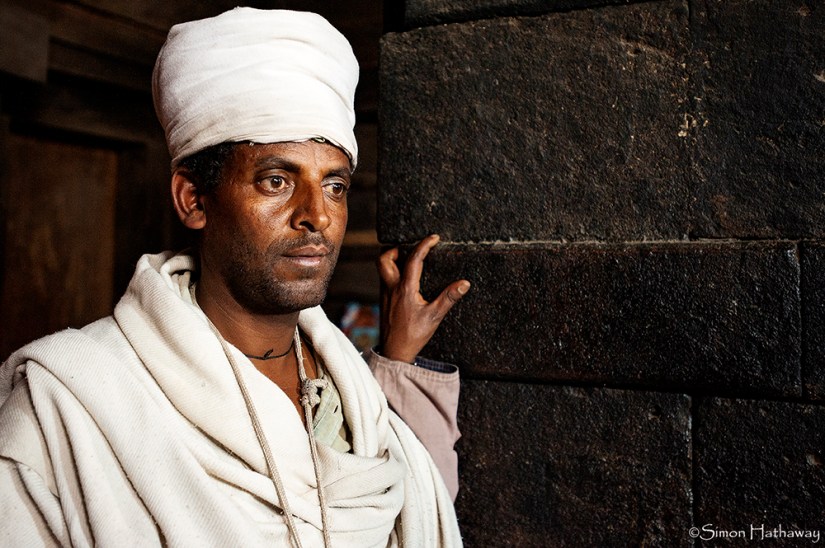
However, you should know that being a Christian means that you think you are a Christian and not that the essence of your being is Christian. The essence of your being is neither Buddhist nor Christian. Whether you are a Buddhist or a Christian, it is no more than a sort of label you give yourself and it is not actually the essence of your being nor does it change it at all.

You should try to realise what you are when all the labels attached to you are removed.

©Boo Ahm

All writing ©Boo Ahm. All images ©Simon Hathaway

#zen #meditation #zenfools http://ow.ly/i/F3anB
Uncategorized

Yangshan’s Discourse

Yangshan’s Discourse

Yangshan was once asked by a monastic, “Does the dharma body understand a dharma discourse?” Yangshan said, “I can’t speak about it, but someone else can.” The monastic said, “Where is the person who can?” Yangshan pushed forward a pillow. Guishan heard about it and said, “Yangshan used the blade of a sword.”

Student: “Why did Yangshan push forward a pillow when asked who could speak about if the dharma body understood a dharma discourse?”
Master: “He showed the ‘someone else’ he had mentioned.”
Student: “Why did Guishan say, ‘Yangshan used the blade of a sword’ though he only pushed a pillow?”
Master: “Guishan showed his own sword that is not less sharp than Yangshan’s sword.”

P1100845a_thumb


Commentary:
A sword is not words but what is hidden in them.
A foolish man doesn’t recognise his own sword while having himself cut with it.

©Boo Ahm

All writing ©Boo Ahm. All images ©Simon Hathaway

#zen #meditation #zenfools http://ow.ly/i/FkuhM

Uncategorized

Hsin Shin Ming: “35. Tied by your thoughts, you lose the truth, but falling into darkness is also not good.”

Hsin Shin Ming: “35. Tied by your thoughts, you lose the truth, but falling into darkness is also not good.”

‘Tied by your thoughts’ means to try to see the true-Self with knowledge and ‘the truth’ means the true-Self. ‘Falling into darkness’ means falling into silence or stop thinking.

The reason why, when tied by your thoughts or trying to see the true-Self with knowledge, you lose the truth is that being tied by your thoughts is being tied or deluded by labels, words. However, the true-Self can be seen only when you are free from labels. The more attached you are to them, the blinder you become to the truth because they are the barrier blocking your sight of the truth.

018_7404a_thumb


Some people fall into darkness by stopping thinking since they mistake stopping thinking for not being tied by thoughts. That is to make another illusion and cling to it. Not being tied by your thoughts is not falling into darkness but realising that all things, including your thoughts, are empty. When realising this fact, you can be free to think without being tied or deluded by your thoughts, which is to think without staying anywhere, just as the Diamond Sutra says.

Student: “How do I feel when I am not tied by my thoughts?”
Master: “The Earth is not round but cubic.”
Student: “What are you talking about, Sir? ‘The Earth is round’ is an unchangeable truth.”
Master: “You are tied by your thoughts now.”

©Boo Ahm

All writing ©Boo Ahm. All images ©Simon Hathaway

#zen #meditation #zenfools http://ow.ly/i/FevCR

Uncategorized

Q. What is the difference between attachment and enjoyment? If you enjoy doing something, is this likely to be classed as attachment?

Q. What is the difference between attachment and enjoyment? If you enjoy doing something, is this likely to be classed as attachment?

A. You seem to think that people without attachment ought to have no enjoyment in their lives. If we have no joy when we have no attachment, why should we try to remove it from ourselves? The purpose of removing attachment is not to make ourselves emotionless but to make ourselves happy.

To enjoy doing something is one thing and attachment is another. Attachment means to cling to possessing or doing something and then we feel unhappy and even frustrated when it is impossible to possess or do it. This happens since we don’t know that everything is empty. Attachment is not a matter of whether you enjoy doing something or not, but a matter of whether or not you have realised that everything is empty.

SRH_4972a_thumb


Only when you are aware that both the thing you enjoy doing and you yourself who enjoy doing it are empty can you be free from attachment. That is because then, you don’t cling to enjoying doing it and are not disappointed or frustrated even if you can’t enjoy it. However, not only clinging to enjoying doing something but clinging to rejecting enjoyment is also a kind of attachment when you are not aware that everything is empty.

©Boo Ahm

All writing ©Boo Ahm. All images ©Simon Hathaway

#zen #meditation #zenfools http://ow.ly/i/FcxCA

Uncategorized

Monastic Shen’s Fish and Net

Monastic Shen’s Fish and Net

One day Senior Monastic Shen and Senior Monastic Ming visited the river Huai. They saw a fisherman pulling in a net from which a carp escaped.
Shen said, “Brother Ming, look how splendid the fish is! It is just like a skilled practitioner.”
Ming said, “It is indeed. But how come the fish did not avoid being trapped by the net in the first place? It would have been much better.”
Shen said, “Brother Ming, there is something keeping you from being enlightened.”
At midnight Ming understood the meaning of the conversation with Shen.

My Pictures0013a_thumb


Student: “Ming didn’t seem to be wrong in saying that to avoid being trapped by the net in the first place would have been much better. What is wrong with Ming?”
Master: “In what Shen spoke about there is nothing better or worse, nor is there anything to avoid or go after.”

Commentary:
Doing good is not as good as doing nothing.
Having a good idea is not as good as having no idea.

©Boo Ahm

All writing ©Boo Ahm. All images ©Simon Hathaway

#zen #meditation #zenfools http://ow.ly/i/EzeHV

Uncategorized

Hsin Shin Ming: “34. Leave everything alone and you will become one with the Way and be free from disturbances.”

Hsin Shin Ming: “34.  Leave everything alone and you will become one with the Way and be free from disturbances.”

‘Leave everything alone’ means putting no labels on things or seeing all things without labelling them. ‘The Way’ means emptiness, non-duality or Oneness.


Labelling things is to the Way as labelling different winds such as breeze, storm, hurricane, etc and differentiating them from one another is to air. Whatever names they may have, whatever directions they blow in and however strong they are, all of them are air in essence without exception and oneness as air. What they look like is just how air is.


Likewise, we are one with the Way, that is, we are the Way itself just as winds are air itself. We can’t cease to be the Way even for a moment. Although everything has a different name and a different shape and looks and sounds different from one another, the essence of its being is emptiness, the Way, just as the essence of all winds is air.

20180225_120721a_thumb


We don’t realise this fact because we don’t leave things alone or cease labelling things. In other words, we have separated ourselves from the Way by labelling, or drawing imaginary lines and try in vain to return to it. Therefore, when we leave everything alone, we are said to become one with the Way. However, in fact we don’t become one with the Way but confirm that we are already one with the Way simply by leaving things alone. What or who would disturb whom in Oneness, the Way?


Student: “What happens when I become one with the Way?”

Master: “The Way disappears.”

Student: “Why does it disappear?”

Master: “It is not the Way anymore when you are the Way itself.”


Image: 20180225_120721a_thumb_thumb.jpg


©Boo Ahm


All writing ©Boo Ahm. All images ©Simon Hathaway


#zen #meditation #zenfools

Uncategorized

Q. What does ‘hear what can’t be spoken’ mean?

Q. What does ‘hear what can’t be spoken’ mean?

A. When you say that you know the right side, it means that you also know that there is also the left side. Arguing that you know the right side without knowing that there is the left side means that you don’t know what the right side is. Likewise, if you can’t hear what can’t be spoken, you can’t be said to hear what can be spoken.

When you speak, there is your speaking because there is also what is not your speaking. Your speaking becomes what is spoken by you because there is also what is not spoken by you just as red is red because there is also non-red colour. When you understand that your speaking is based on what is not spoken just as the right is based on the left, you can see that what can be spoken is one with what cannot be spoken. So, when you can hear what is spoken and what is not spoken at the same time, you are said to be able to hear things as they are and to hear with your eyes.

File0053a_thumb


Student: “Can you hear what is not spoken now?”
Master: “Of course.”
Student: “Can you say what is not spoken?”
Master: “Sure.”
Student: “Please, say what is not spoken.”
Master: “How can I say what is not spoken?”

©Boo Ahm

All writing ©Boo Ahm. All images ©Simon Hathaway

#zen #meditation #zenfools http://ow.ly/i/F144A

Uncategorized

Yunyan’s Lion

Yunyan’s Lion

Guishan asked Yunyan, “I hear that you played with a lion when you were at Yaoshan’s. Is it true?”
Yunyan said, “Yes, it is.”
Guishan said, “Did you always play with it, or did you sometimes stop?”
Yunyan said, “I played when I wanted to. I stopped when I wanted to.”
Guishan said, “Where was the lion when you stopped?”
Yunyan said, “Stop! Stop!”

P1170512a_thumb
Student: “Why did Yunyan say, ‘Stop! Stop!’?”
Master: “He played with the lion.”
Student: “Why did he play with it when asked where the lion was when he stopped playing with it?”
Master: “Because it is always where it plays even when it stops playing.”

Commentary:
Playing is to stopping as the right is to the left.

©Boo Ahm

All writing ©Boo Ahm. All images ©Simon Hathaway

#zen #meditation #zenfools http://ow.ly/i/EWSag

Uncategorized

Hsin Shin Ming: “33. Just let things be in their own way as they are, and there is neither going nor staying.”

Hsin Shin Ming: “33. Just let things be in their own way as they are, and there is neither going nor staying.”

‘Let things be in their own way’ means ‘Don’t put labels on things’, or ‘Don’t discriminate things’. ‘There is neither going nor staying’ means that there are no relative concepts such as going and staying, or good and bad. So, this scripture implies, ‘If we don’t put labels on things, there are no relative concepts such as going and staying’.

For example, the moment we put the label ‘table’ on a thing, relative concepts related to it such as old, new, large, small, good, poor and so on never fail to follow it, because we think that, in order for a thing to be what the table represents, it should be equipped with certain conditions.

However, in fact the table neither says nor thinks that it is a table, that it is small or that it is old. It is a small, old table because we think so and put such labels on it. Before we put labels such as table, small and old on it, it is not a table, not small and not old. When we don’t put any labels on it, it has no identity, no merits and no demerits, and it is neutral. It is perfect as it is. It may look nice, poor, sometimes broken and imperfect, but it looks so not because it really is like that but because you think so. That is just the way it is. Therefore, if you let things be in their way, there is neither going nor staying.

Student: “How can I let things be in their own way as they are.”
Master: “Remove all the labels from them.”
Student: “How is it when there is neither going nor staying?”
Master: “Then oneness appears.”

©Boo Ahm

All writing ©Boo Ahm. All images ©Simon Hathaway

#zen #meditation #zenfools http://ow.ly/i/DYEgE

Uncategorized

Q. Trying to be compassionate all the time can become a mental burden. It can be oppressive. Is there another way one can think about it?

Q. Trying to be compassionate all the time can become a mental burden. It can be oppressive. Is there another way one can think about it?

A. Don’t try to be compassionate. Compassion maintained by your artificial effort is not compassion but an illusion of compassion. True compassion is a natural emotion like the maternal love mothers feel for their children, like the friendship you feel when you have a good friend and like the fullness you feel when you have had enough food.

No woman tries to have maternal love without having a child, but she comes to have it spontaneously as soon as she has a child. No one tries to have friendship without a friend, but we can feel friendship when we have a good friend. No one tries to be full without eating food, but we can feel full spontaneously when we have eaten enough food.

Likewise, true compassion is the emotion toward others that comes to you as you feel oneness with them. In other words, when you feel oneness with others, you come to see and feel others’ suffering as yours, which is compassion. So, trying to be compassionate without feeling oneness is like trying to have maternal love without having a baby.

©Boo Ahm

All writing ©Boo Ahm. All images ©Simon Hathaway

#zen #meditation #zenfools http://ow.ly/i/DYDZG