Questions & Koans

zen

The Diamond Sutra 2 (40)

Part 13-5

“Subhuti, what do you think—can the Realised One be seen by way of the thirty-two marks?” “No, World Honoured One, the Realised One cannot be seen by way of the thirty-two marks. Why? The thirty-two marks explained by the Realised One are not marks, they are just called the thirty-two marks.”

Commentary:

As consistently mentioned, the core of the Buddha’s teaching is that everything seen and heard in this world is the Buddha. To realise this and reach the Pure Land, one must see and hear all things as they truly are without being deceived by forms, or names.

To specifically show his disciples how to see clearly without being deceived, the Buddha stated in parts 13-1 and 13-2 that even the Perfect Wisdom he taught is not Perfect Wisdom, but merely named so. In part 13-3, he went as far as saying he had never taught any Dharma. Here, he further warns not to be deceived even by the physical appearance of the Buddha. He refers to the thirty-two Marks (physical characteristics of a Buddha) mentioned in the Madhyama Agama, stating that the thirty-two Marks are not the thirty-two Marks; they are merely named the thirty-two Marks.

The True Buddha (Buddha-nature), which is the essence of both Sakyamuni Buddha and ourselves, has no beginning or end, and possesses no form or name. However, people are constantly deceived by appearances.
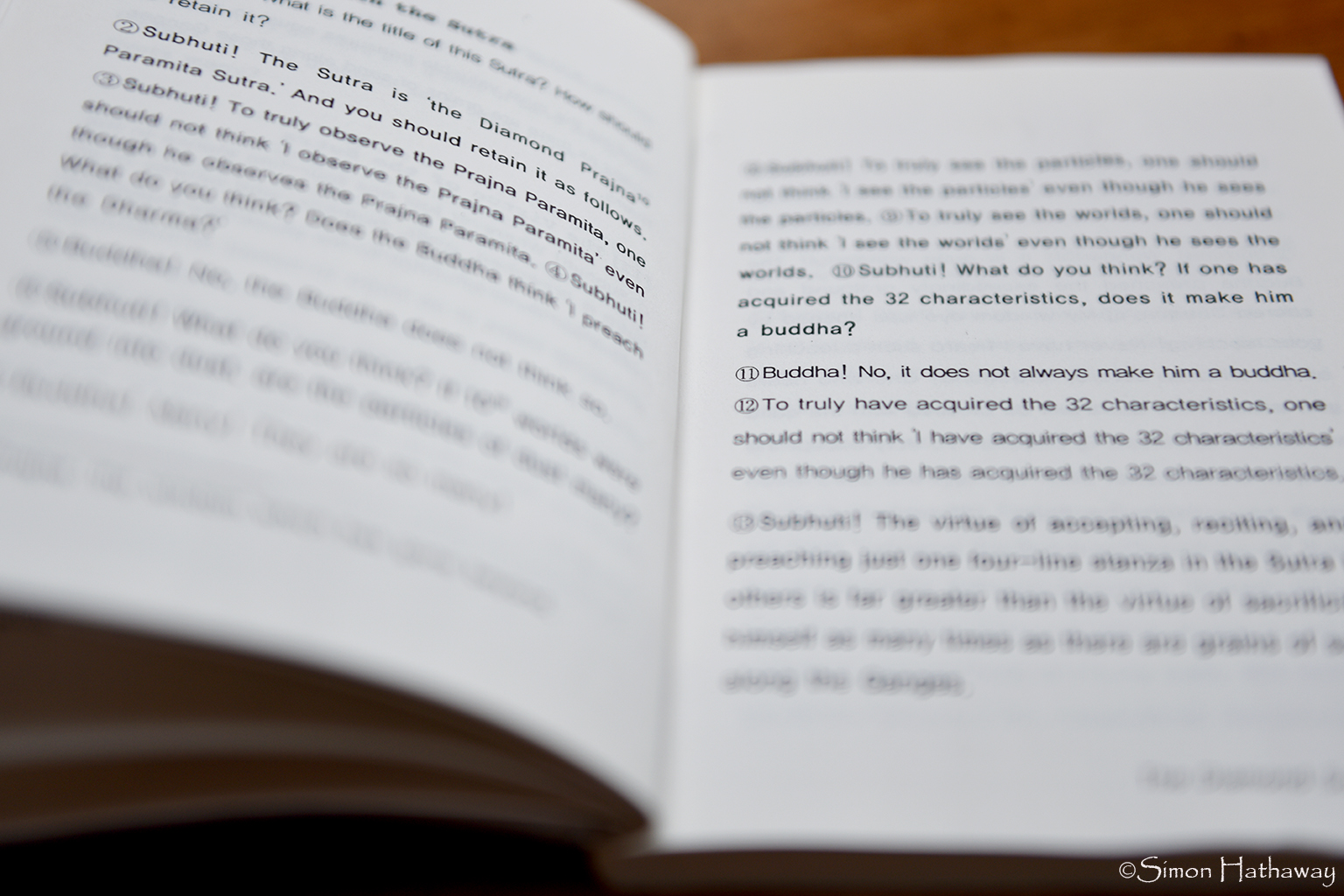
The Avatamsaka Sutra warns:

Those who are deluded and lack knowledge

take only the forms of the Four Elements and Five Aggregates.

Because they do not know the true-Self,

they fail to see the Buddha.

Even if one sees the Buddha constantly for hundreds of thousands of eons,

if they do not rely on the True Principle

and only look at Sakyamuni Buddha as the Buddha,

they are merely clinging to form.

They will only increase the net of foolish doubt

and remain imprisoned in the cycle of birth and death.

This means that if we mistake the physical body (composed of the four elements and five aggregates) of Sakyamuni Buddha for the True Buddha, we cannot escape birth and death. Just as the term Perfect Wisdom was an expedient means to reveal the true-Self, the thirty-two Marks were also not intended as literal descriptions, but as tools to reveal the formless true-Self.

As ancient masters said, “If words are not words, then every word is the true-Self.” To truly read the scriptures is to see every single letter and word as the functioning of the true-Self. When you can see the true-Self even within the phrase thirty-two Marks, you are reading this Sutra correctly.

Disciple: “What does the Buddha look like?”

Master: “He possesses the thirty-two Marks.”

Disciple: “The Buddha taught that the thirty-two Marks are not the thirty-two Marks but merely a name, warning us not to be deceived by words and forms. Why then do you say he has the thirty-two Marks?”

Master: “Because you are still being deceived by words and forms.”

If you know the thirty-two Marks are not the thirty-two Marks,

you will see the Buddha within those very marks.

This is because illusions themselves are enlightenment.

Koan:

Yabo said, “Having borrowed the grandmother’s clothes, one bows to the grandmother.”

Question: What is the meaning of Yabo’s statement?

©Boo Ahm

All writing ©Boo Ahm. All images ©Simon Hathaway
zen

The teaching that things neither exist nor non-exist still doesn’t make clear sense to me.

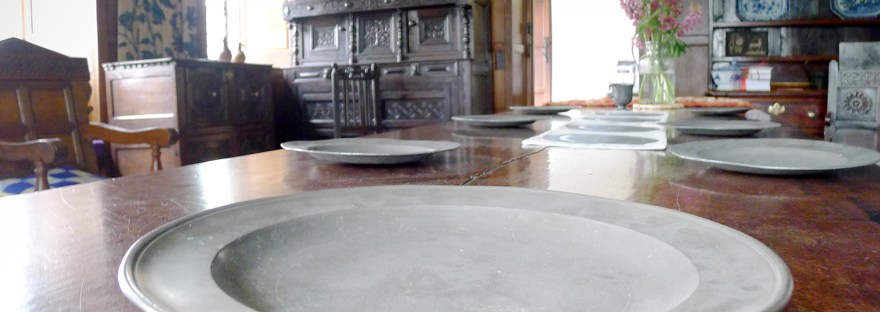
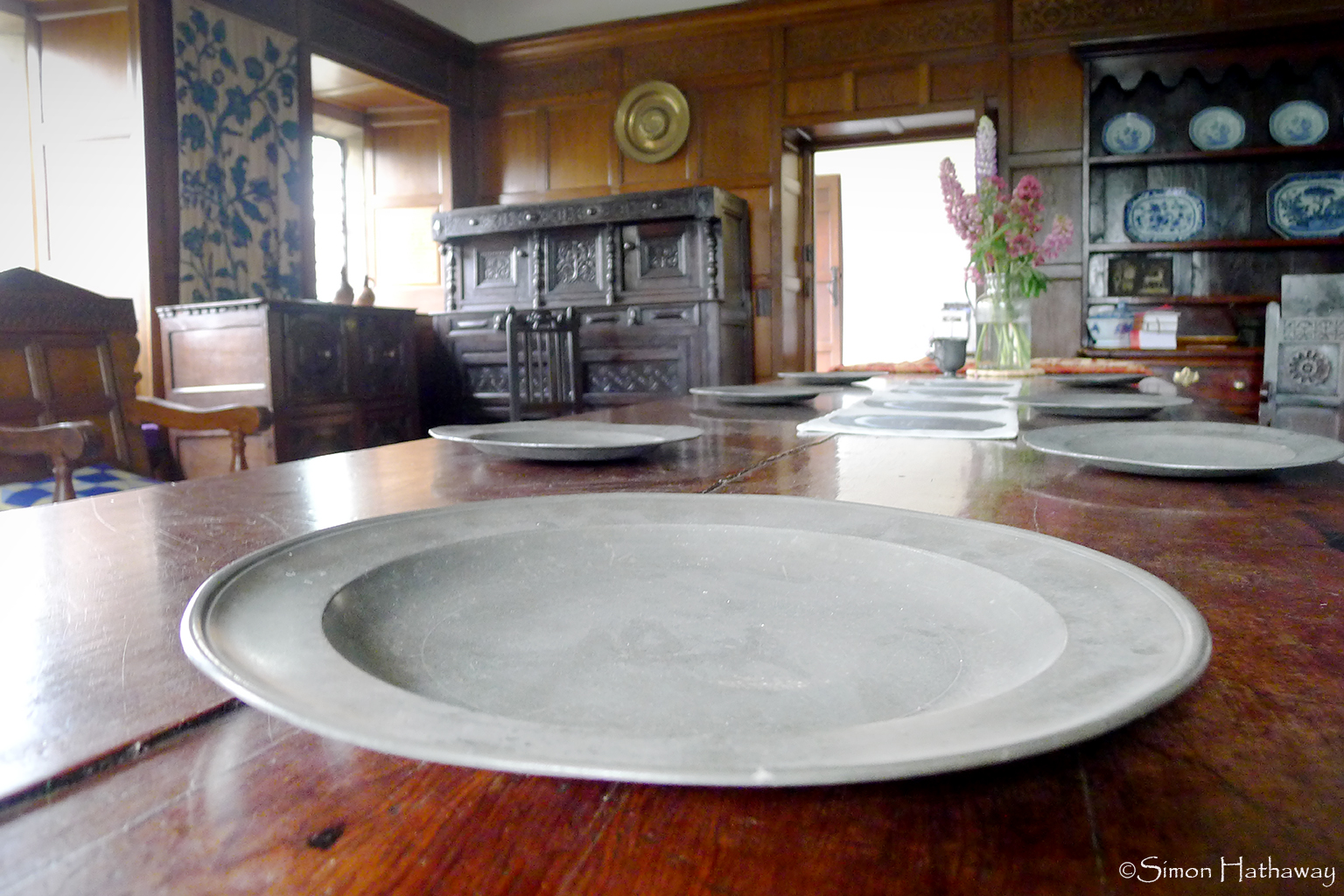
It means that everything is empty. In other words, not only whether a thing exists, or not but also its identity depends on our perspective. Let’s suppose we have a gorgeous long table here that can hold more than twenty people. We are faced with a problem now; a party is supposed to be held here this evening and a stage on which a guest singer will perform on is needed. After a brainstorming, we decide to use our long table as a stage by decorating it with a red carpet and some flowers.

In the evening it becomes a nice stage. Then, is this a table, or a stage. If we say it is a stage, where is the table we used for dining? When we use it as a table after the party, where is the stage? When we use it as a table, we cannot say that the table doesn’t exist.

When we use it as a stage, we cannot say that the table exists.

In essence, there is neither a table nor a stage. The object we use as a table, or a stage never declared its identity as a table, or a stage. It is a table when we think it is a table and it is a stage when we think it is a stage. This is why it is said that things neither exist nor non-exist.

©Boo Ahm

All writing ©Boo Ahm. All images ©Simon Hathaway
zen

Namchun’s ‘Cats and Cows’ (3)

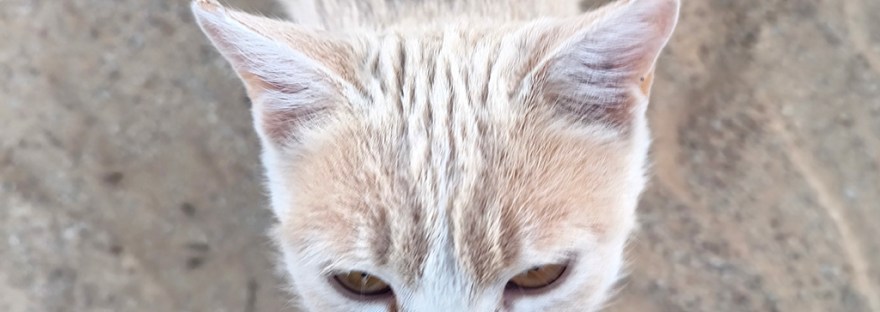
One day Master Namchun said, “No Buddha of the three worlds knows it, but rather a cat, or white cow knows it.”

Student: “How is it when all the Buddhas of the three worlds don’t know, yet a cat, or a white cow knows instead?”

Master: “The former are not wise, and the latter is not foolish.”

Commentary:

There is neither wisdom nor ignorance in the Pure Land.

©Boo Ahm

All writing ©Boo Ahm. All images ©Simon Hathaway
zen

The Diamond Sutra 2 (39)

Part 13-4

“Subhuti, what do you think—are there many particles of dust in a billion-world universe?”

Subhuti said, “Very many, World Honoured One.”

“Subhuti, all those particles of dust the Realised One says are not dust, they are just called dust. The universe that the Realised One says is not the universe, but it is just called the universe.”

Commentary:

The Avatamsaka Sutra states:

When ordinary people see all phenomena,

they are shaken by following only appearances.

Because they do not know that phenomena have no fixed form,

they fail to see the Buddha.

Knowing that sentient beings struggle to escape words and forms, the Buddha repeatedly emphasised in the Diamond Sutra that the Buddha Dharma, Adornment of Buddha lands, and Perfect Wisdom are not thosethings themselves, but merely names. Even in the Avatamsaka Sutra, when he describes countless worlds—such as the world of Exquisite Sound or Treasure-Adorned Light—he is emphasising once again: do not be deceived by the names and forms of these myriad worlds. Look and listen clearly to see the true-Self within them.

If we apply this to ourselves: the world we live in is not the world, but is merely named the world, the Earth is not the Earth, but is just named the Earth. We who live upon it are not humans, but are named humans. When I look at a flower, the flower is not a flower and I am not I. When both the flower and the I who sees it disappear, the distinction between us vanishes and we become one.

The Avatamsaka Sutra says:

The act of seeing, the object seen,

and even the one who sees—all must be erased.

Only then do you not destroy the True Dharma;

only such a person can know the Buddha.

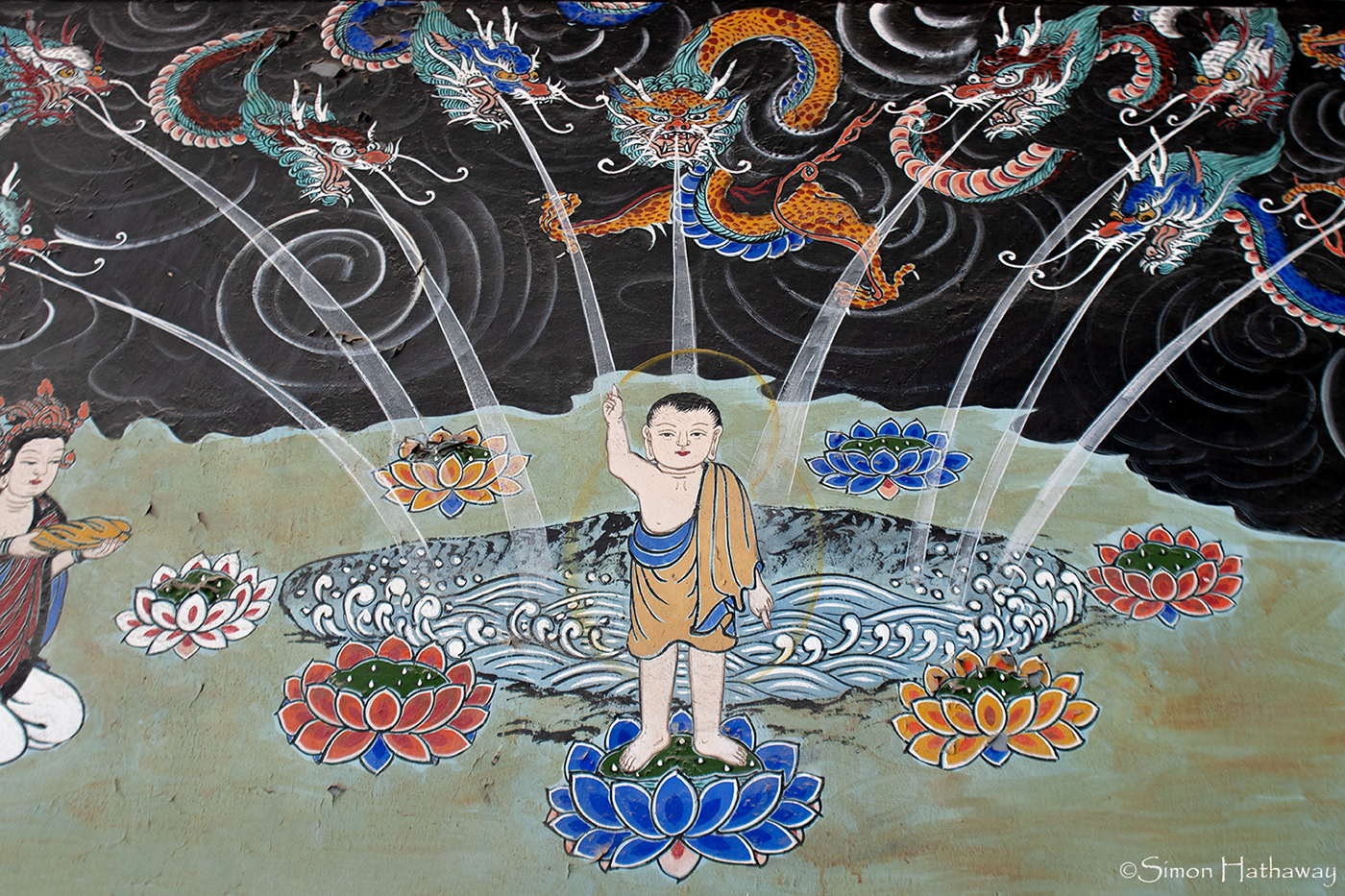
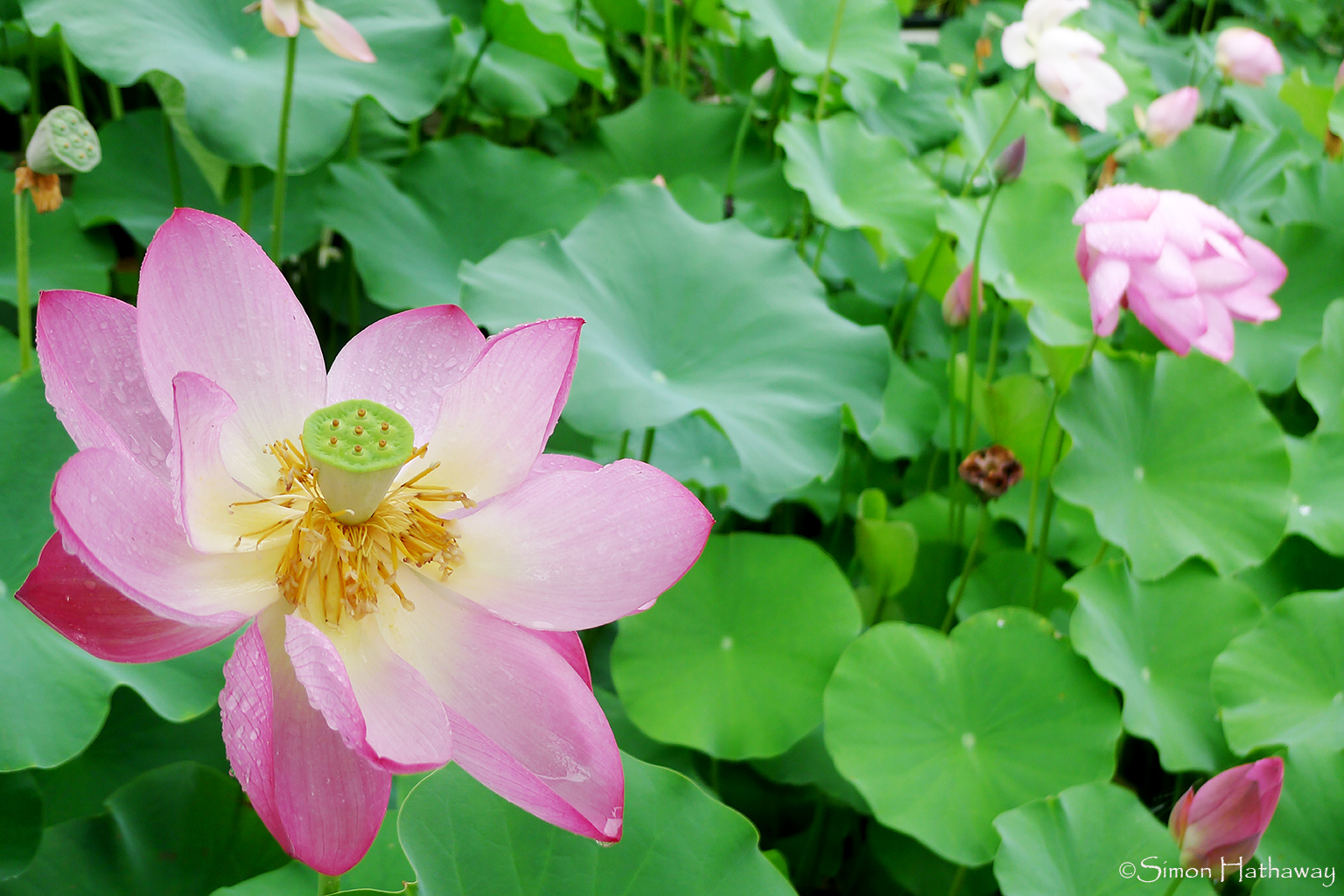
This state—where the True Dharma of Emptiness is realised—is expressed as ‘In the heavens and on earth, I alone am the honoured one’. In this realm, everything is vivid, yet because the subject and object have become one non-dual, one can neither say they are seeing nor not seeing. This is what it means to see the True Dharma. To see in this way is to see Emptiness within Form and to see the Buddha in everything. This is called ‘Seeing lotus flowers everywhere’.

Disciple: “What is it like when the seen object and the seeing ‘I’ become one?”

Master: “If I were to answer, I would be committing the same error you are committing.”

Since a speck of dust is not a speck of dust,

the dust is not small.

Since the world is not the world,

the world is not large.

There is no difference between the two;

they enter and leave each other freely,

and their radiance covers the universe.

Koan:

A monk asked Yunmen, “What is it like when the tree withers and the leaves fall?”

Yunmen replied: “The whole body is revealed in the autumn wind.”

Question: What is it like when the whole body is revealed in the autumn wind?

©Boo Ahm

All writing ©Boo Ahm. All images ©Simon Hathaway
zen

Although I know that all things are one, I still find myself trying to attain what is right and discard what is wrong.

One. If you have come to the realisation that all things are one, you will not be faced with the problem you raise now.

The other. You should not think that the enlightened don’t discern what is right from what is wrong in their lives. Although they distinguish right from wrong, they are never attached to the distinctions they make, because they know that they are empty.

Try your best to attain what is right and discard what is wrong. Without doing so, your life would be impossible. But don’t be attached to your decision. 

What matters now is not your trying to attain what is right and discard what is wrong but your attachment to your distinctions. 

©Boo Ahm

All writing ©Boo Ahm. All images ©Simon Hathaway

zen

Namchun’s ‘Cats and Cows’ (2)

One day Master Namchun said, “No Buddha of the three worlds knows it, but rather a cat, or white cow knows it.”

Student: “How is it when all the Buddhas don’t know?”

Master: “They showed their modesty.”

Student: “How is it when a cat, or a white cow knows?”

Master: “It shows its honesty.”

Commentary:

Modesty and honesty are from the same root.

©Boo Ahm

All writing ©Boo Ahm. All images ©Simon Hathaway

zen

The Diamond Sutra 2 (38)

Part 13-3

“What do you think, Subhuti—is there any doctrine that the Realised One has preached?” Subhuti said to the Buddha, “World Honoured One, there is no doctrine that the Realised One has preached.”

Commentary:

The purpose of the Buddha’s preaching was to reveal the formless and nameless true-Self through the expedient means of words. Our purpose in reading the scriptures must align with this: to see the essence of our existence —the true-Self (Buddha-nature, Emptiness, Buddha).

However, sentient beings have a long-standing habit of clinging to words and forms. If the Buddha says, “All things are empty,” they cling to the phrase ‘all things are empty’. If he says, “Do not cling,” they cling to the command ‘do not cling’. Knowing this, in the preceding section (parts 13-1, 2), the Buddha warned his disciples not to be deceived by his expedient words, saying, “The Perfect Wisdom that the Buddha himself speaks of is not Perfect Wisdom; it is merely named Perfect Wisdom.” Following this, he spoke even more forcefully, stating that he has never taught any Dharma at all.

If we take the text literally and believe there is no Dharma taught, how should we view the Sutra we are reading now? If we simply accept ‘there is no Dharma taught’ as a factual statement, we are once again being deceived by words.

The Avatamsaka Sutra says, “By vainly discriminating the Dharma explained in words with meagre wisdom, obstacles arise, and one fails to know their own mind.” Ancient masters also said, “The words of the Buddha cannot be engraved on paper or stone.” In short, the Buddha spoke words that are not words to reveal the true-Self that cannot be captured in writing. If sentient beings try to understand this through discrimination based on shallow intellectual knowledge, they will ultimately fail to understand.

Bodhidharma once said, “If you know that words are not words, then speaking all day long is the Way. But for those who follow words, even a whole day of silence is not the Way.” This means that whether you are reading the Sutra, or living your daily life, you must see every word and phrase as the functioning of the true-Self. If you can see and hear this way, you will see the Buddha in every word and phrase of the Sutra. Furthermore, you will realise that everything you see and hear—including your own speech and every sound you create—is the functioning of the true-Self.

When this happens, you cannot help but see the true-Self at every moment, everywhere; you cannot avoid it even if you try.

Thus, Bodhidharma said:

When one knows, the Dharma follows the person.

When one does not know, the person follows the Dharma.

When the Dharma follows the person, even what is not Dharma becomes Dharma.

When the person follows the Dharma, even the Dharma becomes non-Dharma.

When the person follows the Dharma, all Dharma is false.

When the Dharma follows the person, all Dharma is true.

He further warned that reading the Sutras while only following the words without knowing this principle is useless by saying, “If you do not see your own true-Self, there is no benefit in chanting the Buddha’s name, reciting Sutras, performing rituals, or keeping the precepts.”

Disciple: “If there is no Dharma taught by the Buddha, what is the Buddha’s teaching?”

Master: “His teaching is not words.”

Disciple: “If it is not words, then what is it?”

Master: “It is not difficult to tell you, but I fear you will misinterpret it.”

Disciple: “Please tell me.”

Master: “His teaching is words.”

Koan:

A monk asked Master Joshu, “It is said that the Supreme Way is not difficult; it only avoids choosing. What is it not to choose?” Joshu: “In the heavens and on earth, I alone am the honoured one.” Monk: “That itself is still choosing.” Joshu: “You dimwit! Where is the choosing?”

Question 1: Why did Joshu say, “In the heavens and on earth, I alone am the honoured one,” in response to the monk’s question?

Question 2: Why did the monk respond to Joshu by saying, “That itself is still picking and choosing”?

Question 3: If you were in that monk’s position, how would you respond to Joshu’s remark, “You dimwit! Where is the choosing?”

©Boo Ahm

All writing ©Boo Ahm. All images ©Simon Hathaway
zen

“I” and “you,” this and that – they never truly appear as one.

Trying to see them as one is practice. Can you guess what you were like five hundred years ago, before you were born into this world? Can you say that what you were like was different from what a flower, or a bird was like five hundred years ago before it came into existence as a flower, or a bird? What do you think that you, the flower, and the bird will be like five hundred years from now?

No matter what you may be like, and no matter how different you may appear to be from the others in the world at the moment, you are one with them in essence as the earth, or as the universe. The purpose of Buddhism is to realise the truth in person through practice.

©Boo Ahm

All writing ©Boo Ahm. All images ©Simon Hathaway
zen

Daesu’s Cosmic Fire (2)

A monk asked Master Daesu, “When the cosmic fire blazes and the entire great thousand worlds collapse, does this also collapse along with them?”

“It collapses,” he replied. The monk said, “Then I will follow it.” The master said, “Follow it, then.”

Student: “How can we stay alive when this collapses with the entire great thousand worlds?”

Master: “Don’t flounder in vain to escape it.”

Commentary:

Don’t take splendid lotus flowers for raging flames.

©Boo Ahm

All writing ©Boo Ahm. All images ©Simon Hathaway

zen

The Diamond Sutra 2 (37)

Part 13-1, 2

Then Subhuti said to the Buddha. “World Honoured One, what is this sutra to be called? How should we uphold it?” The Buddha said to Subhuti, “This sutra is named Diamond Prajnaparamita; you should uphold it by this name. Why? Subhuti, the prajnaparamita explained by the Buddha is not prajnaparamita but just called prajnaparamita.”

Commentary:

When we speak of this Sutra, we are literally referring to the sermon titled The Diamond Sutra for Attaining Wisdom delivered by Sakyamuni Buddha at the Jetavana Monastery in Sravasti.

Diamond symbolises the ultimate strength that neither breaks nor changes.

Wisdom here means the perfection of wisdom.

Thus, it signifies unchanging, perfect wisdom, or the attainment of unchanging, perfect wisdom.

The core of Buddha’s teaching that we must keep in mind is that all things are empty — meaning non-dual, or that all things are one. Regardless of what the Buddha said, the purpose of his words was to reveal Emptiness, the Buddha-nature, which is non-dual.

As the Avatamsaka Sutra says, “The Buddha fills the world with a subtle voice, preaching the Dharma for countless eons; yet all those teachings are contained within a single word.”

This means that although terms like this Sutra or Wisdom, may sound different and seem to carry different meanings, they are merely expedient means created by the Buddha to help sentient beings recognise the formless and nameless Buddha-nature. In essence, they are all functions of the true-Self, Buddha-nature, we should know without being deluded by words.

This is why in part 8-3, it is said: “What is called the Buddha Dharma is not the Buddha Dharma.” In part 10-2, Subhuti says, “Adornment is not adornment; it is merely named adornment.” Similarly, the Buddha said, “Perfect Wisdom is not Perfect Wisdom; it is merely named Perfect Wisdom,” warning us not to be deceived by the words themselves. In other words, there is no separate, special thing called Diamond Sutra; rather, he is pointing to the very source from which the sound of those words arises. That source is the True Sutra that the Buddha intended, and one must clearly realise this.

As an ancient Zen master once said:

Everyone possesses their own Sutra,

but as it has no form or letters,

no one knows how to read it.

One who can read that Sutra

will enter Nirvana without birth or death,

will not seek the path of a Bodhisattva,

nor strive to become a Buddha.

Disciple: “How should I uphold this Sutra?”

Master: “See it as you wish, but I do not permit you to uphold it.”

Disciple: “Why do you forbid upholding it?”

Master: “To uphold it is to defile it.”

One should have no place where the mind abides.

To uphold is to abide.

If you abide, it is no longer Perfect Wisdom.

Koan:

When Joshu visited Yunju, Yunju said, “You are getting on in years; why do you not find a place to stay?”

“Where is the place I should stay?” Joshu asked.

Yunju replied, “There is an old temple site at the foot of the mountain.”

“Then why don’t you, Master, stay there yourself?” Joshu countered.

At this, Yunju remained silent.

Joshu then went to Sooyou. Sooyou also said, “You are getting on in years; why do you not find a place to stay?”

Joshu said, “Where is the place I should stay?”

“You are so old, yet you still do not even know where you should stay!” Sooyou replied.

Question 1: What is the meaning of Joshu’s response to Yunju: “Why don’t you, Master, stay there yourself?”

Question 2: What is the meaning of Sooyou’s remark: “You are so old, yet you still do not even know where you should stay!”?

©Boo Ahm

All writing ©Boo Ahm. All images ©Simon Hathaway