Enlightenment, Koan, Meditation, Mind, Truth, Zen

Q50. Student: What are you when your body is not you?

Master: Two plus three is five.
Student: I know that, too.
Master: Then you are a master, too.
Student: I didn’t ask you about numbers.
Master: I didn’t talk about numbers, either.

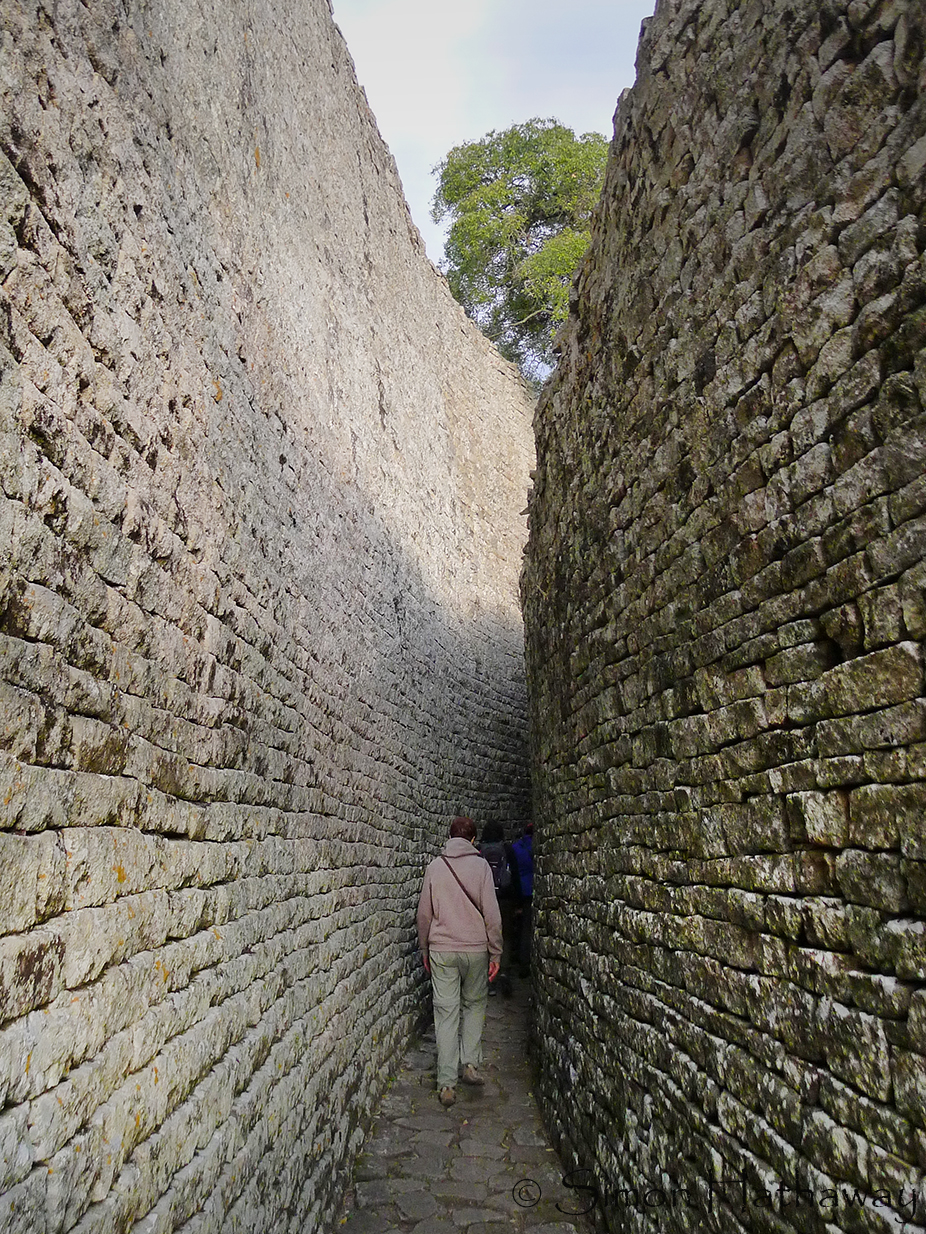
SRH_0343a_thumb - Copy

Commentary:
Master is pointing to the moon with his finger.
Why aren’t you looking at the moon but the finger?
If I were the student, I would say, “You are wrong, sir. Two plus three is seven.”

All writing ©Boo Ahm. All images ©Simon Hathaway.

Enlightenment, Meditation, Practice, Truth, Zen

Q49. Do we become emotionless, not feeling sad or happy after reaching the final goal?

A. Many people think we will not have feelings like sad, anger, pride, lust, happiness and so on after reaching the final goal. Some people use being emotionless as a scale to measure how much progress they have made in meditation progress. This is one of the most common wrong ideas about Zen meditation. Why should we continue our life, not to mention practising to reach the final goal, if we become emotionless like a wooden craft? We have the same feelings: feel sad when seeing sad things, angry when encountering unjust situations, and happy when seeing happy things.

File5448a_thumb - Copy

When we’ve reached the final goal, we can see things as they are, which means we can see things as neutral. Then we see things like a movie: we are sad during a sad movie and happy during a comic play. What counts is that we never become frustrated however sad the movie is and never become so attached to the movie as to disturb our life, since we know it is not real. Likewise, when coming upon a sad situation in reality, we feel sad but never feel so frustrated as to damage our life because we know it is neutral in itself. Meeting with a good thing, we feel happy but never become so proud of, or attached to it, as to mess up our life because you know it is also neutral in itself.
In a word, we have the same feelings but in a different dimension.

All writing ©Boo Ahm. All images ©Simon Hathaway.

Buddhism, Enlightenment, Happiness, Koan, Meditation, Practice, Truth, Zen

Q47. Student: What are you when your body is not you?

A. Master: A piece of cake.
Student: How does it taste?
Master: Bitter.
Student: What happens when we eat it?
Master: All die.

SRH_4318a_thumb - Copy

Commentary:
How mysterious!
It tastes bitter and kills all.
Why do people struggle to eat it?

When all die, all illusions die.
When all illusions die, you are eternity itself.

All writing ©Boo Ahm. All images ©Simon Hathaway.

Buddhism, Enlightenment, Meditation, Mind, Truth, Zen

Q46. I seem to have a lot of lust within me. How can I eliminate it from me?

A. If you do want to eliminate your lust and have compassion, don’t struggle to do away with the former, but try to know what it is. How could you remove it without knowing what it is? To know it, trace your lust back to its root whenever you feel it. On reaching the root, you will realise not only that lust comes from the same root that compassion is from, but that the root is the very final goal you long to reach, when you will be compassion itself. Remember that everything is from the same root.

_SRH4171a_thumb - Copy

Don’t try to remove your lust,
since it is another face of your compassion.
Don’t be attached to compassion,
since it is another face of lust.

All writing ©Boo Ahm. All images ©Simon Hathaway.

Buddhism, Enlightenment, Meditation, Truth, Zen

Q43. How can we remove our attachment?

A. You should know what attachment is and where it comes from before trying to remove it. It comes from your misunderstanding things. When you can’t see things as they are, you come to misunderstand them, or make illusions of things. Taking the illusions for real, we overestimate them just as we regard a piece of broken glass as a piece of diamond and a piece of rope as a snake, when we struggle to obtain or to run away from them by all means. In a word, attachment is our strong desire to possess or avoid something.

To eliminate our attachment we should be able to see things as they are, that is, see things as neutral, when our attachment will disappear of itself. However, we might hold it down for a time, but we are likely to fail to remove it permanently if we try to fight it off. We can persuade ourselves not to have attachment and hold it back for a time, in the way we give up a big sum of money beyond our reach, by fooling ourselves into saying to ourselves, “More money than is necessary for an ordinary life can ruin people, so I don’t like such big money.” However, the attachment can come out any time again when such big money seems to be within our reach because we still have the root of it.

P1060261a_thumb - Copy

Either focus on your question, or trace your attachment back to its root and you will feel it becoming weaker with time. On reaching the root of it, you will realise that its root is the very final goal you long to reach and that it is the same root from which your compassion stems, when your attachment turns into compassion of itself.

Not until we realise the fact that everything we value is neutral in itself: neither valuable nor worthless, can we root out our attachment.

All writing ©Boo Ahm. All images ©Simon Hathaway.

Koan, Meditation, Truth, Zen

Q42. Why can’t we see things as they are?

A. It is not because things don’t show themselves as they are, but our eyes and ears are veiled by illusions that have been accumulated since our birth.

I remember reading an article about implanting false memories. It said it is possible to manipulate and create false happy memories in mice during sleep, adding that they succeeded in creating false and happy memories in mice. The fact is that numerous information or knowledge has been implanted in us and the process is ongoing even at this moment; it will continue to our death and remain in us in the name of memory.

Memories become verbalised or are turned into languages for expression and conveyance, which makes languages essential to our life. Over time, we are so used to our languages that we can’t stop identifying words with our memories. A word always reminds us of a set memory associated with the word, which we are so accustomed to that we take words for reality. For example, a lady was so shocked to hear the terrible news that her daughter, studying abroad, had been killed by a car accident that she passed out and got sick in bed. A few days later, the news turned out to be wrong and she found that her daughter was in fact alive and could be around as usual soon. The lady was shocked and fainted because she took the words about her daughter for reality regardless of the truth. This is a good instance that shows how we mistake words for reality. In short, to identify words with reality is called ‘illusion,’ ‘form,’ or ‘boundary’ in Zen.

P1180092a_thumb

In our life, we not only get illusions implanted in ourselves but also implant them in others, and we often manipulate them in order that we may implant the ones that seem favourable to us. What counts here is that, when making our decisions, or choices, like whether a certain illusion is favourable to us or not, we depend on the illusions implanted in us. In a word, illusions create illusions, and we are so addicted to illusions that we cannot tell them apart from our reality, that is to say, we are trapped in the world of illusion. The purpose of Zen is to free people from the trap of illusion.

Of course, our life requires a lot of illusions and our education might mean to provide students with illusions that are thought to be necessary and useful in their future. Who dares to deny the fact that all the civilisations modern people enjoy rest on illusions? However, languages can be an obstacle in seeing things as they are, and conveying memories as they are, just as water gets in the way of a ship’s speeding up – though it is essential in the ship’s moving.

The purpose of Zen, it can be said, is to enable people to enjoy both the world of illusion and the world free of illusion at once.

All writing ©Boo Ahm. All images ©Simon Hathaway.

Buddhism, Koan, Truth, Zen

Q40. Why can’t you hear and see?

Whether a new born baby or an old person,
There is no one but answers your question.
Whether dead or alive,
There is no one but answers your question.
Whether a young flower or a broken bike,
There is nothing but answers your question.

SRH_6143a_thumb - Copy
Your eyes, your ears and even your mouth are full of the answers.
Oh, not hearing the answers is as difficult as hearing them.
Hearing and seeing nothing, you would be said to know the answer.

All writing ©Boo Ahm. All images ©Simon Hathaway.
Buddhism, Enlightenment, Koan, Meditation, Practice, Truth, Zen

Q36. What is a koan in Zen meditation? Why can’t I understand koans even though I have read a lot on meditation? They make no sense to me.

A. A koan is a sort of dialogue between a master and his students that is used to check whether they have reached the final goal. At the same time, it can be a good question you can practice with. It is just like a maths question in maths, in that a question can be used to test students on one hand and can be material to study on the other hand; so it can be referred to as a Zen question. If you understand perfectly the principle of a question, you can solve other questions easily. Koans might seem to be funny and even look like a joke. Sometimes they may seem to make no sense at all. However, once you have reached the final goal, you will understand how clever, correct and beautiful they are.

SRH_5614a_thumb - Copy

Some people think that each question has a single answer, and, memorising it, say they know the correct answer. The truth is that each koan has so many answers that we can’t say all the answers, even if we spend all our life saying the answers to a single question.
It is just like when five year old children are asked a maths question, “What is 3 + 2?” Not all, but most of them can provide only a single answer 5, because they have not mastered the four rules of arithmetic. However, most secondary school students know that though the answer to the question is 5, it can be said in countless other ways, such as 6 – 1, 1.5 + 3.5, 4 + 1, 4.8 + 0.2, 100 – 95 and so on. They also know that although each of the answers seemingly has a different form, all of them are perfectly correct answers.
If you expect to understand koans by reading books, it is natural for them to seem to make no sense at all. Trying to grasp them through reading is like trying to wash a mud-stained cloth with muddy water; it will make things more complicated, since koans are asked to check whether Zen students are freed from the illusions with which we are bound, but reading books is to create illusions. Only when you are freed from illusions can you understand them clearly.

All writing ©Boo Ahm. All images ©Simon Hathaway.