Bible, Buddha, Buddhism, Enlightenment, final goal, illusion, Meditation, Religion, sutras, Truth, Zen

Q100. I don’t understand that the Sutras and the Bible are also illusions.

A. Ancient masters used to say that a nice saying which sounds reasonable can be a strong trap. A saying or a word, however great and nice, is nothing but an illusion. No one denies, for example, the truth that the sun is a mass of flames. However, your lips are never hot, not to mention being burnt, no matter how many times you may recite the word ‘sun’. In other words, sayings or words are not the truth itself but an illusion.

SRH_2660b_thumb

The more reasonable a saying sounds, however, the stronger we tend to make our attachment to it while taking it for the truth itself. The Sutras and the Bible are very typical examples that have great sayings we are likely to be tempted to attach ourselves to. We have a very interesting metaphor for such cases that shows how we should accept spiritual teachings: Don’t look at the finger pointing to the moon but the moon itself. The Sutras and the Bible are just like fingers pointing to the moon for people who want to see the moon, but they are not the moon itself.
©Boo Ahm

All writing ©Boo Ahm. All images ©Simon Hathaway

Enlightenment, final goal, Koan, Meditation, Truth, Zen

Q99. Student: “What are you when your body is not you?”

A. Master: “I won’t answer.”
Student: “Why not?”
Master: Because I know that you won’t believe in my answer.
Student: “Tell me the answer, sir. I will accept it.”
Master: “I answered.”

P1020472b_thumb

Commentary:
The master is not telling a lie. Don’t break into pieces what he says.
©Boo Ahm

All writing ©Boo Ahm. All images ©Simon Hathaway

Buddha, Buddhism, Meditation, Truth, Zen

Q98. How far is hell from heaven?

A. It is as far as it is from the right to the left. All the time both are in the same place at the same time. As what is the right to one man can be the left to another, and what is the left today can be the right tomorrow, so what heaven is to one man can be hell to another, and what heaven is to a man today can be hell to him tomorrow. A jail, for example, is hell to the inmates there, but can be heaven to the officials who work there for a living these days when getting a job is so difficult. To a hungry, penniless man who is pursued and threatened by gangsters, prison can be heaven, a safe shelter because it provides him with food and security. In fact, there is neither hell nor heaven, just like there is neither the right nor the left. Whether a place is hell or heaven depends on the eyes of the beholder.

My Pictures0133a_thumb
©Boo Ahm

All writing ©Boo Ahm. All images ©Simon Hathaway

Enlightenment, final goal, Meditation, Truth, Zen

Q97. It is said everything looks different after enlightenment. Do things change after enlightenment?

A. No, nothing changes. Everything looks different after enlightenment not because things themselves change but because your perspective changes. In other words, you can see what you couldn’t see before. In fact there is nothing that deceives you. You deceive yourself because you can’t see things as they are.

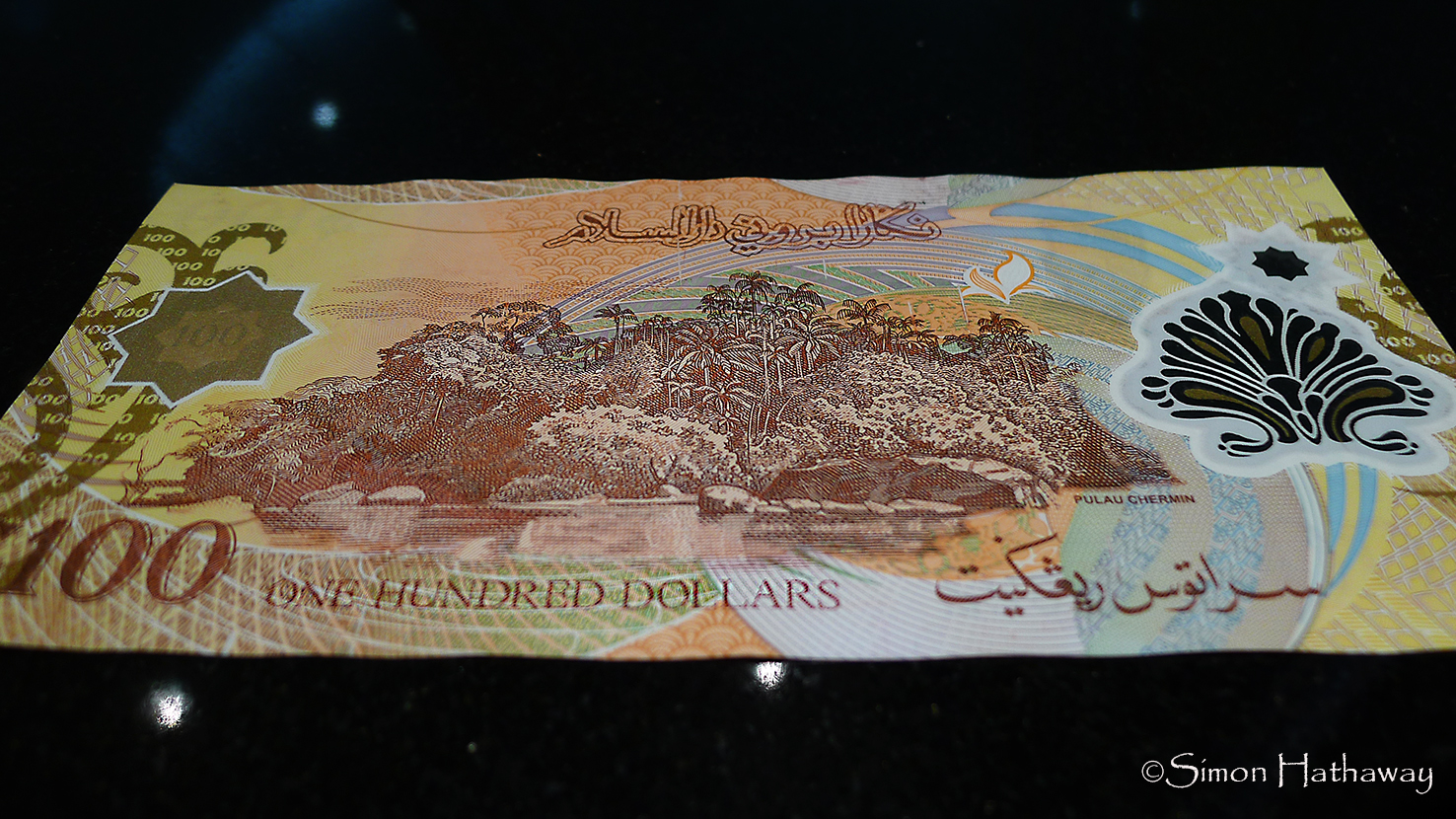
When you are scared of a piece of broken rope since you mistake it for a snake, which is to blame for it, you or the broken rope? If you, regarding a piece of broken glass as a piece of diamond, struggle to obtain it and get disappointed when failing to get it, which is to blame for it, you or the piece of broken glass? What does a hundred dollar bill mean? It means only a piece of paper, or sweets at most to a five year old child, but it means much more to an adult. Does the bill have ageism against children?

P1030919a_thumb
What changes is not the object you see, but the way you see it.

©Boo Ahm

All writing ©Boo Ahm. All images ©Simon Hathaway

Enlightenment, final goal, Meditation, Truth, Zen

Q95. What does ‘enjoy being still’ mean?

A. Most people think it means to enjoy sitting still with our mind focused on something like our breath or Zen question during the meditation practice. Of course we can have such a feeling during the practice, and the stillness we feel during the practice will grow deeper and deeper along with it. That is a very essential process which we go through in order to reach the final goal. However, that is not the stillness mentioned in Zen meditation because as soon as we stop the practice, the stillness breaks and we come back into the noisy world. The stillness that can be enjoyed only during practice is of no practical use in our life. The purpose of Zen meditation is not to change only a given part of our life at a given time, but to change our whole life. In other words, the stillness we pursue is not temporary but permanent stillness, which we can feel only when, after removing all illusions, we realise the whole universe is still all the time regardless of whether we practice or not. Then our life is always still and peaceful, and we can enjoy stillness all the time even in a busy street or a crowded market place.

_SRH5749a_thumb

If I were asked what stillness is, I would say,

“Ten volcanos erupt at the same time.”

©Boo Ahm

All writing ©Boo Ahm. All images ©Simon Hathaway
final goal, Meditation, Practice, Zen

Q94. I can’t pay all my attention to Zen practice even though I’d like to because my family wants me to share as much time as possible with them. What shall I do?

A. You should not allow your practice to a make mess of your normal life. If your practice makes your family unhappy in any way, I’d say, you’d better give up your practice. To practice Zen, while making your family unhappy is against the purpose of Zen meditation since it is to be happy.

If your family doesn’t want you to practice Zen, something is wrong with you, I think. If you practice in the right way, people around you including your family members are bound to like you more because you become more considerate, patient and open-minded.

SRH_7465a_thumb

Don’t think that you will complete your practice in a short period of time. In that way, you can avoid overworking yourself, becoming ill and neglecting your family, which could cause you trouble. The idea of reaching the final goal quickly can make you impatient, which rather disturbs your practice.

Look upon each of your family members as a gate to the final goal. Their smiling, laughing, crying, eating, and sleeping are all actions of the truth you want to reach. Ask yourself what is making your wife smile, when you see her smile, and what is controlling your children’s bodies when you see them play. All of this is Zen practice. Do remember that spending time with your family can also be good practice.

©Boo Ahm

All writing ©Boo Ahm. All images ©Simon Hathaway

Buddha, Buddhism, Enlightenment, final goal, Meditation, Truth, Zen

Q92. What is the truth, the final goal we are seeking like?

A. Not seeing it is more difficult than seeing it. In fact it is impossible not to see it. If you try to chase it even for a while, you are going the wrong way. Everything you see and hear is the shape and the sound of the truth itself and is showing and telling itself to you. If you can see or hear only a single thing that comes to your eyes or ears just as it is, you’ll have reached the final goal without moving a step. SRH_7389a ©Boo Ahm All writing ©Boo Ahm. All images ©Simon Hathaway

Enlightenment, final goal, Koan, Meditation, true self, Truth, Zen

Q91. What do you mean by ‘Everything is the gate to the truth’?

A. It means that everything you hear and see is teaching you. You can reach your final goal if you grasp this teaching. Let me give you an example.

Once upon a time a monk who had been practising Zen meditation with the Zen question, ‘What was your original face like before you were born?’ happened to be walking across a market place. He saw a group of people making a great fuss around a humble looking man. The fact was that this man was caught stealing some money from an elderly woman. Some bystanders in the crowd blamed him and some were feeling pity for him. One of them said to him, “You’ve lost your face now. How can you save your face before your family?” The poor man answered with his head bent, “I have no face to lose any more.” The moment the monk heard the phrase ‘I have no face to lose’, his question ‘What was your original face like before you were born?’ was solved perfectly. The trivial word from the humble thief was the greatest teaching to the monk that he had ever heard in his life. What would not be a gate to the truth, if even such a trifle as the thief’s words is the greatest teaching?

SRH_3799a_thumb

Do you want to hear the teaching of the truth?
Listen carefully to your family and neighbours.
©Boo Ahm
All writing ©Boo Ahm. All images ©Simon Hathaway