Buddhism, Mind, mindful, mindfulness, Practice, Truth, zen

Q57. Do we have to do away with all illusions in order to see the truth?

A. Absolutely not. You should know that escaping from illusions means not removing or destroying them but realising that all illusions are also the truth. We are apt to judge what seems, or sounds nice or holy, to be the truth and what seems bad or ugly to be an illusion. In fact everything we can see, hear, feel and imagine, whether good or bad and right or wrong, is the truth. There is nothing but the truth, which we can’t escape from even a moment. Not seeing it is much more difficult than seeing it.

Why can’t we see it? It is because our eyes are covered with the truth and not because it is too far away. In other words it is so near us that we don’t recognise it.

Don’t look away from illusions for the truth. That is to go after illusions turning your back on the truth. The truth is not separate from illusions. What you regard as illusions is the truth and what you look upon as the truth is illusions. Don’t try to do away with illusions. You can’t make it because they are not illusions but the truth. People who strive to eliminate illusions are those who don’t know what they are. How can you remove them when you don’t know what they are? Faced with what you think is an illusion, trace back to the root which the idea of the illusion stems from instead of making efforts to get rid of it. That is the very Zen practice.

SRH_0118a_thumb - Copy

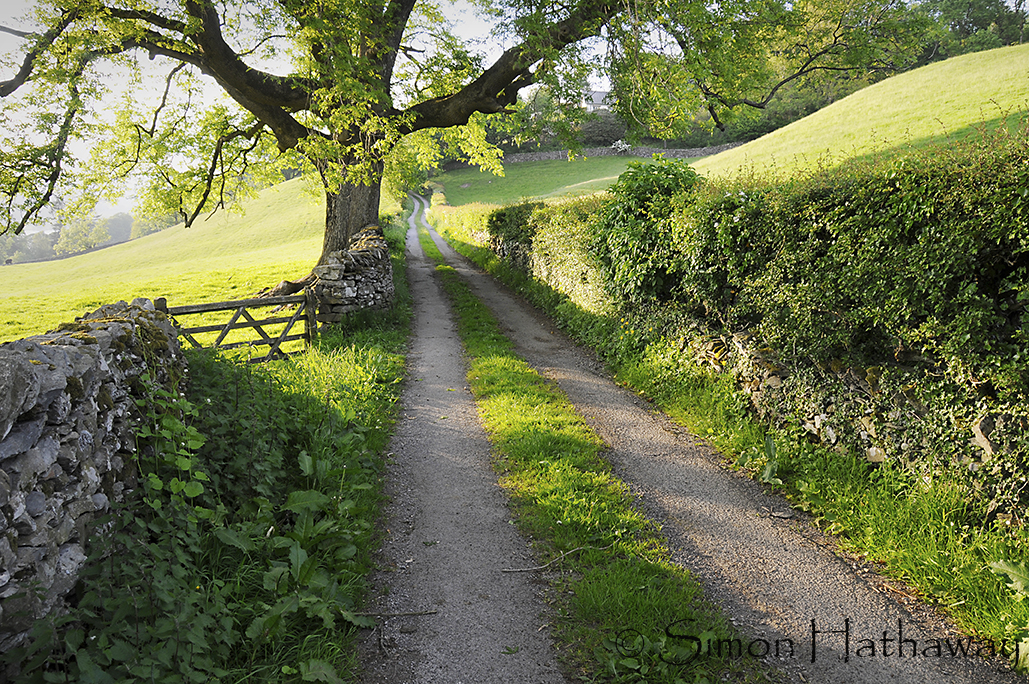
Never avoid illusions.
Never go after the truth.
If you stop avoiding and going after,
You will be motionless.
That is the way the truth is.

All writing ©Boo Ahm. All images ©Simon Hathaway.

Buddhism, Enlightenment, Practice, Truth, zen

Q55. How can I remove my ego?

A. Don’t try to remove your ego until you know what it is. You are likely to try hard in vain because you strive to eliminate something you don’t know. Though you say that you want to remove your ego, you actually don’t know what your ego is because you can’t see yourself as you are. How could you know what your ego is while not knowing yourself? You had better try to see yourself as you are instead of trying to eliminate your ego. When you can see yourself as you are, your ego will vanish of itself.

File0406a_thumb - Copy

All writing ©Boo Ahm. All images ©Simon Hathaway.
Happiness, mindfulness, zen

Q54. What do masters mean when they insist that we possess nothing?

A. It means we should escape perfectly from the trap of illusion without having a single illusion left. Ancient masters said that if we have a single illusion, it will fill the whole universe with illusions in no time. The Bible says that the poor are blessed. The poor here are those who have no illusion. People who have escaped from the trap of illusion are aware that everything in the universe is an illusion. Such people can be said to have nothing however much they have because they know all they have is nothing but an illusion.

File0438a_thumb - Copy

All writing ©Boo Ahm. All images ©Simon Hathaway.

Meditation, Mind, Practice, zen

Q52. What shall I do when I don’t seem to make any progress in my Zen practice?

A. That is a very common feeling novice practitioners can have. You don’t have to think you are not making progress because you don’t know what progress is like, and I wonder what your standard of making progress is. If you can keep good focus on the question, you are doing well regardless of whether you feel a change or not. If you can’t make concentration on your question, ask yourself what thinks you can’t make concentration and you are not making progress. In other words, trace back your negative thinking to its root.
Your negative thinking is the very form of your final goal.

SRH_4593a_thumb - Copy
All writing ©Boo Ahm. All images ©Simon Hathaway.

Buddhism, Practice, Truth, zen

Q51. What does it mean when masters say our true-self is holy?

A. When it is said to be very pure or holy, it means that it is perfectly free of illusions. All words and ideas are illusions, so even the idea of its being pure or holy is an illusion and defiles it. The fact is that it neither pure nor dirty and can’t be dirtied or stained by anything. That is why ancient masters would keep silent as an answer when they were asked what they were when their body was not them.

P1200603a_thumb - Copy

All writing ©Boo Ahm. All images ©Simon Hathaway.

Enlightenment, Koan, Meditation, Mind, Truth, zen

Q50. Student: What are you when your body is not you?

Master: Two plus three is five.
Student: I know that, too.
Master: Then you are a master, too.
Student: I didn’t ask you about numbers.
Master: I didn’t talk about numbers, either.

SRH_0343a_thumb - Copy

Commentary:
Master is pointing to the moon with his finger.
Why aren’t you looking at the moon but the finger?
If I were the student, I would say, “You are wrong, sir. Two plus three is seven.”

All writing ©Boo Ahm. All images ©Simon Hathaway.

Enlightenment, Meditation, Practice, Truth, zen

Q49. Do we become emotionless, not feeling sad or happy after reaching the final goal?

A. Many people think we will not have feelings like sad, anger, pride, lust, happiness and so on after reaching the final goal. Some people use being emotionless as a scale to measure how much progress they have made in meditation progress. This is one of the most common wrong ideas about Zen meditation. Why should we continue our life, not to mention practising to reach the final goal, if we become emotionless like a wooden craft? We have the same feelings: feel sad when seeing sad things, angry when encountering unjust situations, and happy when seeing happy things.

File5448a_thumb - Copy

When we’ve reached the final goal, we can see things as they are, which means we can see things as neutral. Then we see things like a movie: we are sad during a sad movie and happy during a comic play. What counts is that we never become frustrated however sad the movie is and never become so attached to the movie as to disturb our life, since we know it is not real. Likewise, when coming upon a sad situation in reality, we feel sad but never feel so frustrated as to damage our life because we know it is neutral in itself. Meeting with a good thing, we feel happy but never become so proud of, or attached to it, as to mess up our life because you know it is also neutral in itself.
In a word, we have the same feelings but in a different dimension.

All writing ©Boo Ahm. All images ©Simon Hathaway.
Enlightenment, Meditation, One, Truth, zen

Q48. When practising at home alone, how can I know whether I am doing well or not? Can I feel any change when doing well as told?

A. In the beginning you might feel it difficult to focus on your question, but it becomes easier and easier over time and the question will be internalised sooner or later.
Once your question becomes one with you, your practice feels very easy and even interesting, and you feel as if it is going on of itself, with little effort. Whatever you do, you feel your work is not separate from your practice, when we say work and practice are one. Then you start to feel what you couldn’t feel before: see and hear what you couldn’t see and hear before. For example, you can be surprised or shocked to hear a sound from a bird, a dog, a car, a person, the wind or anything. On hearing a sound, not knowing what it means, you feel it as the sound of the truth, feeling yourself becoming one with the universe. Sometimes you may feel as if your body has disappeared or collapsed down, becoming one with the universe. You are so happy at that moment that you might burst into tears.

SRH_8443a_thumb - Copy

The feeling doesn’t last long but your practice seems to go better and you get more confidence. Experiencing such changes, you come to grasp the words ‘see with ears and hear with eyes’. What is most important here is that you must not be attached to them, nor must you try to avoid them.
No matter how good or marvellous things are that you may experience; you must not attach yourself to them, keeping it in mind that it is also no more than an illusion. You should not be attached even to enlightenment.

All writing ©Boo Ahm. All images ©Simon Hathaway.