Buddha, Buddhism, Enlightenment, Koan, Meditation, Mind, now, root, self, true self, Truth, Uncategorized, Zen

Q166. How can we use our Dharma discussion as part of practice?

A. Discussions on Zen meditation and the Dharma are a very important part of our practice because we can help one another through them. In order to make the discussions efficient and helpful, special attitudes are required for these discussions, especially in the absence of a master who has can guide us.
When you ask your Zen friend a question, you should think you are not asking your friend, but Buddha the question and listen to him in the same way. When you are not satisfied with his answer, either because you don’t understand his answer or because you think he is giving a wrong answer, you should blame yourself for not understanding his perfect teaching rather than think he is wrong. You should keep in mind that he is telling you the truth regardless of whether his answer is right or wrong.

_SRH9361a_thumb


When you are asked a question, you should regard the questioner as Buddha and think you are being tested by Buddha. Be frank about your practice, and try your best to make the best answer you can. Be neither happy because he agrees with you, nor unhappy because he doesn’t, since his approval itself doesn’t advance your practice and his disapproval doesn’t disturb your progress.

When you ask, asking itself is important because the answer is in your asking. When you listen, listening itself is important because the answer is in your listening. When you answer, answering itself is important because the answer is in your answering. In summary, what matters is all in you, not out of you.
©Boo Ahm

All writing ©Boo Ahm. All images ©Simon Hathaway
Buddha, Buddhism, Enlightenment, final goal, Koan, Meditation, Mind, Practice, root, Truth, Uncategorized, Zen

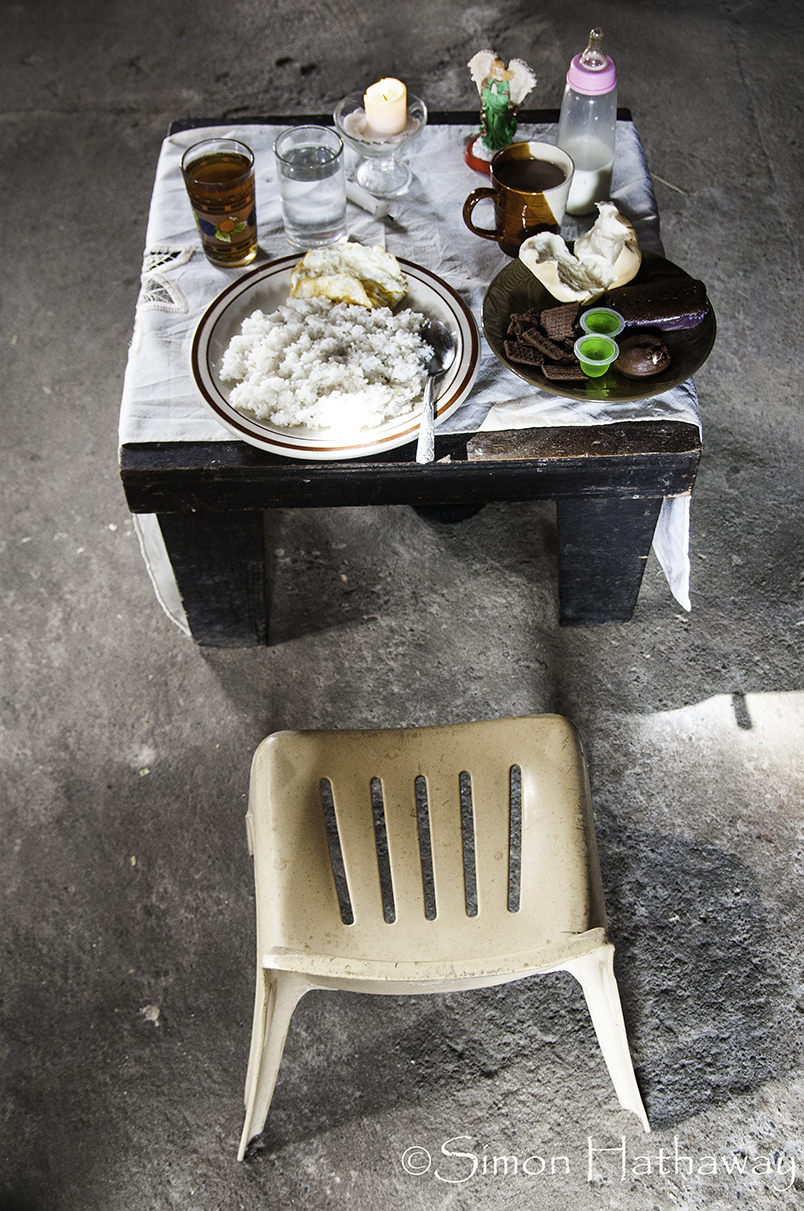
Q165. What am I when my body is not me?

A. You answered your question before you finished asking it.

Commentary:
Don’t complain that the bill is being given to you when you’ve not even seen your appetiser.
You are to blame for waiting for the appetiser without noticing the main course being served.

File12252a_thumb
©Boo Ahm

All writing ©Boo Ahm. All images ©Simon Hathaway
Buddha, Buddhism, Enlightenment, final goal, Meditation, Mind, Practice, true self, Truth, Uncategorized, Zen

Q164. To make concentration on the question feels very hard. Is Zen practice steadily difficult all the way until we reach the final goal?

A. In the beginning, you might feel it a little difficult to keep focused on the question for a long time. However, if you keep practising, your practice will grow easier and easier with time, and the duration of your concentration on the question becomes longer and longer until you reach the stage of becoming oneness with your question.

SRH_5494a_thumb


Once you get to this stage, your practice goes on by itself spontaneously all day long without your effort. You can’t separate your question from yourself or stop practising even though you try to stop it. Whatever you do; speak, listen or eat, you feel as if your question did it. Then your life itself becomes your practice and your practice is as easy as breathing.
©Boo Ahm

All writing ©Boo Ahm. All images ©Simon Hathaway
Buddha, Buddhism, Enlightenment, final goal, illusion, Koan, master, Meditation, Mind, Practice, root, true self, Truth, Uncategorized, Zen

Q163. I wonder why you say that we need no more practice after enlightenment, while most masters insist that we continue to practise after enlightenment.

A. What is enlightenment? It means to realise that everything is empty and an illusion. To the enlightened, there is nothing to obtain because everything is an illusion. They are aware that not only practice but also enlightenment is an illusion. Then, practice, to try to obtain enlightenment is to make another illusion. In brief, the purpose of practice is to remove illusions. Why should we make new illusions while trying to remove illusions?

P1050694a_thumb


Some people say it takes time to remove old bad habits that we have had for a lifetime even after enlightenment. However, the enlightened never make an artificial effort to remove them, but leave them alone to disappear by themselves of their own accord, because they know that not only old bad habits but also the disappearance of them is empty.
Waves in the sea, however wild, naturally grow calm with time when the storm stops.

 
©Boo Ahm

All writing ©Boo Ahm. All images ©Simon Hathaway

Buddha, Buddhism, Enlightenment, final goal, illusion, master, Meditation, Mind, One, Religion, root, self, student, true self, Truth, Uncategorized, Zen

Q162. Student: “What are you when your body is not you?”

A. Master: “I am you.”

Commentary:
Watch out!
You are prone to fall into the den of ghosts.

_DSC1166a_thumb


When the master is the student, what are they?
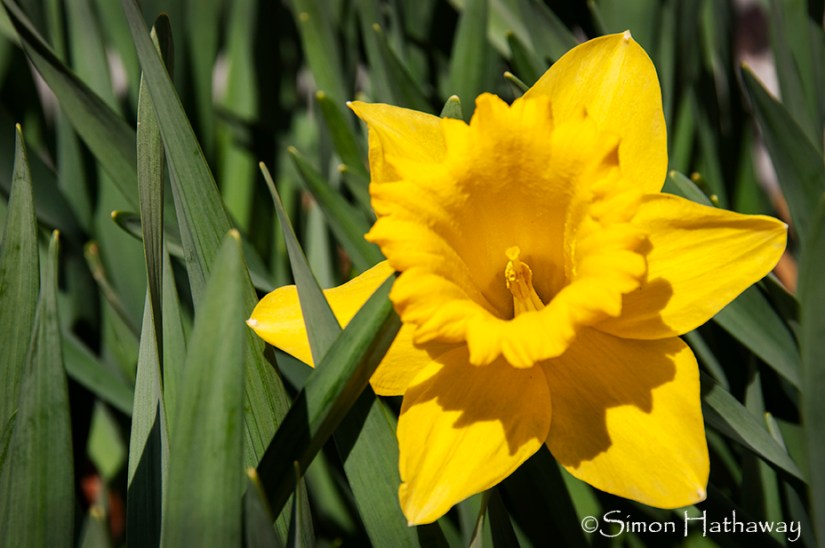
Daffodil.
©Boo Ahm

All writing ©Boo Ahm. All images ©Simon Hathaway

Buddha, Buddhism, desire, Enlightenment, Meditation, Mind, mindfulness, root, suffering, true self, Truth, Uncategorized, Zen

Q161. Is desire the motivation of life or the root of suffering?

A. This question is like asking whether we should view food as a cause of illness, such as obesity and diabetes, or a necessary thing for survival. Desire itself is neutral. It depends on you whether it is the motivation of life or the root of suffering. Try to see the root of your desire clearly when it occurs. When you realise it clearly, it is not only the motivation of life but also the root of happiness. It is when you don’t know what it is that it becomes the root of suffering.

_SRH3337a_thumb


However beautiful a thing may be, it is no more than an illusion as long as you don’t know the root from which it is from.
However ugly a thing may be, it is the truth itself when you know its root.
©Boo Ahm

All writing ©Boo Ahm. All images ©Simon Hathaway

Buddha, Buddhism, emptiness, empty, Enlightenment, final goal, Happiness, illusion, Meditation, mindful, mindfulness, One, Practice, root, self, true self, Truth, Uncategorized, Zen

Q160. If everything, even enlightenment is empty and just an illusion, why should we try to attain enlightenment?

A. If we really know that everything is an illusion, we don’t have to make an effort to attain enlightenment since enlightenment is also then an illusion. The reason for trying to obtain enlightenment is that we have not realised in person the truth while saying that everything is empty. The knowledge of enlightenment is not enlightenment itself. The former is as different from the latter as the knowledge of a meal is different from eating the meal. The knowledge of enlightenment can no more give us eternal happiness than the knowledge of food can satisfy our hunger. We practise in order to experience, in person, the truth that everything is empty.

P1080040a_thumb
©Boo Ahm

All writing ©Boo Ahm. All images ©Simon Hathaway

Buddha, Buddhism, Enlightenment, final goal, illusion, Koan, Meditation, Mind, mindful, Practice, true self, Truth, Uncategorized, Zen

Q159. How can I clap with one hand?

A. You already did.

Commentary:
The banker informs him that he is a billionaire, but he is still worried about his next meal.

SRH_6906a_thumb


©Boo Ahm

All writing ©Boo Ahm. All images ©Simon Hathaway
Buddha, Buddhism, Enlightenment, final goal, Happiness, illusion, Meditation, Mind, mindful, mindfulness, Practice, Religion, root, self, Uncategorized, Zen

Q158. How can we, sentient beings, know Buddha?

A. I never ask you to try to know Buddha that seems to be far above us. Now I am encouraging you to realise what a sentient being is because you know that you are a sentient being.
The key problem, however, is that you don’t know what a sentient being is, because you don’t know what you are even though you say that you are a sentient being. What matters is that Buddha is he who knows what a sentient being is, since Buddha is he who can see himself as he is because Buddha and sentient beings are from the same root. In brief, Buddha is none other than a sentient being who can see himself as he is.

SRH_8752a_thumb


A Buddha who can’t see his True-self is a sentient being.
A Sentient being who can see his True-self is a Buddha.

©Boo Ahm

All writing ©Boo Ahm. All images ©Simon Hathaway

Buddha, Buddhism, Enlightenment, illusion, Meditation, Mind, Practice, suffering, Uncategorized, Zen

Q157. How can we have less suffering when an unhappy thing happens to us?

A. Why do we have less fear than children when we get an injection in the hospital? Do we have less pain than children? When do we feel more pain, getting an injection while awake or while asleep? We feel much less suffering while awake because we can know the context before and after the injection: why we have to get it, what will happen after we get it, and what the feeling will be like, and we can get ourselves mentally ready to take it in advance.

However, being injected while asleep will make me feel more pain because we are not ready. Likewise, children feel more pain or suffering than grown-ups because they can’t understand the context including the fact that the injection will relieve them of the suffering they are undergoing now. In the same way, when we can see the essence of things we are going through by seeing things as they are, we can feel much less suffering than those who can’t see things as they are.

SRH_8799a_thumb
©Boo Ahm

All writing ©Boo Ahm. All images ©Simon Hathaway