Enlightenment, illusion, Meditation, Truth, Zen

Q85. Why am I still unhappy even though I know that all is an illusion?

A. Let’s suppose there is an sick man whose illness is so serious that he can’t move around. You give him medicine that can cure him of the illness. The next time you meet him, finding him still ill, you wonder if he took the medicine. You ask, “Did you take the medicine I gave to you?” He answers, “Of course, I did.” You say, “You don’t seem to have taken it. You still don’t look well.” He says, “I did take it. I will show you the evidence that I took it.” He throws up the medicine you gave him in front of you and shows it to you. It must be the very medicine you gave to him. Do you think he took the medicine? This is the way we accept spiritual teachings and read spiritual books.

When a patient takes medicine, the medicine must be absorbed into the system of his body and its form should disappear, in order to help him. The evidence that the patient took the medicine is not that he keeps the medicine intact in his stomach, not feeling better, but that he acts energetically and is in good shape after the medicine disappears into his tissues of his body.

We often regard remembering teachings from masters and the contents of books you read as mastering it. Knowing something as knowledge is one thing and experiencing it is another. Just keeping the truth as your knowledge without experiencing it through your body is like keeping medicine undigested in your stomach. Zen knowledge without experiencing the truth is no more helpful to your life than undigested medicine is to your body.

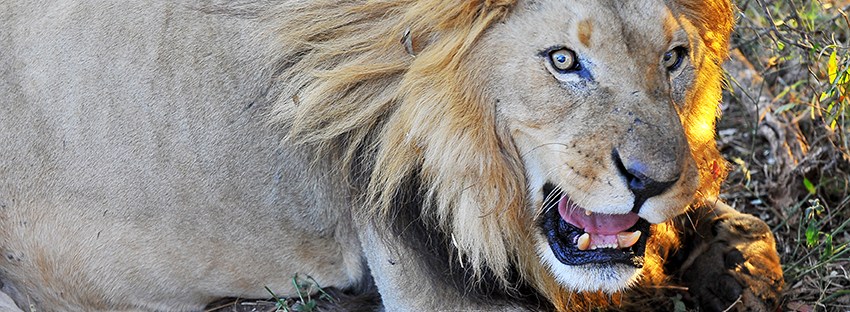
_SRH1068a_thumb

Don’t say you know that all is an illusion.
You are not aware of the truth at all.
What is worse,
you are not conscious of even the fact that you don’t know the truth.

You don’t know what you say since you can’t see yourself as you are.
When all is an illusion, you are also an illusion.
Who on earth is unhappy when you are an illusion?

©Boo Ahm

All writing ©Boo Ahm. All images ©Simon Hathaway.
Koan, Truth, Zen

Q84. Student: “Sir, what are you when your body is not you?”

A. Master: “Go and ask Tom, your senior.”
(He goes to Tom and asks him.)
Student: “What are you when your body is not you?”
Tom: “Go and ask my friend, John. I can’t tell you the answer now because I have a bad headache.”
(He goes to John and asks him.)
Student: “What are you when your body is not you?”
John: “I can’t tell you the answer since I am busy now. Why don’t you ask such a question of the master?”
(He returns to the master and tells him what Tom and John said to him.)
Master: “Tom’s hair is white, and John’s hair is black.”

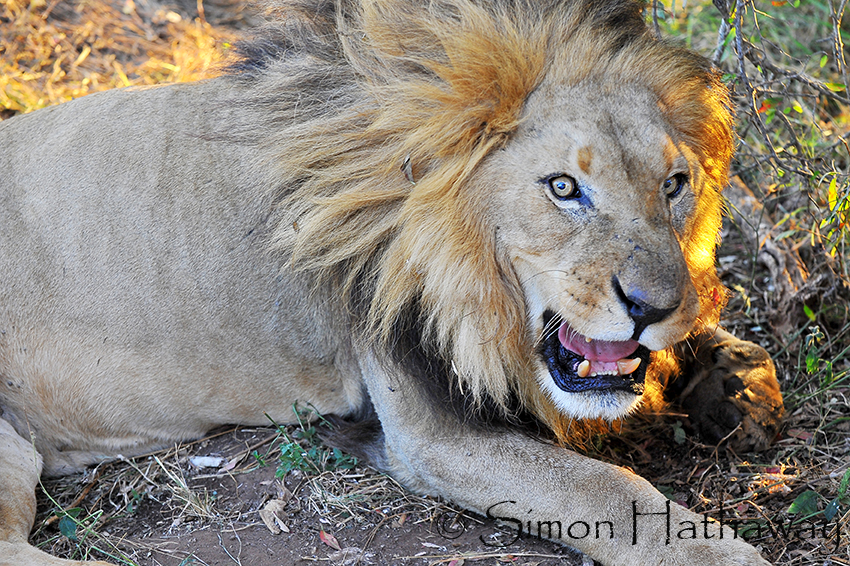
SRH_1893a_thumb

Commentary:
A dog dashes to the stone when it is thrown to it but a lion to the thrower.

©Boo Ahm

All writing ©Boo Ahm. All images ©Simon Hathaway.
Meditation, Truth, Zen

Q83. What would they think of people?

Autumn wind has no intention at all to cool people,
but they say it is cool.
A cow, producing milk, has no intention to give it to people,
but they say it is a beneficial animal.
A snake, producing poison, has no intention to harm people,
but they say it is a harmful animal.
What would they think of people?

_DSC1097a_thumb

©Boo Ahm

All writing ©Boo Ahm. All images ©Simon Hathaway.

Buddha, Buddhism, Enlightenment, final goal, Meditation, self, true self, Truth, Zen

Q82. I was told to treasure my True-self. How can I treasure it well?

A. In order to treasure your True-self, you, above all, should know exactly what it is. How can you treasure your True-self, if you don’t know it? You can’t treasure it whatever you may do unless you realise it through experience. However, once you realise your True-self through experience, you don’t have to try to treasure it because it is so perfect that there is nothing you can do for it. You can neither throw it away, treasure, destroy, purify nor protect it. It is always perfect without any change, regardless of whether you do something for it or not. If you have any intention to do something to treasure or protect it, it is also rather an illusion to stain it. So the best way to treasure your True-self is to realise it through experience.

_SRH7369b_thumb

©Boo Ahm

All writing ©Boo Ahm. All images ©Simon Hathaway.

Buddha, final goal, illusion, Koan, Meditation, self, Zen

Q80. What did ancient masters mean when saying, “Kill the Buddha”?

A. It is from the well-known saying in Zen, “If you want to see the Buddha, kill him if you should meet him.”
It means that you should break away the illusion of a thing when it comes to you if you are to see the essence of it. Most people have images of the Buddha although they have never seen him. It is indeed a very good example of an illusion. Illusions die hard because we are highly addicted to them, so masters employed strong language like that in order to put emphasis on eliminating illusions.

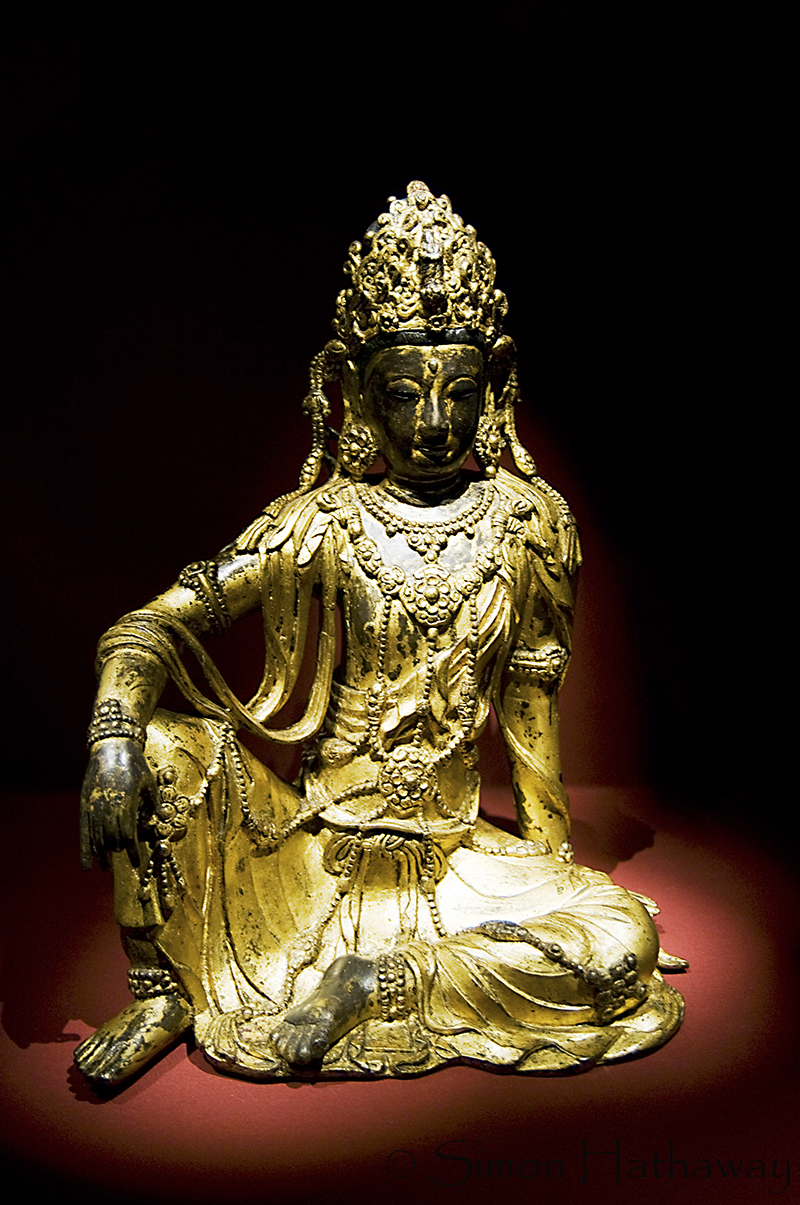
Bronze Bhudda_a_thumb

Likewise, if you are to see the essence of you, you should remove the image of you. The very typical image of you is your body, and I can tell you to kill yourself to convey my meaning that you should remove your established image of yourself, instead of telling you to ask yourself what you are when your body is not you. So “Kill the Buddha” mentioned above, means to perfectly remove the illusion of a thing in order to see the essence of it.

©Boo Ahm

Enlightenment, final goal, Koan, Truth, Zen

Q78. Master: ‘What are you doing here?’

A. Student: ‘I am doing nothing.’
Master: ‘Then you are sitting at leisure.’
Student: ‘Sitting at leisure is also doing.’
Master: ‘You say you are doing nothing. What are you not doing?’
Student: ‘Even saints don’t know it.’

_SRH9236a_thumb

Commentary:
He can be said to know how to do nothing.
If you knew who does what, you would know how to do nothing.

©Boo Ahm

final goal, illusion, Truth, Zen

Q77. Buddhism says, ‘Don’t kill a living thing.’ Can we live without killing any living things?

A. As long as we want to remain alive, we have to kill some living things to keep ourselves alive. Though, as a vegetarian, we don’t touch meat or fish, we can’t avoid killing countless invisible living things. All plants such as vegetables, for example, are living things, and countless micro-organisms, living things too small to see with naked eyes, are living on their surface. Feeding on plants, being a vegetarian means killing such living things as well.

_SRH8716a_thumb

So asking us not to kill a living thing is asking us to get out of illusions because we can’t help killing living things while living in the world of illusion. Getting out of illusion also means escaping from the trap of birth and death. In the world free of illusion, not only ourselves but also all other living things, escape from birth and death. Leaving ourselves to stay in the world of illusion is leaving both ourselves and all other living things to die. In other words, not trying to get out of illusions is to leave ourselves and all other living things alone to die, and to leave dying people and things alone that you can save is not different from killing them. So it means you should save not only yourself but also all living things by getting out of illusions, reaching the final goal.

©Boo Ahm

Enlightenment, final goal, illusion, Truth, Zen

Q76. How different is an illusion from the final goal, the truth?

A. In fact both are not different from each other, but they are one, just as sea and waves are not separate. There is nothing but the truth. If, regarding illusions as different from the truth, we try to remove illusions and reach the final goal, it is like trying to remove waves in order to see the sea. We should keep in mind that to eliminate illusions doesn’t mean to put the illusions away to another place, but means to change our viewpoint and realise that all illusions including us, are the truth itself we are looking for. ©Boo Ahm SRH_1462b_thumb

All writing ©Boo Ahm. All images ©Simon Hathaway.

Koan, Truth, Zen

Q75. Student: ‘What are you when your body is not you, sir?’

A. Master: ‘I don’t know. ‘
Student: ‘Why don’t you know?’
Master: ‘Don’t tell anyone that I said I didn’t know.’

Earth and Water_thumb

Commentary:
It is not for the sake of his reputation but for the sake of his student’s reputation that Master advises his student not to tell anyone that he said he didn’t know.

©Boo Ahm