A. Master: “A rat.”
Student: “Why do you say that you are a rat?”
Master: “Because of karma.”

Commentary:
Look and listen carefully.
It is not a rat but your eyes and ears that matter.
©Boo Ahm
All writing ©Boo Ahm. All images ©Simon Hathaway


A. Master: “A rat.”
Student: “Why do you say that you are a rat?”
Master: “Because of karma.”
Commentary:
Look and listen carefully.
It is not a rat but your eyes and ears that matter.
©Boo Ahm
All writing ©Boo Ahm. All images ©Simon Hathaway

A. When you have a stick, can you remove either end of it? Even if you cut off one end of it, there will still remain two ends even though the stick becomes a little shorter. No matter how many times you may cut off either end of it, you will still have both ends and find that the middle part becomes the end. The fact is that you can’t avoid having one end as long as you have the other end. This shows that there is no fixed end and that any part can be an end according to circumstances.

When we have an intention to do something good, we can’t avoid having an idea of something bad because there can’t be a good thing without a bad thing. As long as we have an intention to do good things, we can’t avoid discriminating things. Discriminating things is against the purpose of Zen meditation.
So masters said “Don’t try to do good things” in order to advise their students not to have discriminating minds.
©Boo Ahm
All writing ©Boo Ahm. All images ©Simon Hathaway

A. According to the Bible, man can’t have eternal happiness or find salvation because of the original sin he committed in the beginning of time. The sin was eating the fruit of the tree of life, and as a result, our mind became discriminating, which prevents us from seeing God. The Bible says that we can be forgiven for the sin and find salvation only by believing in God.
To find salvation means to return to the original state prior to eating the fruit. And to believe in God means to see God, just as the old saying goes, ‘Seeing is believing’. Seeing God is possible by removing the discriminating mind.

The Sutras say that whatever good things we may do, we can’t enjoy eternal happiness without life and death, even though we can enjoy temporary happiness, unless we realise the true-self by removing the discriminating mind.
The core teachings of Christianity and Buddhism are the same in that we can enjoy eternal happiness by eliminating the discriminating mind. Zen meditation is a practice to remove the discriminating mind.
So, to help Christians to remove their discriminating mind is to help them to overcome original sin.

A. Master: “Where are you from?”
Student: “I am from New York.”
Master: “How did you come?”
Student: “By plane.”
Master: “How is the weather there these days?”
Student: “Very fine.”
Master: “That’s all. Nothing else.”

Commentary:
Is that all? What is that?
When lost, turn back the way you’ve just come.
©Boo Ahm
All writing ©Boo Ahm. All images ©Simon Hathaway
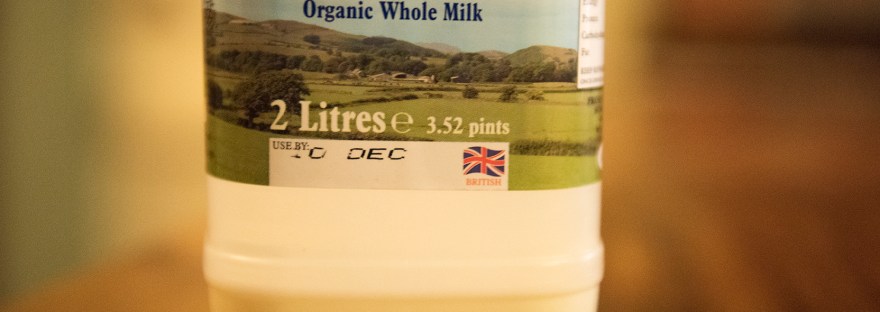
A. Milk. Milk.

Commentary:
Why do you see only water when the master says, ‘Milk’?
Look and listen the other way around.
©Boo Ahm
All writing ©Boo Ahm. All images ©Simon Hathaway

A. I think this is a question that can occur to you when you think your true-self is in your body and that it is so pure and holy that it has nothing to do with bad things like hell.
There is nothing larger than your true-self. Your true-self has infinite room left even when it houses millions of universes. All things imaginable, whether good or bad, happen only in your true-self. Nothing happens out of your mind. When you go to the hell, your going to hell happens in your true-self, and when going to the heaven, you go there in your true-self as well.

Your true-self never judges right or wrong since it is always neutral or empty. It has no heaven and no hell. It neither helps you go to the heaven nor prevents you from going to the hell and vice versa. It is your discrimination that creates heaven or hell and makes you go to it.
©Boo Ahm
All writing ©Boo Ahm. All images ©Simon Hathaway

A. This is not a matter of whether to fill or empty, but a matter of realising what the mind is. The ultimate end of Zen meditation is to realise what the mind that you are going to fill or empty is.

This question shows well how unaware we are of what we say and how imprudently we are seeking happiness. How could we fill or empty the mind while not knowing what it is? In fact, it is because you don’t know what your mind is that you have such an idea of filling or emptying it. Once you get to see it clearly, you will realise that it can’t be filled or emptied because it is perfect, and that you are happiness itself.
©Boo Ahm
All writing ©Boo Ahm. All images ©Simon Hathaway

Master: “A rat.”
Student: “Why do you say that you are a rat?”
Master: “What shall I say I am?
Student: “Buddha Nature.”
Master: “My rat is much better than your Buddha Nature.”
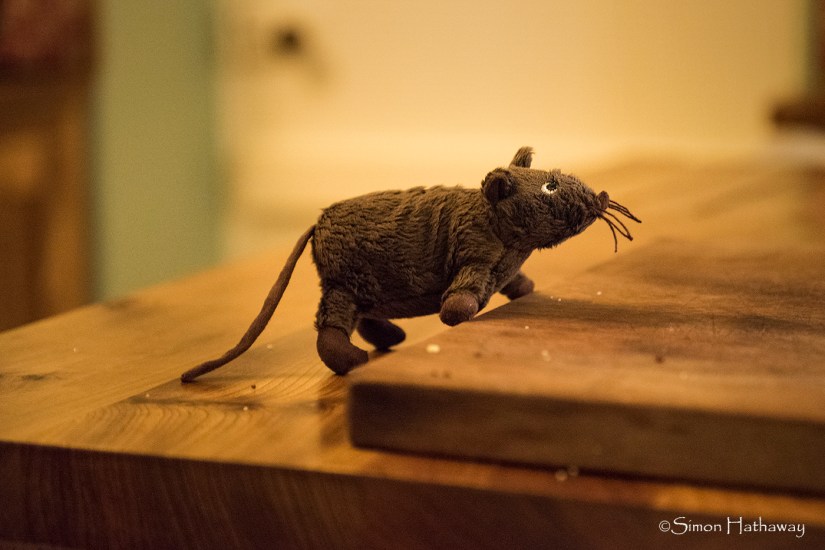
Commentary:
What a wonderful rat! What poor Buddha Nature!
A rat swallows Buddha Nature in a single gulp.
©Boo Ahm
All writing ©Boo Ahm. All images ©Simon Hathaway

A. You should depend on what you are depending on each moment. In fact, what matters now is not what to depend upon but whether or not you know what you are depending on this moment. Whatever you are doing now: speaking, listening, standing, sitting, drinking, and so on, you are doing it by depending on it. You are even reading this writing by being dependent upon it. You can’t do anything without it. The problem is that you don’t know what it is while relying on it.

To realise what you are depending on at this moment is to attain enlightenment. Ancient masters would say, “You are wandering around in search of a cow while riding it.”
©Boo Ahm
All writing ©Boo Ahm. All images ©Simon Hathaway

A. You can’t hide it.

Commentary:
Why don’t you recognise it while revealing it at every moment?
Don’t seek it and it will show itself.
©Boo Ahm
All writing ©Boo Ahm. All images ©Simon Hathaway
 Zen Fools