Buddha, Buddhism, God, illusion, Meditation, Practice, Religion, Truth, Zen

Q133. Do heaven and hell really exist?

A. Heaven is to hell what right is to left. As there is no left without the right and no right without the left, so there is no hell without heaven and no heaven without hell. In fact there is no fixed right or left, and whether something is the right or the left depends on beholder’s view. What is the right to someone can be the left to someone else. Likewise, what is heaven to someone can be hell to someone else. What is hell today can be heaven tomorrow and the other way around.

_SRH5037a_thumb

As long as we believe that heaven is one thing and hell is another, we are tricked by illusions of heaven and hell. What we pursue is not to avoid hell and go to heaven, but to realise the fact that both of them are illusions. That is called the middle path without extremes; no good and bad nor right and wrong.

©Boo Ahm

All writing ©Boo Ahm. All images ©Simon Hathaway

Buddha, Buddhism, Enlightenment, final goal, Meditation, Zen

Q131. Do we have to keep practising to maintain the final goal after reaching it?

A. Would you try to reach the universe even while knowing that you are part of it? Once you realise the fact that you cannot escape being part of the universe whatever you may do, why should you keep struggling to reach the universe? Likewise, once you reach the final goal, you don’t have to make any effort to maintain or stay in it because you can’t escape from it; you are the goal itself. Instead, you may well pity and help those who strive to reach the final goal to realise that they are already there.

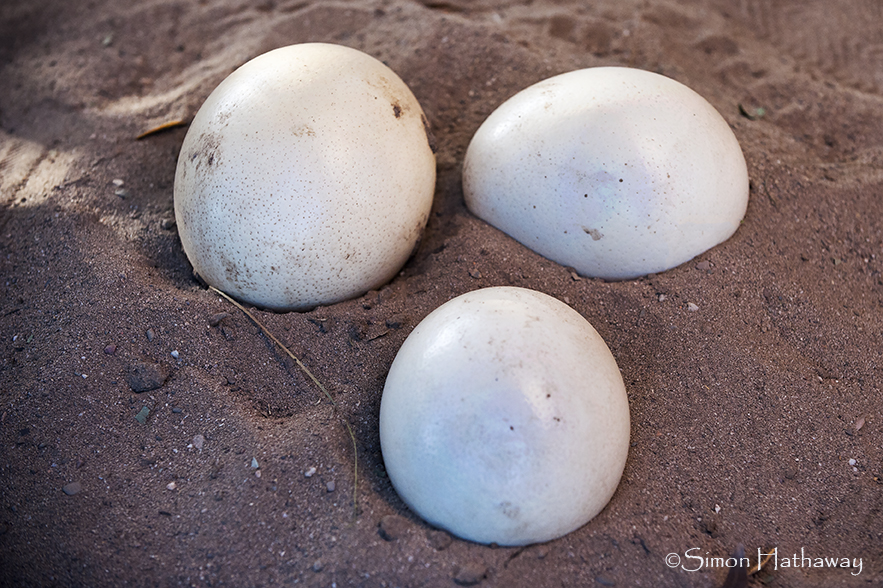
There are people who insist that we should continue to practice even after reaching the final goal. They believe that we will fall back to what we were if we do not continue practicing. In fact, we can no more return after reaching the final goal than a hatched chicken can go back into its egg. Once we reach the final goal, we will even feel that all the effort made was useless because we will realise that we were like a man struggling to reach his home while sitting in his living-room. If someone makes even a little effort to reach or stay in the universe, it shows that he still doesn’t know what the universe is. Likewise, if someone makes an effort to maintain or stay in the final goal, that is evidence that he is still blind to what the final goal is.

SRH_3053a_thumb

Though medicine is essential to a patient,
It is of no use to him any more once he gets well.

©Boo Ahm

All writing ©Boo Ahm. All images ©Simon Hathaway
Buddha, Buddhism, Enlightenment, master, Meditation, Practice, student, Zen

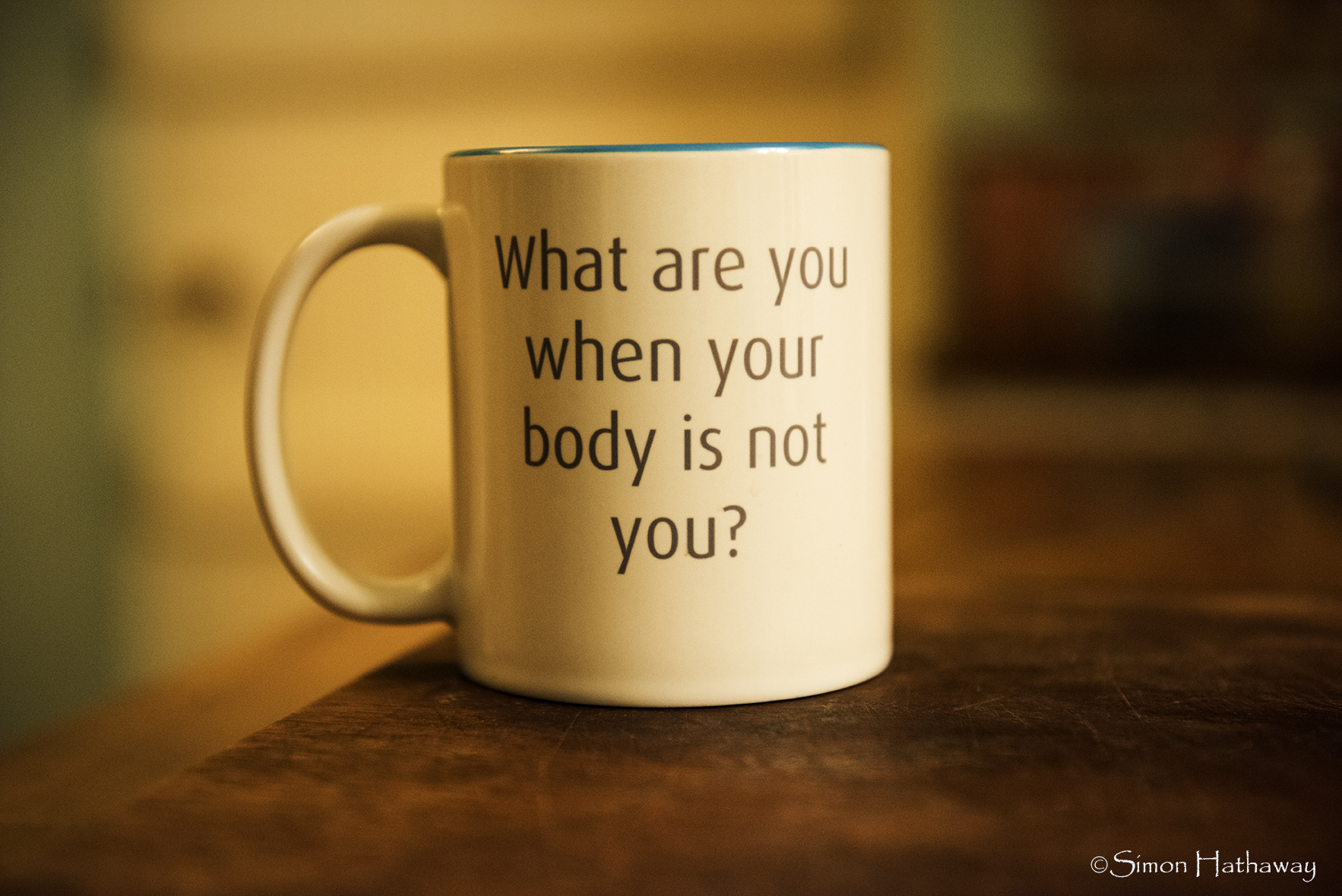
Q129. Student: “What are we when our bodies are not us?”

Master: “It can’t be explained with words.”
Student: “What is a word beyond words?”
Master: “Love.”
Student: “Beautiful!”
Master: “You made it dirty.”

My Pictures0009a_thumb

Commentary:
Beautiful?
What is beautiful?
Don’t mistake a beautiful lady’s dress for her.
©Boo Ahm

All writing ©Boo Ahm. All images ©Simon Hathaway

Buddha, Buddhism, desire, Happiness, illusion, Meditation, poisons, Truth, Zen

Q121. What are the three poisons that prevent us from being happy?

A. The first poison, ignorance, is the lack of ability to see things as they are. For instance, we look upon a piece of broken rope as a snake, or mistake rotten food for healthy food. When we can’t see things as they are like this, we are said to see illusions as real.

P1180565a_thumb

The second poison, greed, is the desire to get or avoid such illusions. When we are confused into seeing illusions as being real, we want to run away from illusions like a piece of broken rope that look awful or ugly, or strive to obtain illusions like rotten food that look attractive. Such desire is called greed.

Finally, when we struggle to obtain or avoid illusions that we mistake for being real, things usually don’t go as we desire. Repeated failures to achieve our goals, whether to avoid or obtain such illusions, cause us to lose our temper. Even if we sometimes succeed in achieving such illusions, we are disappointed or upset to see that they are not what we desired and don’t give us as much happiness as we expected. Such emotion, the third poison, is called anger.
©Boo Ahm

All writing ©Boo Ahm. All images ©Simon Hathaway

Buddha, Buddhism, Enlightenment, final goal, illusion, meditaion, Meditation, self, true self, Truth, Zen

Q109. If everything is the true-self, can I say that I am looking at my true-self while looking at this cup?

A. No, you can’t, because you are looking at a cup. As long as you see a cup as a cup, you can’t say that you see your true-self. Seeing a cup as a cup means seeing a car as a car and a person as a person, which means that all the labels or lines dividing one into many still remain. Your eyes, it is said, are covered with illusions or you are an open-eyed blind man.

SRH_2266a_thumb

The Buddha said, “If you realise that form is not form, you will see your true-self.”
Being able to see the cup as non-cup means that a car is not a car, a person is not a person any more to you and you are not you because all illusions have disappeared. The disappearance of all illusions means the disappearance of the lines that divide one into many. When all the lines disappear, many become one. There is no seer and no seen and no speaker and no listener in the situation where a cup is not a cup. It can be said that the seer is one with the seen, and speaker is one with the listener. There is nothing to mention, and speech is not speech any more here. Then everything, it is said, is the true-self. To experience this through your body in person is to realise the true-self.
©Boo Ahm

All writing ©Boo Ahm. All images ©Simon Hathaway

Buddha, Buddhism, illusion, Koan, Meditation, Practice, Truth, Zen

Q104. Sometimes angels appear during my practice. Am I practising in the wrong way? What shall I do?

A. There are times like that. I am sure that you are not wide awake to your question during the experience. Some people say that they see beautiful angels or even the Buddha and Jesus Christ, some say they see their late parents or grandparents, some say that they see their previous lives, and others say they see ghosts or monsters as if having a nightmare. Do remember that everything you experience during your practice is nothing but an illusion whether fantastic or terrible. When you experience something beautiful you have never experienced in your life before, you are apt to feel attracted by it. They are only the actions of your emotions hidden in your sub-consciousness. If you feel attached to great figures like the Buddha or Jesus and scared of the terrible figures, you are fooled by illusions. Leave them alone and focus on your question, and they will disappear by themselves.

SRH_3522a_thumb
©Boo Ahm

All writing ©Boo Ahm. All images ©Simon Hathaway

Buddha, Buddhism, Enlightenment, illusion, Meditation, Practice, true self, Truth, Zen

Q103. How can we feel oneness with our surroundings?

A. Why do you think we can’t feel oneness? The habit of labelling prevents us from feeling oneness. Labelling is drawing lines that divide one into many. When we label a thing as red, we separate it from what doesn’t look red. The label, ‘red’ is a line that divides one into what is red and what is not red. When labeling a thing as good, the label ‘good’ is a line that divides one into what is good and what is not good.

_SRH5590a_thumb

We have produced countless divisions and are so addicted to them that we have forgotten the root, the original shape that we come from. The labels or divisions are referred to as illusions in Buddhism because they are not real but imaginary. Zen meditation can be said to be a practice that makes many into one by eliminating all labels or illusions. The most common and difficult label to erase is ‘I’. In order to eliminate the ‘I’, you need to realise what you are when your body is not you. When we eliminate the imaginary line ‘I’, then we can feel oneness with our surroundings.

©Boo Ahm

All writing ©Boo Ahm. All images ©Simon Hathaway

Buddha, Buddhism, Enlightenment, final goal, illusion, Meditation, self, true self, Truth, Zen

Q101. Why can’t we see our true-self?

A. Don’t think that you can’t see it. You are seeing and hearing it even at this moment. You can’t avoid seeing and hearing it. The key problem is that you can’t discern it because your eyes and ears are covered with illusions. Never think that your true-self is somewhere else out of your reach. There is nothing that doesn’t belong to your true-self. Even you yourself are not an exception. Whatever you do, cry, smile, commit a cruel crime or do good deeds, they are all actions of your true-self. In summary, you can no more get away from your true-self even for a moment than you can get away from the universe. So if you chase it for a moment, it is said, you will be going the wrong way.

SRH_8400a_thumb

Student: “What is the true-self like, Sir?”
Master: “Why do you ask me the taste of your saliva in your mouth?”
©Boo Ahm

All writing ©Boo Ahm. All images ©Simon Hathaway