Bible, Buddha, Buddhism, Enlightenment, final goal, God, master, Meditation, Photography, Practice, Religion, root, student, sutras, true self, Truth, Uncategorized, Zen

Q338. What does the story of Noah’s Ark in Genesis mean?

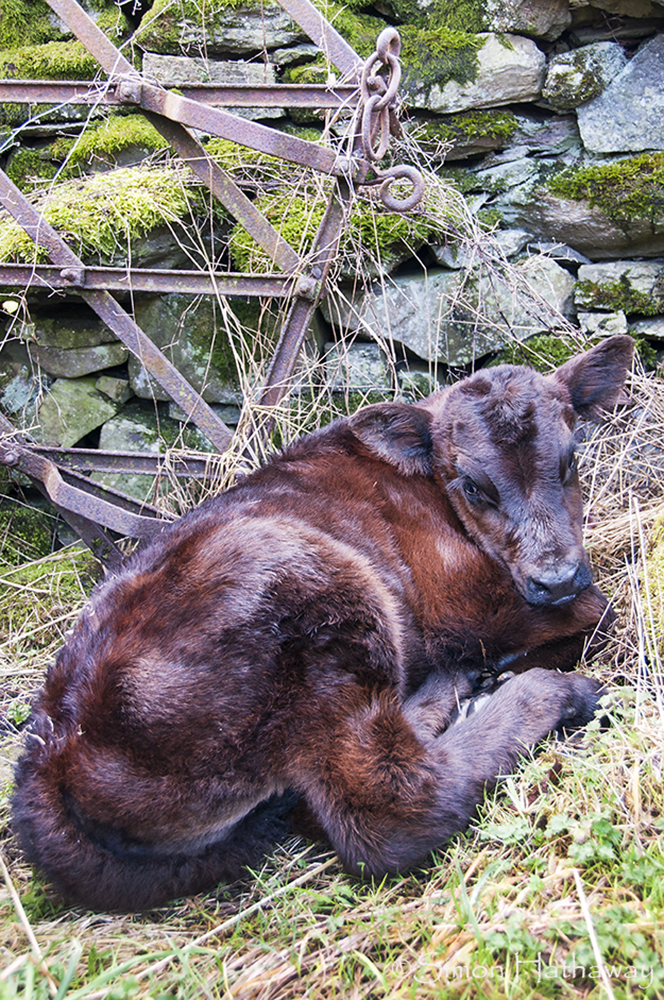
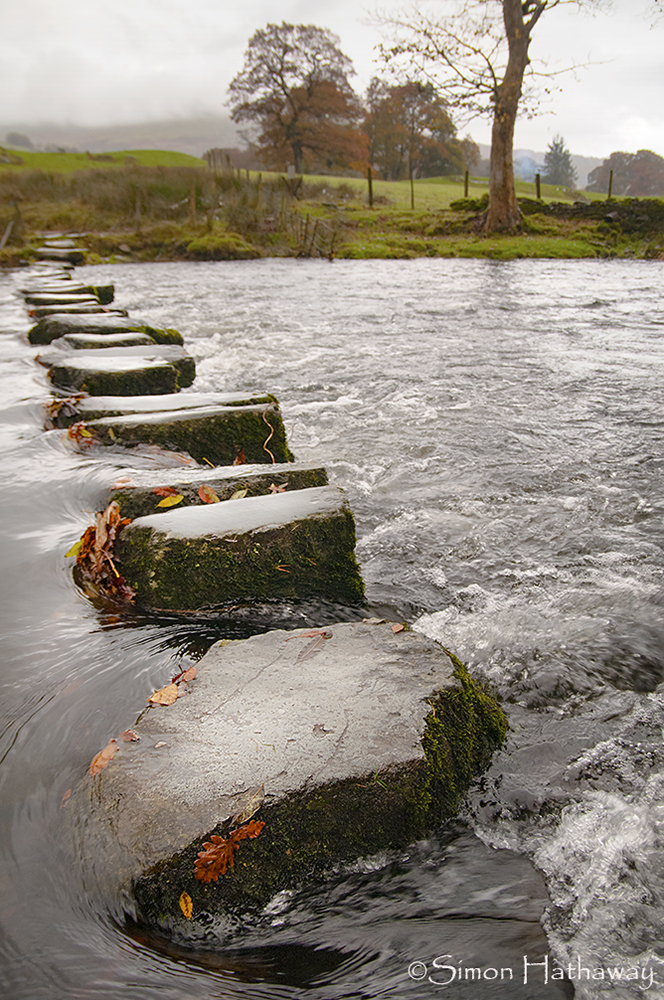
A. At that time Noah was the only person that followed God. People who, following Noah’s direction, got aboard the Ark could save their lives. So, the Ark symbolises God’s teaching to attain eternal life. Buddhism has a similar metaphor to this. Buddha compared his teaching to a boat by which we can cross the river of birth and death, and said that we should abandon the boat after crossing the river without being attached to it.

_SRH9927a_thumb


Student: “How can we board the boat to cross the river of birth and death?”

Master: “If you don’t board it, you can’t cross the river, but if you board it, you will sink under the water with it.”


©Boo Ahm


All writing ©Boo Ahm. All images ©Simon Hathaway

Buddha, Buddhism, Enlightenment, final goal, illusion, Koan, master, Meditation, Photography, Practice, student, true self, Truth, Uncategorized, Zen

Q336. Every time an ancient Zen master gave a dharma talk, a certain old man would come to listen. He usually left after the talk, but one day he remained. The master asked, “Who is there?”

A. The man said, “I am not actually a human being. I lived and taught on this mountain at the time of Kashyapa Buddha. One day a student asked me, ‘Does a person who practises with great devotion still fall into cause and effect?’ I said to him, ‘No, such a person doesn’t.’ Because I said this I was reborn as a wild fox for five hundred lifetimes. Sir, please tell me the correct answer and free me from this wild fox’s body.”

Then he asked the master, “Does a person who practises with great devotion still fall into cause and effect?”

The master said, “He isn’t deluded by cause and effect.”

Immediately the man had great realisation.

My Pictures0192a_thumb


Student: “What answer would you have made if you had been in his shoes?”

Master: “I would have said, ‘Such a man doesn’t fall into cause and effect’.”

Student: “Why on earth do you copy the wrong answer?”

Master: “Because of cause and effect.”

Student: “What would the old man have become if he had given a correct answer?”

Master: “A fox.”

Student: “Why would he have become a fox if he had given a correct answer?”

Master: “Because of cause and effect.”


Commentary:

Everything is the gate to the enlightenment.

When you know clearly what cause and effect is,

it is also the gate to the enlightenment.

When you don’t know what it is,

it is a trap that turns you into a fox.


©Boo Ahm


All writing ©Boo Ahm. All images ©Simon Hathaway

Buddha, Buddhism, Enlightenment, final goal, Happiness, Meditation, Photography, Practice, root, sutras, true self, Truth, Uncategorized, Zen

Q335. If everything is empty, is it important to actually attain enlightenment? After enlightenment, can you really hold on to it? Are you then walking around as ‘an enlightened being’? In my opinion, it’s impossible to sustain that experience because it’s empty. Is it a bit like trying to hold onto quick sand?

A. Enlightenment doesn’t mean ‘void’ or ‘valueless’ but means ‘perfection’, ‘perfect freedom’, ‘perfect happiness’ or ‘unlimited possibility’.


Attaining enlightenment is compared to a patient’s recovering perfectly from serious illness after taking good medicine. A patient is always ill wherever he is, whatever he does. He walks around as an ill being, and drinks tea as an ill being. However, once he has recovered perfectly from illness, he is well all the time whatever he does, wherever he is. He walks around as a healthy being and drinks tea as a healthy being. He is quite different from what he was when he was ill. He never wants to return to the previous state because he remembers how terrible he felt while ill and can feel how much happier he is now than before.

_SRH1728a_thumb


The difference between attaining enlightenment and recovering from illness is that you, once getting enlightened, can’t return to the unenlightened state, while you can lose your health again if not taking care of it. Whatever you do, wherever you are, you are always in the state of enlightenment forever without any effort to stay in, or sustain the state. So, a Sutra says that once you pass the gate of enlightenment, the gate is closed behind you forever.


©Boo Ahm


All writing ©Boo Ahm. All images ©Simon Hathaway

Buddha, Buddhism, emptiness, empty, Enlightenment, illusion, Meditation, Photography, Practice, Truth, Uncategorized, Zen

Q334. How should I, as a businessman, accept the teaching that we should make no discrimination by seeing everything as empty?

A. It is very natural for you to expect something in return as a businessman. You should consider the ratio of reward to cost and calculate whether, when and how you will attain return for your goods or services, which is business. Not only a businessman but also even a housewife has to make discrimination in order to run her family budget efficiently and to bring up her children well. Whatever you are, a businessman or a housewife, you should do your best to make the best discrimination in your job. What would happen if a neurosurgeon should not make careful and delicate discrimination during his operation on his patient while thinking of it as empty?


Saying that everything is empty doesn’t mean that you should belittle the realities of life but that you should see the other side of the realities of life that you have neglected and not recognised so far, as well as the side that you have been accustomed to seeing. Then you can realise that there is unlimited possibility that can’t be confined by the labels attached to them.


Making discrimination in Zen means making discrimination without knowing that everything is empty. Discrimination you make while aware that everything is empty is not discrimination any longer. So, once you have realised that everything is empty, whatever discrimination you may make, you are free from making discrimination. He who knows that everything is empty and neutral is not so indulged in the pleasure of success as to overestimate his situation when everything comes up roses, because he knows that his success is also empty and neutral. Also, he is never so frustrated as to lose his composure even though he encounters a so-called failure. Rather, he can think of the failure as a steppingstone for his future success.

_SRH4231a_thumb


To conclude, the phrase ‘you should not discriminate knowing that everything is empty’ doesn’t mean that you should make light of the realities of life but that you should not be a servant controlled by such illusions as success and failure but a master who can take advantage of them.


©Boo Ahm


All writing ©Boo Ahm. All images ©Simon Hathaway

Buddha, Buddhism, emptiness, empty, Enlightenment, illusion, Koan, master, Meditation, Photography, self, student, true self, Truth, Uncategorized, Zen

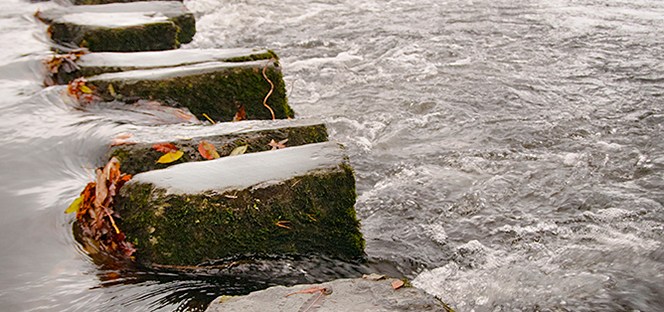
Q333. Student: “What is not changing when everything, including mountains and rivers, changes?”

A. Master: “Mountains and rivers.”

SRH_3196a_thumb


Commentary:

Master’s tongue is not long enough to say the answer.

You had better hear him with your eyes.


©Boo Ahm


All writing ©Boo Ahm. All images ©Simon Hathaway
Buddha, Buddhism, emptiness, empty, Enlightenment, final goal, illusion, master, Meditation, Mind, Photography, Practice, root, student, Truth, Uncategorized, Zen

Q332. What does Zen meditation have to do with reincarnation?

A. All our life we try to make good causes for good effects tomorrow. Trying your best to make yourself happy is trying to make good causes for good effects tomorrow. However, the key problem is that we don’t know what a good cause is and what a bad cause is, partly because our view of it varies according to our viewpoint and partly because what we think is a good cause very often turns out to bring a bad effect. So, we can’t help being worried about what effect we will get tomorrow even though we do our best to make good causes today. Furthermore, whatever good causes we may try to make, we can neither avoid death nor know what will happen to us after death. As a way of settling this challenging problem, primitive people would depend on the gods created by their imagination.


The purpose of Zen meditation is to help people to escape from the trap of reincarnation by realising that everything is empty. When everything is empty, not only birth and death but also transmigration and souls are empty illusions. Then reincarnation that means endless rebirth through transmigration of souls is also an empty illusion. In other words, Zen is to help people to free themselves from reincarnation by realising that reincarnation implies an endless cycle of illusions that feed on themselves and reproduce. So, to become free from reincarnation means to obtain eternal life or escape from the trap of life and death, which is also referred to as enlightenment in Buddhism.


_DSC1118a_thumb


Student: “What do you think you will be reborn as after your death?”

Master: “I couldn’t care less.”

Student: “What if you should be reborn as a cow after death?”

Master: “Not bad at all.”

Student: “How can you say being reborn as an animal is not bad at all?”

Master: “Because it is empty.”


©Boo Ahm


All writing ©Boo Ahm. All images ©Simon Hathaway
Buddha, Buddhism, Enlightenment, final goal, Photography, root, self, suffering, true self, Truth, Uncategorized, Zen

Q329. Why does Zen compare us sentient beings to a patient?

A. As soon as we are born, we are all doomed to an incurable illness, ageing, which leads to death, that no one can avoid. While we have many kinds of painkillers for the illness, there is no medicine to cure it. Whenever we feel the pain of hunger, we take a painkiller, food.

017_8054a_thumb


However, over the course of time, the illness worsens to the extent that no painkiller can help us, and leads us to death in the end. Therefore, we sentient beings are compared to a patient. The purpose of Zen is to help people to be cured of the fatal illness, ageing. So, ancient masters would refer to enlightenment as the solution to the matter of birth and death.


©Boo Ahm


All writing ©Boo Ahm. All images ©Simon Hathaway

Buddha, Buddhism, emptiness, empty, Enlightenment, final goal, illusion, Meditation, moment, now, Practice, root, self, Truth, Uncategorized, Zen

Q326. Should we see worldly life as an illusion and abandon, or be indifferent to it in order to attain enlightenment?

A. The purpose of Zen meditation is not to make people belittle, become indifferent to, or abandon worldly life but to help them to realise the truth that the realities of the life they are facing every day is no other than the heaven or the paradise they dream of. If you happen to have the slightest thought that, after enlightenment, you may be someone else, or somewhere else, other than exactly where you are now, you are far from the right way of practice.

file12136a_thumb


Zen is telling us why we can’t see and how we can see the paradise that is spread out before us.  We can’t see it since our views are clouded by labels, which are called illusions. Zen doesn’t tell people to make light of or abandon worldly life, but advises them to try to see beyond the labels of worldly life and teaches how to do it. Zen encourages people to enjoy the eternal happiness that they have not recognised so far. To try to see beyond the labels when seeing things is Zen practice.


©Boo Ahm


All writing ©Boo Ahm. All images ©Simon Hathaway

Buddha, Buddhism, emptiness, empty, Enlightenment, final goal, illusion, Meditation, moment, Photography, root, self, true self, Truth, Uncategorized, Zen

Q325. At the moment I die or when I fall asleep, does the world cease to exist?

A. Who, or what, dies or falls asleep when you die or sleep? When everything is empty, which of ‘I’, ‘death’, ‘sleep’ and ‘the world’ is not empty? Saying that everything is empty means that all of them are empty, too.

srh_5715a_thumb


However, when your sleep is not empty, the places such as your bed, your room et cetera where you sleep are not empty, either. When they are not empty, things and people related to the places are also not empty. When the things and people related to the places are not empty, other things and people related to these things and these people are also not empty. If we keep expanding in this way, we reach the conclusion that if your sleep is not empty, all the world is not empty, either. So, ancient masters would say that when even a grain of dust is not empty but real, all the world is real.


Therefore, saying that the world is empty but your sleep isn’t makes no sense at all. When your sleep is not empty but real, the world is also real. When your sleep is empty, the world is empty. To sum up, when you think that you fall asleep, the world exists. When you, however, think that your falling asleep is empty, the world is empty as well. Whatever things may happen, whether they exist or not depends upon your view.


©Boo Ahm


All writing ©Boo Ahm. All images ©Simon Hathaway
Buddha, Buddhism, Enlightenment, final goal, master, Meditation, Mind, moment, now, One, Photography, self, student, true self, Truth, Uncategorized, Zen

Q323. How long do I have to wait to see my true-self?

A. Don’t wait for it. A waiting mind can rather blind you. See it at this moment. While you spend time here waiting for it, it is also waiting for you in the same place.


An ancient master would say, “A foolish man doesn’t realise the true-self although he is with it all his life, just like a spoon or a fork doesn’t know the taste of food. However, a wise man realises the truth as soon as he listens to a Dharma talk, just like a tongue senses the taste of food.”

017_8036a_thumb


You have lived on it all your life, and you are chewing it every moment, even at this moment when you read this writing. Why don’t you see it at this moment?


Student: “What is the true-self, Sir?”

Master: “You already said it.”

Student: “What is it like?”

Master: “You already showed it.”


©Boo Ahm


All writing ©Boo Ahm. All images ©Simon Hathaway