Buddha, Buddhism, Enlightenment, final goal, illusion, Koan, master, Meditation, Mind, Practice, present, Religion, root, self, true self, Truth, Uncategorized, Zen

Q173. Where do we go after we die?

A. If you are anxious to know where you will go after death, you should know where you are now. How could you expect to know your future which is invisible, not knowing the present right before your eyes? Once you know where you are standing now, you can know not just where you will go after death but also where you were before you were born. In order to know where you are, you, first of all, should know what you are. How could you know where you are, not knowing what you are?

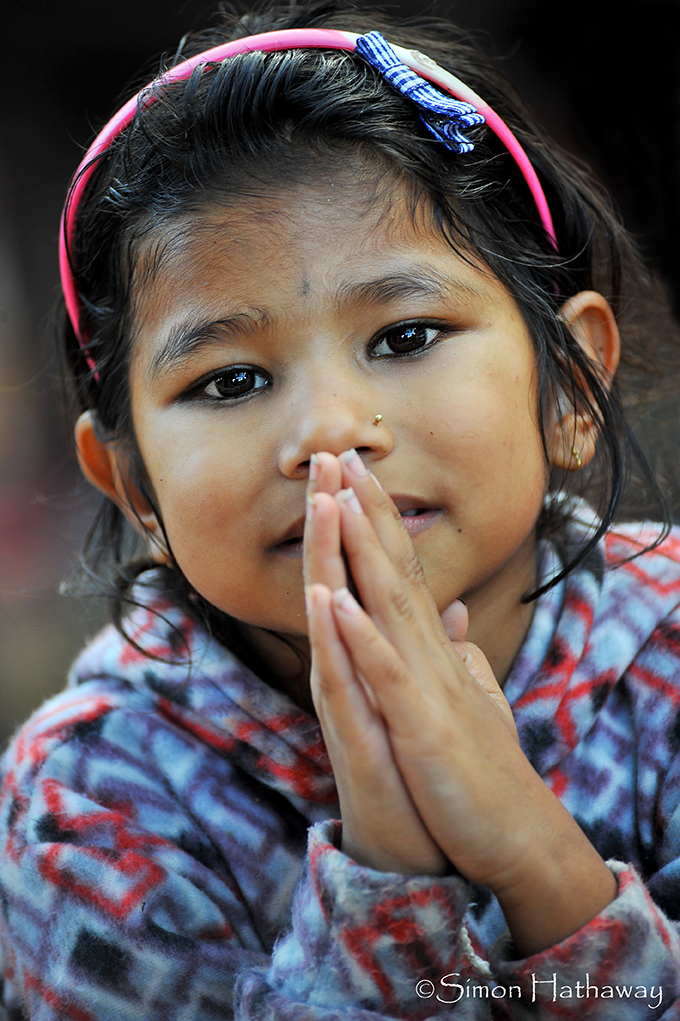
SRH_4955a_thumb

Your true-self is not born and does not die. It has always been and will be the same without any change forever. It never changes at all. You are eternity itself. Death and birth are only illusions. The problem is that you are not aware of this truth because you can’t see things as they are. The end of Zen meditation is to experience the truth through your body.

Do you want to know where you will go after your death?
Watch carefully what you are stepping on.


©Boo Ahm

All writing ©Boo Ahm. All images ©Simon Hathaway

Buddha, Buddhism, Enlightenment, final goal, illusion, master, Meditation, Mind, One, Religion, root, self, student, true self, Truth, Uncategorized, Zen

Q162. Student: “What are you when your body is not you?”

A. Master: “I am you.”

Commentary:
Watch out!
You are prone to fall into the den of ghosts.

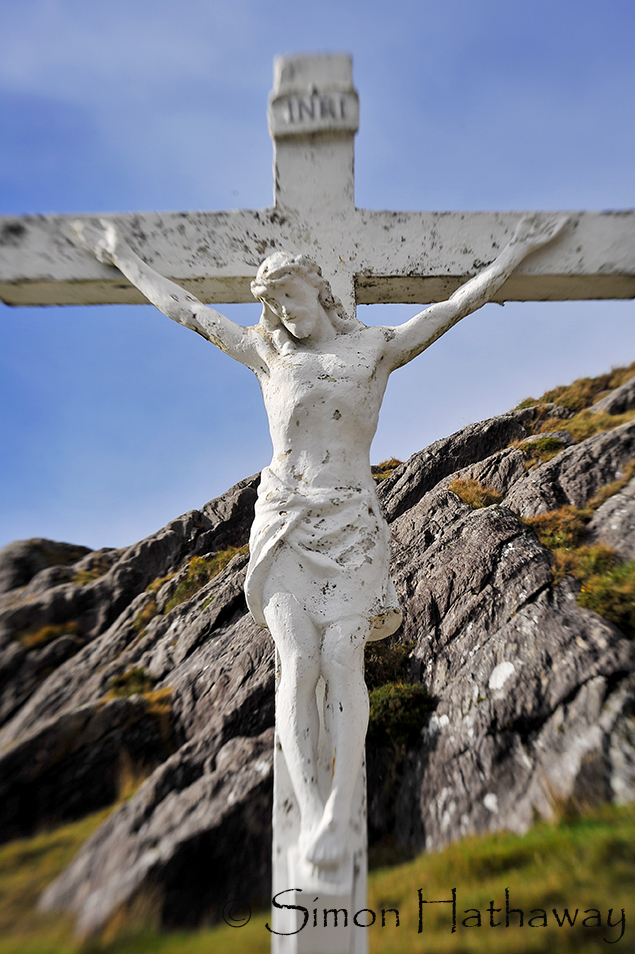
_DSC1166a_thumb


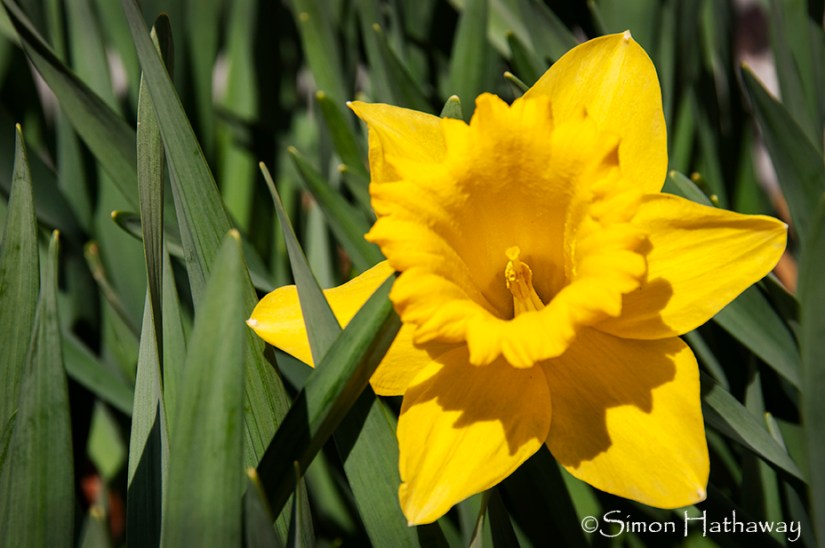
When the master is the student, what are they?
Daffodil.
©Boo Ahm

All writing ©Boo Ahm. All images ©Simon Hathaway
Buddha, Buddhism, Enlightenment, final goal, Happiness, illusion, Meditation, Mind, mindful, mindfulness, Practice, Religion, root, self, Uncategorized, Zen

Q158. How can we, sentient beings, know Buddha?

A. I never ask you to try to know Buddha that seems to be far above us. Now I am encouraging you to realise what a sentient being is because you know that you are a sentient being.
The key problem, however, is that you don’t know what a sentient being is, because you don’t know what you are even though you say that you are a sentient being. What matters is that Buddha is he who knows what a sentient being is, since Buddha is he who can see himself as he is because Buddha and sentient beings are from the same root. In brief, Buddha is none other than a sentient being who can see himself as he is.

SRH_8752a_thumb


A Buddha who can’t see his True-self is a sentient being.
A Sentient being who can see his True-self is a Buddha.

©Boo Ahm

All writing ©Boo Ahm. All images ©Simon Hathaway

Bible, Buddha, Buddhism, Enlightenment, final goal, God, Happiness, meditaion, Mind, mindful, mindfulness, Practice, Prayer, Religion, root, Uncategorized, Zen

Q154. How do you think Zen meditation can help Christians to overcome original sin?

A. According to the Bible, man can’t have eternal happiness or find salvation because of the original sin he committed in the beginning of time. The sin was eating the fruit of the tree of life, and as a result, our mind became discriminating, which prevents us from seeing God. The Bible says that we can be forgiven for the sin and find salvation only by believing in God.

To find salvation means to return to the original state prior to eating the fruit. And to believe in God means to see God, just as the old saying goes, ‘Seeing is believing’. Seeing God is possible by removing the discriminating mind.

DSC_1435a_thumb

The Sutras say that whatever good things we may do, we can’t enjoy eternal happiness without life and death, even though we can enjoy temporary happiness, unless we realise the true-self by removing the discriminating mind.

The core teachings of Christianity and Buddhism are the same in that we can enjoy eternal happiness by eliminating the discriminating mind. Zen meditation is a practice to remove the discriminating mind.

So, to help Christians to remove their discriminating mind is to help them to overcome original sin.

Bible, Buddha, Buddhism, God, Meditation, Practice, Prayer, Religion, Zen

Q136. What do you think of praying to God or Buddha?

A. We can see a lot of people not only pray to them but also offer plenty of money to temples or churches as a token of their faith in Buddha or God, while ignoring many suffering people who are in need. People want to make a deal with God or Buddha, just like they may bribe public officials to do something they want to be done. In brief, they take advantage of their prayer to Buddha or God as a means to satisfy and justify their greed and hypocrisy.

It is said that God or Buddha is love itself, compassion itself and justice itself and that he is so almighty that he can fulfill our prayers. Why are so many starving in the world and why do endless wars break out and disasters befall people at this time while so many clergymen, priests and monks are praying all around the world? Why does a charitable God who says, “Love your neighbour as yourself” always seem to side with rich, strong countries or people? Why have so many countries been engaged in wars throughout history in the name of religion?

SRH_0014a_thumb

I don’t think that prayer itself is bad. However, why do these things happen in spite of so much prayer by so many people around the world? It is because they don’t know whom they pray to or worship because they don’t know themselves and therefore they do not know who is praying. They also don’t know how to worship or pray because they don’t know whom they worship or pray to. Therefore, they commit brutal carnage while speaking of Jesus’s love with their mouths, and spend an untold sum of money on producing weapons while saying their prayers.

I never discourage you from praying, but encourage you to pray in the right way. In order to pray in the right way, you should know at least who prays to whom. When you don’t know this, trying to find out who prays to whom it is a true prayer.

©Boo Ahm

All writing ©Boo Ahm. All images ©Simon Hathaway

Buddha, Buddhism, God, illusion, Meditation, Practice, Religion, Truth, Zen

Q133. Do heaven and hell really exist?

A. Heaven is to hell what right is to left. As there is no left without the right and no right without the left, so there is no hell without heaven and no heaven without hell. In fact there is no fixed right or left, and whether something is the right or the left depends on beholder’s view. What is the right to someone can be the left to someone else. Likewise, what is heaven to someone can be hell to someone else. What is hell today can be heaven tomorrow and the other way around.

_SRH5037a_thumb

As long as we believe that heaven is one thing and hell is another, we are tricked by illusions of heaven and hell. What we pursue is not to avoid hell and go to heaven, but to realise the fact that both of them are illusions. That is called the middle path without extremes; no good and bad nor right and wrong.

©Boo Ahm

All writing ©Boo Ahm. All images ©Simon Hathaway

Bible, Buddha, Buddhism, Enlightenment, final goal, illusion, Meditation, Religion, sutras, Truth, Zen

Q100. I don’t understand that the Sutras and the Bible are also illusions.

A. Ancient masters used to say that a nice saying which sounds reasonable can be a strong trap. A saying or a word, however great and nice, is nothing but an illusion. No one denies, for example, the truth that the sun is a mass of flames. However, your lips are never hot, not to mention being burnt, no matter how many times you may recite the word ‘sun’. In other words, sayings or words are not the truth itself but an illusion.

SRH_2660b_thumb

The more reasonable a saying sounds, however, the stronger we tend to make our attachment to it while taking it for the truth itself. The Sutras and the Bible are very typical examples that have great sayings we are likely to be tempted to attach ourselves to. We have a very interesting metaphor for such cases that shows how we should accept spiritual teachings: Don’t look at the finger pointing to the moon but the moon itself. The Sutras and the Bible are just like fingers pointing to the moon for people who want to see the moon, but they are not the moon itself.
©Boo Ahm

All writing ©Boo Ahm. All images ©Simon Hathaway

Buddha, Buddhism, Enlightenment, God, Koan, Meditation, Mind, One, Practice, Religion, Truth, Zen

Q39. Could you describe what we are when our body is not us?

A. In fact it is beyond description and can’t be reached through words, but it is not separate from words and can’t be explained without words. When reading a text, or hearing a talk about it, you should take it as more than words.

P1070543a_thumb
It is called the truth, the mind, the true nature, the true self, or the Buddha in Buddhism. In Christianity, it is referred to as the truth, the spirit in you, the word, the lord, or God – as John 8:32 says, “Then you will know the truth and the truth will set you free.”
Everything, whether living or non-living, or whether saints or sentient beings, belongs to nothing but the truth. The truth is neither blue nor yellow, and has neither any frame nor any form. It is neither existing nor non-existent, and since it is boundless like the empty air, not only does it have no inside and no outside but also it can’t be measured. It is with us all the time, and we can’t escape it even for a moment.

All writing ©Boo Ahm. All images ©Simon Hathaway.

Buddhism, Meditation, One, Practice, Religion, Truth, Zen

Q30. When we help others we get such a great feeling….is this just us patting oneself on the back, or is it because that we are all one and by helping others we truly are helping our self?

A. If you get a great feeling, as most people do, it is likely to be a kind of sense of accomplishment. We have been taught and told to help others in need since our kindergarten days. However, we usually feel that we have not helped others as much as we think we should, and we always feel guilty or burdened unconsciously, for it as though we didn’t do our homework. When we help others, we get a kind of accomplishment we would feel when no one but I in the class did the homework in our school days and, enjoying secret pride, we pat ourselves on the back just like our teachers did to us.

_SRH6380a_thumb - Copy

Let me ask you a question. Do you happen to get such a great feeling when you feed yourself? In fact, if you had helped others because you felt oneness with them, you would have felt it natural rather than great. The Bible says, “When you help others, don’t let your left hand know what your right hand does.” However, Zen books say, “When you help others, don’t let even your right hand know what your right hand does.” This is a saying that shows the essence of Zen. You should not have even the idea that you helped someone. You should feel as natural as if you buy yourself lunch, when you serve a nice lunch to a hungry man. That is, to love your neighbours as yourself – just like the Bible says.

All writing ©Boo Ahm. All images ©Simon Hathaway.

Buddhism, Enlightenment, God, Meditation, Practice, Religion, Zen

Q12. Do we have to have God or religion in Zen meditation?

A. No. As I said, I neither ask you to do something nor discourage you from doing something. I only ask you to try to see things as they are. When you see things as they are, whatever you do depends on you. Now how can you have God when you don’t know what you are and what God is?

SRH_8938a_thumb - Copy

All writing ©Boo Ahm. All images ©Simon Hathaway.