Buddha, Buddhism, desire, Enlightenment, Meditation, Mind, mindfulness, root, suffering, true self, Truth, Uncategorized, Zen

Q161. Is desire the motivation of life or the root of suffering?

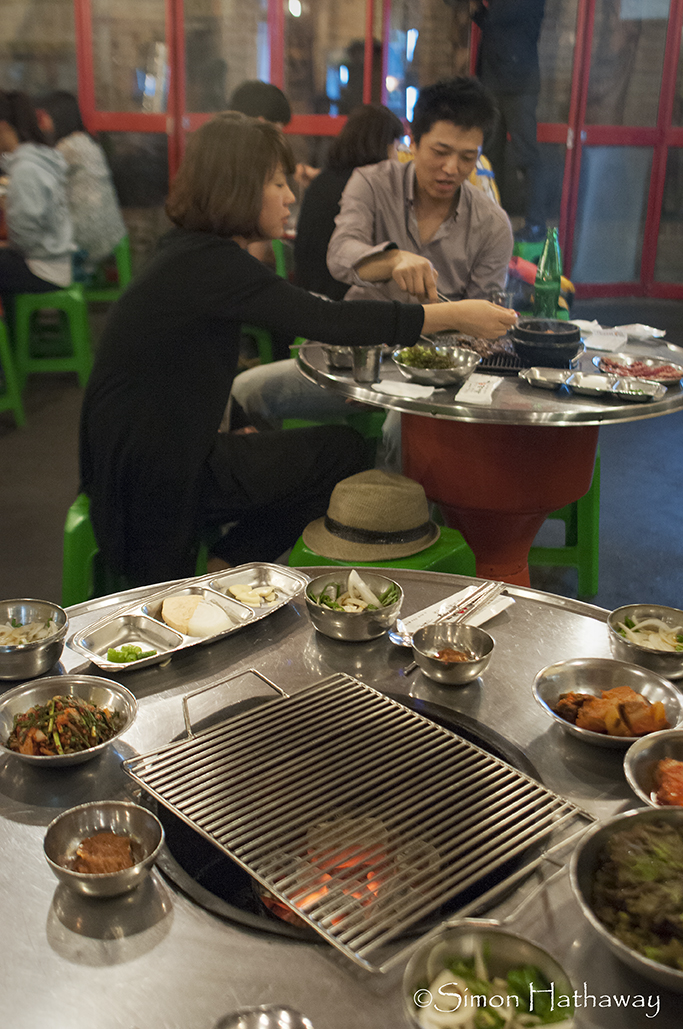
A. This question is like asking whether we should view food as a cause of illness, such as obesity and diabetes, or a necessary thing for survival. Desire itself is neutral. It depends on you whether it is the motivation of life or the root of suffering. Try to see the root of your desire clearly when it occurs. When you realise it clearly, it is not only the motivation of life but also the root of happiness. It is when you don’t know what it is that it becomes the root of suffering.
_SRH3337a_thumb


However beautiful a thing may be, it is no more than an illusion as long as you don’t know the root from which it is from.
However ugly a thing may be, it is the truth itself when you know its root.
©Boo Ahm

All writing ©Boo Ahm. All images ©Simon Hathaway
Buddha, Buddhism, emptiness, empty, Enlightenment, final goal, Happiness, illusion, Meditation, mindful, mindfulness, One, Practice, root, self, true self, Truth, Uncategorized, Zen

Q160. If everything, even enlightenment is empty and just an illusion, why should we try to attain enlightenment?

A. If we really know that everything is an illusion, we don’t have to make an effort to attain enlightenment since enlightenment is also then an illusion. The reason for trying to obtain enlightenment is that we have not realised in person the truth while saying that everything is empty. The knowledge of enlightenment is not enlightenment itself. The former is as different from the latter as the knowledge of a meal is different from eating the meal. The knowledge of enlightenment can no more give us eternal happiness than the knowledge of food can satisfy our hunger. We practise in order to experience, in person, the truth that everything is empty.

P1080040a_thumb
©Boo Ahm

All writing ©Boo Ahm. All images ©Simon Hathaway

Buddha, Buddhism, Enlightenment, final goal, illusion, Koan, Meditation, Mind, mindful, Practice, true self, Truth, Uncategorized, Zen

Q159. How can I clap with one hand?

A. You already did.

Commentary:
The banker informs him that he is a billionaire, but he is still worried about his next meal.

SRH_6906a_thumb


©Boo Ahm

All writing ©Boo Ahm. All images ©Simon Hathaway
Buddha, Buddhism, Enlightenment, final goal, Happiness, illusion, Koan, master, Meditation, Mind, Practice, root, student, true self, Truth, Uncategorized, Zen

Q156. Student: “What are you when your body is not you?”

A. Master: “A rat.”

Student: “Why do you say that you are a rat?”

Master: “Because of karma.”

SRH_6849a_thumb


Commentary:

Look and listen carefully.

It is not a rat but your eyes and ears that matter.


©Boo Ahm

All writing ©Boo Ahm. All images ©Simon Hathaway

Happiness, illusion, master, meditaion, Mind, mindful, mindfulness, now, Practice, Truth, Uncategorized, Zen

Q155. Why did masters say, “Don’t try to do good things”?

A. When you have a stick, can you remove either end of it? Even if you cut off one end of it, there will still remain two ends even though the stick becomes a little shorter. No matter how many times you may cut off either end of it, you will still have both ends and find that the middle part becomes the end. The fact is that you can’t avoid having one end as long as you have the other end. This shows that there is no fixed end and that any part can be an end according to circumstances.

SRH_1214a_thumb


When we have an intention to do something good, we can’t avoid having an idea of something bad because there can’t be a good thing without a bad thing. As long as we have an intention to do good things, we can’t avoid discriminating things. Discriminating things is against the purpose of Zen meditation.
So masters said “Don’t try to do good things” in order to advise their students not to have discriminating minds.

©Boo Ahm

All writing ©Boo Ahm. All images ©Simon Hathaway

Buddha, Buddhism, Enlightenment, final goal, Happiness, illusion, Koan, true self, Truth, Uncategorized, Zen

Q151. I heard that we should remove our ‘I’ and experience ‘non-ego’ in order to see the true-self. How can I remove my ‘I’?

A. Don’t try in vain to remove your ‘I’. You can’t do so because you don’t know what it is. Just try to know what you are when your body is not you. When you reach the final goal, you realise that it is not worth mentioning ‘I’. In short, the illusion of your ‘I’ will disappear. Then, you can be said to experience or realise ‘non-ego’.

_SRH6218a_thumb


When you can’t see yourself as you are, you see the illusion of your ‘I’ as yourself. When you can see yourself as you are, you come to realise the essence of your being, your true-self called Buddha Nature. When you don’t know what you are, your ego is you, but when you know what you are, you have no ‘I’ to remove. Then you feel oneness.

Buddha, Buddhism, Enlightenment, final goal, illusion, Meditation, Mind, sutras, Truth, Uncategorized, Zen

Q150. Does enlightenment have anything to do with gender?

A. Absolutely not. It is a very common belief that only males can attain enlightenment and so females have to be reborn as males in order to attain enlightenment. However, it makes no sense at all. That is against Buddha’s teaching that everything is empty and equal. Gender is also empty and is an illusion.

_SRH8315a_thumb


Enlightenment is to realise your true-self, that is, what you are when your body is not you. When your body is not you, how can you be male or female? Enlightenment has nothing at all to do with gender but a lot to do with how hard you practice and whether or not you practice in the right way.

©Boo Ahm

All writing ©Boo Ahm. All images ©Simon Hathaway

Buddhism, Enlightenment, Koan, true self, Truth, Uncategorized, Zen

Q149. Does our true-self accompany us when we go to hell?

A. I think this is a question that can occur to you when you think your true-self is in your body and that it is so pure and holy that it has nothing to do with bad things like hell.

There is nothing larger than your true-self. Your true-self has infinite room left even when it houses millions of universes. All things imaginable, whether good or bad, happen only in your true-self. Nothing happens out of your mind. When you go to the hell, your going to hell happens in your true-self, and when going to the heaven, you go there in your true-self as well.

_SRH5889a_thumb


Your true-self never judges right or wrong since it is always neutral or empty. It has no heaven and no hell. It neither helps you go to the heaven nor prevents you from going to the hell and vice versa. It is your discrimination that creates heaven or hell and makes you go to it.

©Boo Ahm

All writing ©Boo Ahm. All images ©Simon Hathaway

Buddha, Buddhism, Enlightenment, final goal, Happiness, illusion, Koan, Mind, mindful, mindfulness, true self, Truth, Uncategorized, Zen

Q148. Is happiness obtained through filling our mind or through emptying our mind?

A. This is not a matter of whether to fill or empty, but a matter of realising what the mind is. The ultimate end of Zen meditation is to realise what the mind that you are going to fill or empty is.

_SRH0141a_thumb


This question shows well how unaware we are of what we say and how imprudently we are seeking happiness. How could we fill or empty the mind while not knowing what it is? In fact, it is because you don’t know what your mind is that you have such an idea of filling or emptying it. Once you get to see it clearly, you will realise that it can’t be filled or emptied because it is perfect, and that you are happiness itself.

©Boo Ahm

All writing ©Boo Ahm. All images ©Simon Hathaway