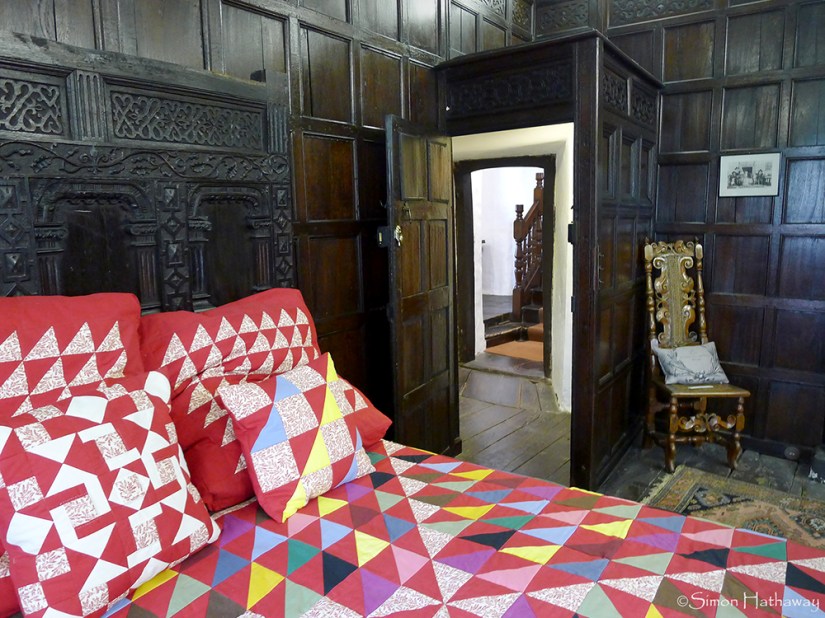
A. Master: “A room”
Commentary:
To take you out of a room is not difficult.
However, it is very difficult to take the room out of you.
©Boo Ahm
All writing ©Boo Ahm. All images ©Simon Hathaway


A. Master: “A room”
Commentary:
To take you out of a room is not difficult.
However, it is very difficult to take the room out of you.
©Boo Ahm
All writing ©Boo Ahm. All images ©Simon Hathaway
A. No, you are not wrong at all. Feel free to choose any path that appeals to you and concentrate on seeking the root from which the path comes. Whichever path you may take, you will come to take the same way after all because they are from the same root, the truth that is not dual.

We should realise the fact that all other things, as well as all paths, are from the same root even though they may look different from each other. The root is the very truth. To realise what the root is should be the final goal of all religions.
©Boo Ahm
All writing ©Boo Ahm. All images ©Simon Hathaway

A. You are absolutely right. When we say ‘trying to attain enlightenment’, it can look and sound dual because there is ‘I’ and there is ‘enlightenment’ as you mentioned. However, I can’t help but explain it in this way because there is still enlightenment for you to attain until you realise that everything is empty and that there is nothing to gain or lose. Attaining enlightenment doesn’t mean that there is duality; ‘you’ and ‘enlightenment’ to be gained, but rather that you should realise everything is empty and there is no duality.
I talk you into attaining enlightenment because you have not realised the truth of non-duality through experience even though you have a lot of knowledge about non-duality and emptiness, and say that everything is empty and there is no enlightenment to attain. Strictly speaking, only when you realise the truth that everything is empty can you say that there is no enlightenment to attain, because there is nothing to realise any more. The reason why I say that you should attain enlightenment is not that there is duality; ‘you’ and ‘enlightenment’, but that you should realise the truth that everything is empty and non-dual and so there is no enlightenment to attain.
©Boo Ahm
All writing ©Boo Ahm. All images ©Simon Hathaway

A. They arise because you don’t know what they are. In fact, you don’t know what an illusion is even though you often mention it. You can’t remove or stop it from showing up because you don’t know what it is.
In fact, there are no illusions at all. There is only the truth, or the true-self. The problem is that you are mistaking the truth for illusions. Enlightenment is to realise that all illusions are the truth, or the true-self. As the Diamond Sutra says, to realise that a flower is not a flower, but emptiness, is enlightenment. To realise that an illusion is not real, but empty, is enlightenment. Realising that an illusion is not an illusion, but the truth, or the true-self is enlightenment.
©Boo Ahm
All writing ©Boo Ahm. All images ©Simon Hathaway

A. The best way to be in the middle is to eliminate either of both extremes. If you remove either of them, the other disappears by itself, because they exist relying on each other. The right, for example, can’t exist without the left, and the left can’t exist without the right. There can’t be wrong without right and the other way around.

However, don’t make the mistake of wasting your efforts to remove either of them by force. You can never succeed in removing them in that way because they are illusionary and not real. The only way to remove them is to realise the truth that the extremes are not real things but just illusions created by your discrimination. When we don’t think of the right and the left, there is no right side and no left side. Only when we fix one side as the left does the opposite side become the right. Therefore, once you realise that one extreme is not real but illusionary, the other extreme disappears by itself.
©Boo Ahm
All writing ©Boo Ahm. All images ©Simon Hathaway

A. That is like telling a baby who can’t even stand on his own feet to run as fast as a sprinter. The first thing you should do in order to put your mind down is to know what your mind is. How would it be possible for you to put your mind down when you don’t know what it is? The key point in Zen meditation is whether or not you realise what your mind is, and not whether to put it down or not. Once you realise what your mind is, holding it or putting it down is up to you.

One of the most common mistakes we make is to think that we know what we don’t know. You seem to be making the same mistake of trying to put your mind down, thinking that you know your mind while in fact you don’t know it. If you are anxious to put your mind down, do try to realise what it is before trying to put it down in vain. In fact, once you realise what your mind is, you can be said to have completed your practice, or to have attained enlightenment. Should you see your master again, first of all ask him what your mind is.
©Boo Ahm
All writing ©Boo Ahm. All images ©Simon Hathaway

A. Don’t try in vain to remove your ‘I’. You can’t do so because you don’t know what it is. Just try to know what you are when your body is not you. When you reach the final goal, you realise that it is not worth mentioning ‘I’. In short, the illusion of your ‘I’ will disappear. Then, you can be said to experience or realise ‘non-ego’.

When you can’t see yourself as you are, you see the illusion of your ‘I’ as yourself. When you can see yourself as you are, you come to realise the essence of your being, your true-self called Buddha Nature. When you don’t know what you are, your ego is you, but when you know what you are, you have no ‘I’ to remove. Then you feel oneness.
 Zen Fools