Buddha, Buddhism, empty, Enlightenment, final goal, Meditation, Photography, true self, Uncategorized, Zen

Q320. If I attained Enlightenment, would it be useful in my life? And if I did find it useful, would it really be Enlightenment?

A. Enlightenment means realising that everything is empty, which can be compared to recovering from a chronic illness.


When you have recovered from a chronic disease that has tortured you all your life, your life will be so different from and better than your previous life that you may even feel as if you were reborn and living a new life. Once you’ve become perfectly well, however, recovery is neither useful nor necessary to you any more since you don’t need it any longer.

p1190539a_thumb


In the same way, enlightenment is to the enlightened as recovery is to the healthy. Enlightenment is useful to unenlightened people, but it is nothing to the enlightened, just like getting well is useful only to patients, but just a useless phrase to the healthy. Finding enlightenment useful to yourself means that you are still not enlightened, just as feeling the need to get well means that you are still not perfectly recovered. Buddha said, “How foolish you would be if you should keep the boat on your back after crossing a river!”


©Boo Ahm


All writing ©Boo Ahm. All images ©Simon Hathaway

Buddha, Buddhism, Enlightenment, final goal, master, Meditation, Photography, Practice, student, true self, Truth, Uncategorized, Zen

Q319. Many people say that they know what enlightenment is and that their way is the true way. How can we tell if a teacher is really enlightened or not?

A. It is true that it is almost impossible for unenlightened people to tell whether a teacher is enlightened or not. Only the enlightened have an eye for the enlightened, just like only those who know maths can tell if a maths teacher has real capacity. However, I am going to tell you a few essential requirements that I think a teacher should be equipped with as a teacher, regardless of whether he is enlightened or not.

srh_0242a_thumb


A teacher should:

  1. Be able to give you a clear definition about what enlightenment, the final goal is.
  2. Be able to give you a persuasive explanation about what his way of practice has to do with enlightenment, or why you should practice in his way.
  3. Be able to give you sufficient Dharma talks explaining the True-self and how to see it in detail.
  4. Welcome all your questions and give you satisfactory answers to them.


If someone satisfies all these conditions, he is worth following as a teacher, I think.


©Boo Ahm


All writing ©Boo Ahm. All images ©Simon Hathaway

Buddha, Buddhism, Enlightenment, final goal, Koan, Meditation, Photography, root, student, true self, Truth, Uncategorized, Zen

Q318. Student: “What is the quickest way to the true-self?”

A. Master: “Don’t ask me where your mouth is.”

clouds-over-coniston_a_thumb


Commentary:

It is standing on its single foot facing you.

You don’t forsake it.


©Boo Ahm


All writing ©Boo Ahm. All images ©Simon Hathaway

Buddha, Buddhism, emptiness, empty, Enlightenment, illusion, master, Meditation, Photography, student, true self, Truth, Uncategorized, Zen

Q316. How can we neither be stained by dirt while in dirt nor be attached to purity when we happen to face it?

A. Interpreted more simply, this question means “How can we live without being deluded by illusions and without being attached to enlightenment when we happen to get it?” It is possible to know, through perfect realisation of the truth, that everything is empty. In other words, when everything is empty, we should realise that not only illusions but also enlightenment is empty.

srh_4738a_thumb


If we are attached to enlightenment after getting enlightened, this is making another illusion, just like making a new form of clay after destroying an old form of clay. You should realise that when everything is empty, you are emptiness itself, and then there is nothing to gain or lose. So, an ancient master said, “Don’t be stained by purity.” when his student asked him how he could remain pure. In other words, you should neither be deluded by illusions while living amid them nor be attached to emptiness.


©Boo Ahm


All writing ©Boo Ahm. All images ©Simon Hathaway

Buddha, Buddhism, Enlightenment, final goal, Meditation, One, Photography, present, suffering, true self, Truth, Uncategorized, Zen

Q314. I started Zen meditation in my early twenties with the goal of enlightenment and was very peaceful and happy during practice. My life, as a single mum with four children, is so busy and messy that I can’t find time to practice Zen although I am very keen for practice.

A. The best way of Zen practice is not to practise only when and where nothing happens to you but to identify everything that you see and hear with your practice. In other words, you should not separate your work from your practice but identify the former with the latter. Then, 24-hours a day can be your practice time.


In fact, everything that makes you bothered and busy is no other than the true-self that you want to see. There is an interesting story about an ancient master. One day he was going through a busy and crowded marketplace, when he saw two people quarrelling, hurling abuse at each other. Upon hearing one of the names they were calling each other, the master attained enlightenment.

srh_3806a_thumb


Why don’t you think that the reason why your life is so busy is that the true-self is striving to show itself to you and attract your attention?  Don’t try to escape from your current situation into a better one for the sake of practice, but try to accept it as a Dharma talk and try to see and hear it as it is. The deeper your practice becomes over time, the easier and more peaceful your life will become.


©Boo Ahm


All writing ©Boo Ahm. All images ©Simon Hathaway

Buddha, Buddhism, emptiness, empty, Enlightenment, illusion, master, Meditation, Photography, Practice, root, student, true self, Truth, Uncategorized, Zen

Q313. What is the true-self and what is an illusion?

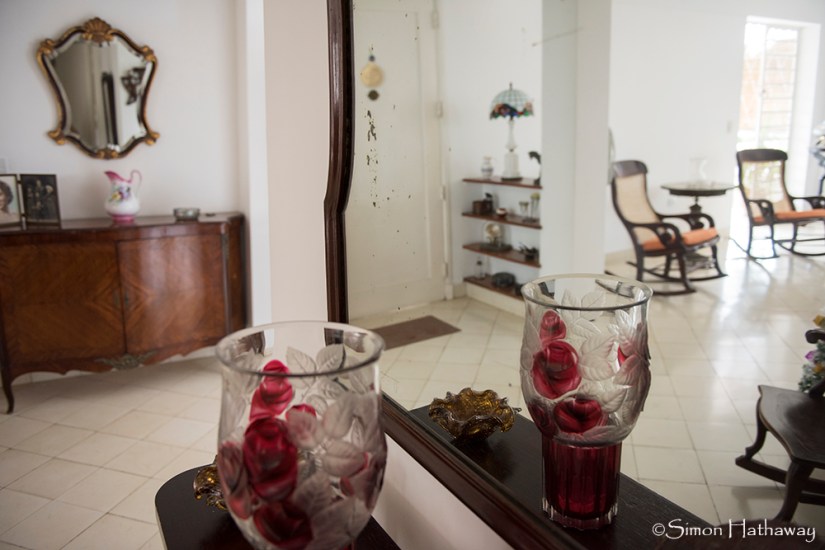
A. The true-self is an illusion and an illusion is the true-self. When you can see, for example, the cup put before you as empty, it is the true-self, but it is an illusion when you can’t see it as empty and see it only as a cup. This is true of everything that you can see and hear; your wife, your friends, your puppy, et cetera. In other words, when you can see things as empty, everything is the true-self. When you can’t see things as empty, everything is an illusion.

srh_0455a_thumb


A thing doesn’t determine on its own whether it is seen as the true-self or an illusion, but it depends on whether or not you can see it as empty. When you can see everything as empty, you are said to have attained the eye of wisdom or enlightenment. So, an ancient master would say that if you get the eye of wisdom, all the rubbish heaps turn into treasure heaps. When you are enlightened, everything including yourself is perfection itself to you. That is referred to as the Pure Land or the Buddha Land.


Student: “What is the true-self?”

Master: “There is nothing that is not the true-self.”

Student: “Why can’t I see it?”

Master: “Because you seek it while seeing it.”


©Boo Ahm


All writing ©Boo Ahm. All images ©Simon Hathaway

Buddha, Buddhism, Enlightenment, final goal, illusion, master, Meditation, One, Practice, student, true self, Truth, Uncategorized, Zen

Q312. Student: “Why is seawater salty and river-water sweet?”

A. Master: “Because both are from the same source.

file1324a_thumb


Commentary:

Sea-fish don’t think that seawater is salty, and freshwater fish don’t think that river-water is sweet.

©Boo Ahm


All writing ©Boo Ahm. All images ©Simon Hathaway

Buddha, Buddhism, Enlightenment, final goal, master, Meditation, One, Photography, root, self, student, true self, Truth, Uncategorized, Zen

Q309. Student: “What is the true-self?”

A. Master: “How can I explain it better than you?”

srh_1657a_thumb


Commentary:

Wisdom never scolds or speaks ill of foolishness.

©Boo Ahm


All writing ©Boo Ahm. All images ©Simon Hathaway

Buddha, Buddhism, emptiness, empty, Enlightenment, Koan, master, Meditation, Photography, student, true self, Truth, Uncategorized, Zen

Q303. Student: “How can we describe the true-self exactly?”

A. Master: “If you describe it, you are wrong.”

srh_5326a_thumb


Commentary:

If you cannot describe it, you are also wrong.

What he does speaks louder than what he speaks.


©Boo Ahm


All writing ©Boo Ahm. All images ©Simon Hathaway

Buddha, Buddhism, Enlightenment, master, Meditation, Photography, Truth, Uncategorized, Zen

Q302. Do masters still have the same emotion as we do?

A. They feel things in the same way sentient beings feel: They are hungry when they don’t have food, feel cold in winter and hot in summer. They are angry at the sight of unjust things, feel happy when seeing good things and feel sympathetic with poor people or animals in suffering. Without such feelings, how would they have compassion for sentient beings?

srh_6691a_thumb


The difference between the enlightened and sentient beings is how to accept or deal with such feelings. Sentient beings are controlled by such feelings because they don’t know the truth that everything is empty, while the enlightened never let such feelings run their life since they are aware of the truth. How the enlightened handle such feelings is compared to a clean mirror. A mirror reflects black colour when a black thing comes and red colour when a red thing comes, but it never becomes black or red. In other words, they can see things as if seeing a movie. While seeing a movie, they feel sad, happy and angry, but they come back to their usual emotion after the movie.


©Boo Ahm


All writing ©Boo Ahm. All images ©Simon Hathaway