Happiness, illusion, master, meditaion, Mind, mindful, mindfulness, now, Practice, Truth, Uncategorized, Zen

Q155. Why did masters say, “Don’t try to do good things”?

A. When you have a stick, can you remove either end of it? Even if you cut off one end of it, there will still remain two ends even though the stick becomes a little shorter. No matter how many times you may cut off either end of it, you will still have both ends and find that the middle part becomes the end. The fact is that you can’t avoid having one end as long as you have the other end. This shows that there is no fixed end and that any part can be an end according to circumstances.

SRH_1214a_thumb


When we have an intention to do something good, we can’t avoid having an idea of something bad because there can’t be a good thing without a bad thing. As long as we have an intention to do good things, we can’t avoid discriminating things. Discriminating things is against the purpose of Zen meditation.
So masters said “Don’t try to do good things” in order to advise their students not to have discriminating minds.

©Boo Ahm

All writing ©Boo Ahm. All images ©Simon Hathaway

Bible, Buddha, Buddhism, Enlightenment, final goal, God, Happiness, meditaion, Mind, mindful, mindfulness, Practice, Prayer, Religion, root, Uncategorized, Zen

Q154. How do you think Zen meditation can help Christians to overcome original sin?

A. According to the Bible, man can’t have eternal happiness or find salvation because of the original sin he committed in the beginning of time. The sin was eating the fruit of the tree of life, and as a result, our mind became discriminating, which prevents us from seeing God. The Bible says that we can be forgiven for the sin and find salvation only by believing in God.

To find salvation means to return to the original state prior to eating the fruit. And to believe in God means to see God, just as the old saying goes, ‘Seeing is believing’. Seeing God is possible by removing the discriminating mind.

DSC_1435a_thumb

The Sutras say that whatever good things we may do, we can’t enjoy eternal happiness without life and death, even though we can enjoy temporary happiness, unless we realise the true-self by removing the discriminating mind.

The core teachings of Christianity and Buddhism are the same in that we can enjoy eternal happiness by eliminating the discriminating mind. Zen meditation is a practice to remove the discriminating mind.

So, to help Christians to remove their discriminating mind is to help them to overcome original sin.

Buddha, Buddhism, Enlightenment, final goal, Happiness, illusion, Koan, true self, Truth, Uncategorized, Zen

Q151. I heard that we should remove our ‘I’ and experience ‘non-ego’ in order to see the true-self. How can I remove my ‘I’?

A. Don’t try in vain to remove your ‘I’. You can’t do so because you don’t know what it is. Just try to know what you are when your body is not you. When you reach the final goal, you realise that it is not worth mentioning ‘I’. In short, the illusion of your ‘I’ will disappear. Then, you can be said to experience or realise ‘non-ego’.

_SRH6218a_thumb


When you can’t see yourself as you are, you see the illusion of your ‘I’ as yourself. When you can see yourself as you are, you come to realise the essence of your being, your true-self called Buddha Nature. When you don’t know what you are, your ego is you, but when you know what you are, you have no ‘I’ to remove. Then you feel oneness.

Buddha, Buddhism, Enlightenment, final goal, Happiness, illusion, Koan, Mind, mindful, mindfulness, true self, Truth, Uncategorized, Zen

Q148. Is happiness obtained through filling our mind or through emptying our mind?

A. This is not a matter of whether to fill or empty, but a matter of realising what the mind is. The ultimate end of Zen meditation is to realise what the mind that you are going to fill or empty is.

_SRH0141a_thumb


This question shows well how unaware we are of what we say and how imprudently we are seeking happiness. How could we fill or empty the mind while not knowing what it is? In fact, it is because you don’t know what your mind is that you have such an idea of filling or emptying it. Once you get to see it clearly, you will realise that it can’t be filled or emptied because it is perfect, and that you are happiness itself.

©Boo Ahm

All writing ©Boo Ahm. All images ©Simon Hathaway

Buddha, Buddhism, Enlightenment, final goal, Happiness, illusion, Koan, master, Meditation, student, Truth, Uncategorized, Zen

Q.147 Student: “What are you when your body is not you?”

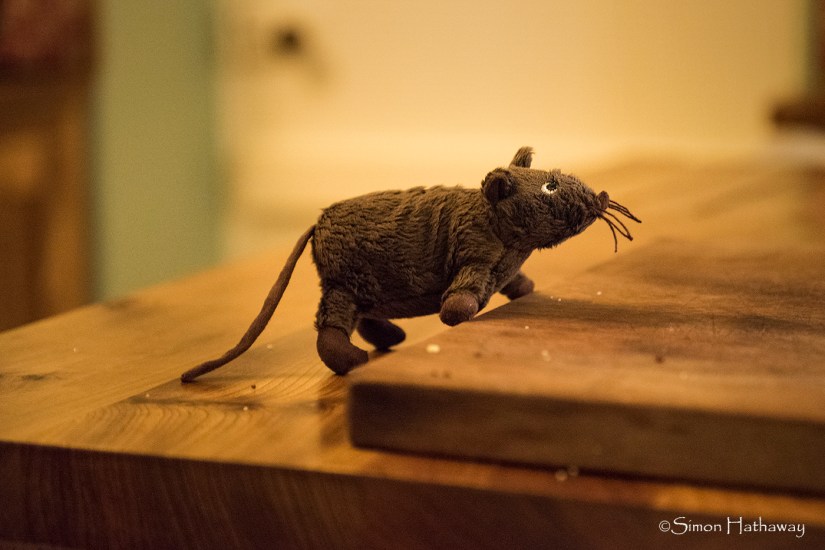
Master: “A rat.”

Student: “Why do you say that you are a rat?”

Master: “What shall I say I am?

Student: “Buddha Nature.”

Master: “My rat is much better than your Buddha Nature.”

SRH_4417a_thumb

Commentary:

What a wonderful rat! What poor Buddha Nature!

A rat swallows Buddha Nature in a single gulp.


©Boo Ahm


All writing ©Boo Ahm. All images ©Simon Hathaway

Buddha, Buddhism, Enlightenment, final goal, Happiness, illusion, Meditation, Practice, true self, Truth, Uncategorized, Zen

Q142. Should ‘I’ be thrown away to attain enlightenment?

A. It is a very common saying in Zen that we should discard ‘I’ in order to attain enlightenment. This saying, however, is like putting the cart before the horse. This nonsensical saying is possible because we don’t know what we say. How would it be possible to discard ‘I’ without so much as knowing what it is? However hard we may try to discard ‘I’, it never disappears unless we realise what it is.

SRH_0724a_thumb


In fact, it is can’t be removed by force but disappears by itself when we realise what it is. The truth is not that it disappears, but that you realise that there is no ‘I’. In other words, you should realise that what seems to be your ‘I’ is just an illusion.

Trying to remove your ‘I’ without knowing what it is, is like trying to sweep away a shadow cast on the ground. If you are to remove your ‘I’, try to realise what it is instead of trying in vain to eliminate it.

©Boo Ahm

All writing ©Boo Ahm. All images ©Simon Hathaway

Buddha, Buddhism, Enlightenment, Happiness, illusion, Meditation, Practice, Zen

Q138. What am I when my body is not me?

A. The source of all suffering.

_SRH8056a_thumb

Commentary:
When you don’t know it, it’s the source of all suffering.
When you know it, it’s the source of happiness.
©Boo Ahm

All writing ©Boo Ahm. All images ©Simon Hathaway

Buddhism, desire, Enlightenment, Happiness, illusion, Meditation, Mind, poisons, Practice, true self, Truth, Zen

Q122. What are the antidotes for the three poisons against happiness?

A. The antidote for the poison of ignorance is wisdom, which means the ability to see everything as it is. That enables us to see a piece of broken rope as a piece of broken rope and rotten food as rotten food.

The antidote for the poison of greed is the precepts, which aim to control greed. We should suppress greed artificially before getting enlightened. To obey the precepts in the strictest sense, however, is not to suppress greed artificially but to have no greed to control through realising that everything is an illusion. Only then can we be said to obey the precepts. For example, when we have the wisdom to see everything as it is, we don’t have any desire to run away from the piece of broken rope, or to chase after rotten food because we can see rope as rope and rotten food as rotten food.

File0070a_thumb

The antidote for the poison of anger is stillness, which naturally comes about when we obey the precepts. That is, when we obey the precepts, we have no greed. Then we need not struggle to fulfill our greed. When we don’t have to strive to satisfy our greed, there is no anger or disappointment that comes from the failure to meet our greed. Then our life becomes still.

In fact, the core of the three poisons is ignorance, and that of the three antidotes is the wisdom to see things as they are.
©Boo Ahm

All writing ©Boo Ahm. All images ©Simon Hathaway
Buddha, Buddhism, desire, Happiness, illusion, Meditation, poisons, Truth, Zen

Q121. What are the three poisons that prevent us from being happy?

A. The first poison, ignorance, is the lack of ability to see things as they are. For instance, we look upon a piece of broken rope as a snake, or mistake rotten food for healthy food. When we can’t see things as they are like this, we are said to see illusions as real.

P1180565a_thumb

The second poison, greed, is the desire to get or avoid such illusions. When we are confused into seeing illusions as being real, we want to run away from illusions like a piece of broken rope that look awful or ugly, or strive to obtain illusions like rotten food that look attractive. Such desire is called greed.

Finally, when we struggle to obtain or avoid illusions that we mistake for being real, things usually don’t go as we desire. Repeated failures to achieve our goals, whether to avoid or obtain such illusions, cause us to lose our temper. Even if we sometimes succeed in achieving such illusions, we are disappointed or upset to see that they are not what we desired and don’t give us as much happiness as we expected. Such emotion, the third poison, is called anger.
©Boo Ahm

All writing ©Boo Ahm. All images ©Simon Hathaway

Enlightenment, Happiness, Meditation, mindfulness, Practice, Truth, Zen

Q70. Can we feel something good only when reaching the final goal?

A. This is not an all or nothing game. In the course of trying to get there you can experience something new and positive. Everything looks more beautiful than before and your life feels simpler and easier. You find it easier and simpler to tackle your demanding life than before, feeling sometimes your problems solve themselves. Becoming more understanding and considerate, you are less apt to lose your head in a bad situation where you used to. You have less ups and downs and your life becomes more stable. You can feel your life becoming much happier than before with practice.

P1160581b_thumb

All writing ©Boo Ahm. All images ©Simon Hathaway.