Buddha, Buddhism, emptiness, empty, Enlightenment, final goal, illusion, master, Meditation, Mind, Photography, Practice, root, student, Truth, Uncategorized, Zen

Q332. What does Zen meditation have to do with reincarnation?

A. All our life we try to make good causes for good effects tomorrow. Trying your best to make yourself happy is trying to make good causes for good effects tomorrow. However, the key problem is that we don’t know what a good cause is and what a bad cause is, partly because our view of it varies according to our viewpoint and partly because what we think is a good cause very often turns out to bring a bad effect. So, we can’t help being worried about what effect we will get tomorrow even though we do our best to make good causes today. Furthermore, whatever good causes we may try to make, we can neither avoid death nor know what will happen to us after death. As a way of settling this challenging problem, primitive people would depend on the gods created by their imagination.


The purpose of Zen meditation is to help people to escape from the trap of reincarnation by realising that everything is empty. When everything is empty, not only birth and death but also transmigration and souls are empty illusions. Then reincarnation that means endless rebirth through transmigration of souls is also an empty illusion. In other words, Zen is to help people to free themselves from reincarnation by realising that reincarnation implies an endless cycle of illusions that feed on themselves and reproduce. So, to become free from reincarnation means to obtain eternal life or escape from the trap of life and death, which is also referred to as enlightenment in Buddhism.
 

_DSC1118a_thumb


Student: “What do you think you will be reborn as after your death?”

Master: “I couldn’t care less.”

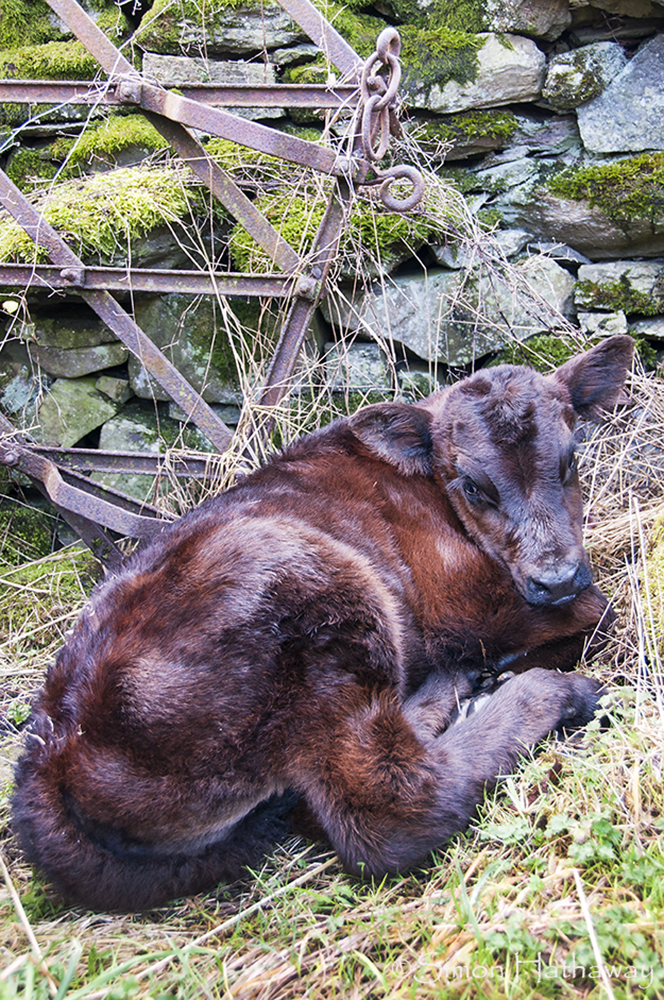
Student: “What if you should be reborn as a cow after death?”

Master: “Not bad at all.”

Student: “How can you say being reborn as an animal is not bad at all?”

Master: “Because it is empty.”


©Boo Ahm


All writing ©Boo Ahm. All images ©Simon Hathaway

Buddha, Buddhism, Enlightenment, final goal, Photography, root, self, suffering, true self, Truth, Uncategorized, Zen

Q329. Why does Zen compare us sentient beings to a patient?

A. As soon as we are born, we are all doomed to an incurable illness, ageing, which leads to death, that no one can avoid. While we have many kinds of painkillers for the illness, there is no medicine to cure it. Whenever we feel the pain of hunger, we take a painkiller, food.

017_8054a_thumb


However, over the course of time, the illness worsens to the extent that no painkiller can help us, and leads us to death in the end. Therefore, we sentient beings are compared to a patient. The purpose of Zen is to help people to be cured of the fatal illness, ageing. So, ancient masters would refer to enlightenment as the solution to the matter of birth and death.


©Boo Ahm


All writing ©Boo Ahm. All images ©Simon Hathaway

Buddha, Buddhism, emptiness, empty, illusion, Meditation, moment, present, root, Truth, Uncategorized, Zen

Q328. Is everything empty because it is always changing and not everlasting?

A. Absolutely not. Everything is empty not because it is always changing and not everlasting but because it doesn’t have its own fixed nature unless you grant it labels such as hard, soft, fragile, flexible et cetera. Emptiness is the state without any label or imaginary line, where there is no time.

017_8052a_thumb


Time is a typical imaginary line. When there is no time, no change can take place since change means the passage of time. When there is no change, there is no life and death. Therefore, when you experience the truth that you are emptiness itself, you are said to escape from the yoke of life and death.


©Boo Ahm


All writing ©Boo Ahm. All images ©Simon Hathaway

Buddha, Buddhism, emptiness, empty, illusion, Koan, master, Meditation, Mind, Photography, Practice, root, self, student, true self, Truth, Uncategorized, Zen

Q327. Student: “How can I keep my plot of mind free from light and shade?”

A. Master: “Telling you the way is very easy. But I am afraid that I may induce you to make light and shade.”

Student: “Please, tell me the way.”

Master: “Everything is empty.”

Student: “I already know that, too.”

Master: “That is making light and shade in your plot.”

_srh2424a_thumb


Commentary:

However efficacious medicine may be, an internal medicine will cause trouble if put into eyes or ears.


©Boo Ahm


All writing ©Boo Ahm. All images ©Simon Hathaway

Buddha, Buddhism, emptiness, empty, Enlightenment, final goal, illusion, Meditation, moment, now, Practice, root, self, Truth, Uncategorized, Zen

Q326. Should we see worldly life as an illusion and abandon, or be indifferent to it in order to attain enlightenment?

A. The purpose of Zen meditation is not to make people belittle, become indifferent to, or abandon worldly life but to help them to realise the truth that the realities of the life they are facing every day is no other than the heaven or the paradise they dream of. If you happen to have the slightest thought that, after enlightenment, you may be someone else, or somewhere else, other than exactly where you are now, you are far from the right way of practice.

file12136a_thumb


Zen is telling us why we can’t see and how we can see the paradise that is spread out before us.  We can’t see it since our views are clouded by labels, which are called illusions. Zen doesn’t tell people to make light of or abandon worldly life, but advises them to try to see beyond the labels of worldly life and teaches how to do it. Zen encourages people to enjoy the eternal happiness that they have not recognised so far. To try to see beyond the labels when seeing things is Zen practice.


©Boo Ahm


All writing ©Boo Ahm. All images ©Simon Hathaway

Buddha, Buddhism, emptiness, empty, Enlightenment, final goal, illusion, Meditation, moment, Photography, root, self, true self, Truth, Uncategorized, Zen

Q325. At the moment I die or when I fall asleep, does the world cease to exist?

A. Who, or what, dies or falls asleep when you die or sleep? When everything is empty, which of ‘I’, ‘death’, ‘sleep’ and ‘the world’ is not empty? Saying that everything is empty means that all of them are empty, too.

srh_5715a_thumb


However, when your sleep is not empty, the places such as your bed, your room et cetera where you sleep are not empty, either. When they are not empty, things and people related to the places are also not empty. When the things and people related to the places are not empty, other things and people related to these things and these people are also not empty. If we keep expanding in this way, we reach the conclusion that if your sleep is not empty, all the world is not empty, either. So, ancient masters would say that when even a grain of dust is not empty but real, all the world is real.


Therefore, saying that the world is empty but your sleep isn’t makes no sense at all. When your sleep is not empty but real, the world is also real. When your sleep is empty, the world is empty. To sum up, when you think that you fall asleep, the world exists. When you, however, think that your falling asleep is empty, the world is empty as well. Whatever things may happen, whether they exist or not depends upon your view.


©Boo Ahm


All writing ©Boo Ahm. All images ©Simon Hathaway
Buddha, Buddhism, illusion, Koan, master, Meditation, One, Photography, Practice, root, student, Truth, Uncategorized, Zen

Q324. Student: “How should I cultivate my plot of mind?”

A. Master: “Don’t try to pull out weeds by force, and never let crops take root.”

Student: “Why shouldn’t I pull weeds out by force?”

Master: “Because they become crops when not taking root.”

Student: “Why shouldn’t I let crops take root?”

Master: “Because they become weeds when taking root.”

Student: “What shall I do in order to carry out your teaching?”

Master: “Keep your plot free from light and shade.”

srh_7048a_thumb


Commentary:

Your plot is originally free from light and shade unless you make them.


©Boo Ahm


All writing ©Boo Ahm. All images ©Simon Hathaway

Buddha, Buddhism, emptiness, empty, master, Meditation, Photography, Practice, root, self, student, true self, Truth, Uncategorized, Zen

Q322. The main idea of Buddhism is ‘non-I’. What on earth are we if there is no ‘I’?

A. Saying that there is no ‘I’ means not that there is no ‘I’, but that there is nothing specific worth mentioning as ‘I’. However, if there were no your ‘I’, what would get your body to read this writing now?


In fact, ‘non-I’ is another expression of the fact that everything is empty and one. When everything is empty, everything is oneness as emptiness. When everything including you is oneness, oneness is part of you and you are part of oneness. When everything including you is oneness, there is nothing else but oneness. Then oneness is all and nothing else. This means that all is you and there is nothing else that is not you since oneness is you. When there is nothing else but you, all is you and you are all.

017_8032a_thumb

In order for you to become you, there must be someone or something else that is not you that you can be discriminated from. When all is you and you are all, you are not you any more, just as red is not red any more when all is red. So ‘non-I’ means not that there is no ‘I’ at all but that there is only ‘I’. So, Buddha said, “In the whole universe, only I exist” when he was born.


Student: “What happens when there is no ‘I’?”

Master: “All becomes you.”


©Boo Ahm


All writing ©Boo Ahm. All images ©Simon Hathaway

Buddha, Buddhism, Enlightenment, final goal, Koan, Meditation, Photography, root, student, true self, Truth, Uncategorized, Zen

Q318. Student: “What is the quickest way to the true-self?”

A. Master: “Don’t ask me where your mouth is.”

clouds-over-coniston_a_thumb


Commentary:

It is standing on its single foot facing you.

You don’t forsake it.


©Boo Ahm


All writing ©Boo Ahm. All images ©Simon Hathaway

Buddha, Buddhism, emptiness, empty, illusion, Meditation, Photography, root, self, true self, Truth, Uncategorized, Zen

Q317. What does ‘an illusion is the true-self’ mean?

A. An illusion is to the true-self as wind is to air. We divide air into many kinds of winds such as breeze, gale, waft, gust and so on. No matter how many kinds of winds there may be, the essence of them is the same, air. In the same way, we divide the true-self, emptiness into many forms by drawing imaginary lines or through labelling, and the forms are referred to as illusions. However many forms there may be, the essence of them is the true-self, emptiness. Therefore, it means that all illusions are true-self, just as all winds are air.

p1170207a_thumb


Student: “What is the true-self?”

Master: “An illusion is.”

Student: “What is an illusion?”

Master: “The true-self is.”

Student: “What is the difference between them?”

Master: “The difference is not between them at all but only in your view because they are one.”


©Boo Ahm


All writing ©Boo Ahm. All images ©Simon Hathaway