A. Don’t look in the wrong place for the horse that you are riding.

Commentary:
Listen carefully to what you say, and watch carefully what you do.
Your sayings and doings are from it.
©Boo Ahm
All writing ©Boo Ahm. All images ©Simon Hathaway


A. Don’t look in the wrong place for the horse that you are riding.
Commentary:
Listen carefully to what you say, and watch carefully what you do.
Your sayings and doings are from it.
©Boo Ahm
All writing ©Boo Ahm. All images ©Simon Hathaway

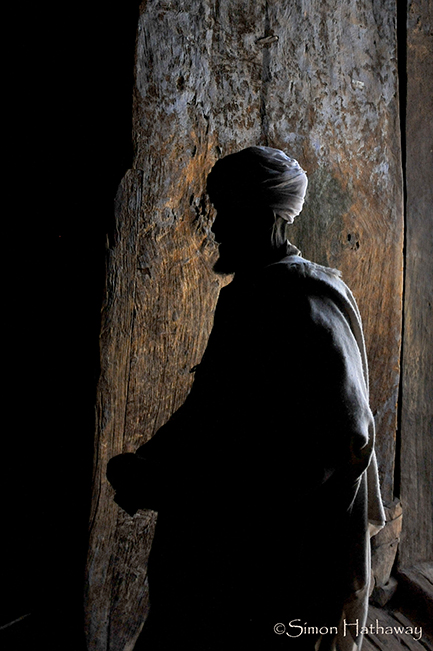
A. There are times like that. I am sure that you are not wide awake to your question during the experience. Some people say that they see beautiful angels or even the Buddha and Jesus Christ, some say they see their late parents or grandparents, some say that they see their previous lives, and others say they see ghosts or monsters as if having a nightmare. Do remember that everything you experience during your practice is nothing but an illusion whether fantastic or terrible. When you experience something beautiful you have never experienced in your life before, you are apt to feel attracted by it. They are only the actions of your emotions hidden in your sub-consciousness. If you feel attached to great figures like the Buddha or Jesus and scared of the terrible figures, you are fooled by illusions. Leave them alone and focus on your question, and they will disappear by themselves.
©Boo Ahm
All writing ©Boo Ahm. All images ©Simon Hathaway

A. Why do you think we can’t feel oneness? The habit of labelling prevents us from feeling oneness. Labelling is drawing lines that divide one into many. When we label a thing as red, we separate it from what doesn’t look red. The label, ‘red’ is a line that divides one into what is red and what is not red. When labeling a thing as good, the label ‘good’ is a line that divides one into what is good and what is not good.

We have produced countless divisions and are so addicted to them that we have forgotten the root, the original shape that we come from. The labels or divisions are referred to as illusions in Buddhism because they are not real but imaginary. Zen meditation can be said to be a practice that makes many into one by eliminating all labels or illusions. The most common and difficult label to erase is ‘I’. In order to eliminate the ‘I’, you need to realise what you are when your body is not you. When we eliminate the imaginary line ‘I’, then we can feel oneness with our surroundings.
©Boo Ahm
All writing ©Boo Ahm. All images ©Simon Hathaway

A. Master: “I can’t answer such a difficult question.”
Student: “What is an easy question, Sir?”
Master: “That is too easy a question to answer.”
Student: “What question shall I ask you then, Sir?”
Master: “Ask me a question which is neither difficult nor easy.”

Commentary:
What is a question which is neither easy nor difficult?
How charitable the master is by giving a delicious and nutritious fish to a poor person!
Why is he struggling with its bone without eating its meat?
©Boo Ahm
All writing ©Boo Ahm. All images ©Simon Hathaway

A. Don’t think that you can’t see it. You are seeing and hearing it even at this moment. You can’t avoid seeing and hearing it. The key problem is that you can’t discern it because your eyes and ears are covered with illusions. Never think that your true-self is somewhere else out of your reach. There is nothing that doesn’t belong to your true-self. Even you yourself are not an exception. Whatever you do, cry, smile, commit a cruel crime or do good deeds, they are all actions of your true-self. In summary, you can no more get away from your true-self even for a moment than you can get away from the universe. So if you chase it for a moment, it is said, you will be going the wrong way.
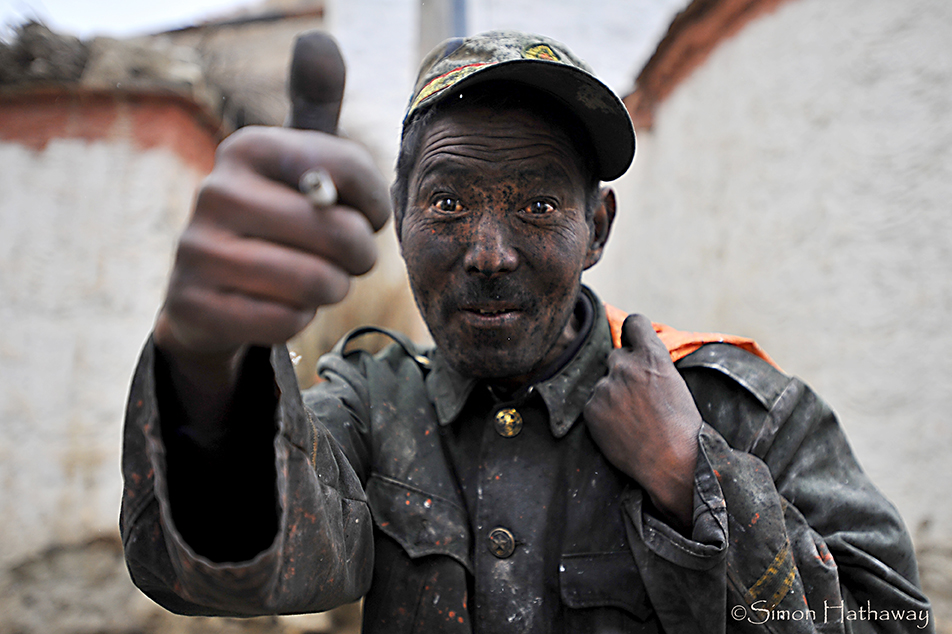
Student: “What is the true-self like, Sir?”
Master: “Why do you ask me the taste of your saliva in your mouth?”
©Boo Ahm
All writing ©Boo Ahm. All images ©Simon Hathaway

A. Ancient masters used to say that a nice saying which sounds reasonable can be a strong trap. A saying or a word, however great and nice, is nothing but an illusion. No one denies, for example, the truth that the sun is a mass of flames. However, your lips are never hot, not to mention being burnt, no matter how many times you may recite the word ‘sun’. In other words, sayings or words are not the truth itself but an illusion.

The more reasonable a saying sounds, however, the stronger we tend to make our attachment to it while taking it for the truth itself. The Sutras and the Bible are very typical examples that have great sayings we are likely to be tempted to attach ourselves to. We have a very interesting metaphor for such cases that shows how we should accept spiritual teachings: Don’t look at the finger pointing to the moon but the moon itself. The Sutras and the Bible are just like fingers pointing to the moon for people who want to see the moon, but they are not the moon itself.
©Boo Ahm
All writing ©Boo Ahm. All images ©Simon Hathaway

A. Master: “I won’t answer.”
Student: “Why not?”
Master: Because I know that you won’t believe in my answer.
Student: “Tell me the answer, sir. I will accept it.”
Master: “I answered.”

Commentary:
The master is not telling a lie. Don’t break into pieces what he says.
©Boo Ahm
All writing ©Boo Ahm. All images ©Simon Hathaway

A. It is as far as it is from the right to the left. All the time both are in the same place at the same time. As what is the right to one man can be the left to another, and what is the left today can be the right tomorrow, so what heaven is to one man can be hell to another, and what heaven is to a man today can be hell to him tomorrow. A jail, for example, is hell to the inmates there, but can be heaven to the officials who work there for a living these days when getting a job is so difficult. To a hungry, penniless man who is pursued and threatened by gangsters, prison can be heaven, a safe shelter because it provides him with food and security. In fact, there is neither hell nor heaven, just like there is neither the right nor the left. Whether a place is hell or heaven depends on the eyes of the beholder.

©Boo Ahm
All writing ©Boo Ahm. All images ©Simon Hathaway
A. No, nothing changes. Everything looks different after enlightenment not because things themselves change but because your perspective changes. In other words, you can see what you couldn’t see before. In fact there is nothing that deceives you. You deceive yourself because you can’t see things as they are.
When you are scared of a piece of broken rope since you mistake it for a snake, which is to blame for it, you or the broken rope? If you, regarding a piece of broken glass as a piece of diamond, struggle to obtain it and get disappointed when failing to get it, which is to blame for it, you or the piece of broken glass? What does a hundred dollar bill mean? It means only a piece of paper, or sweets at most to a five year old child, but it means much more to an adult. Does the bill have ageism against children?
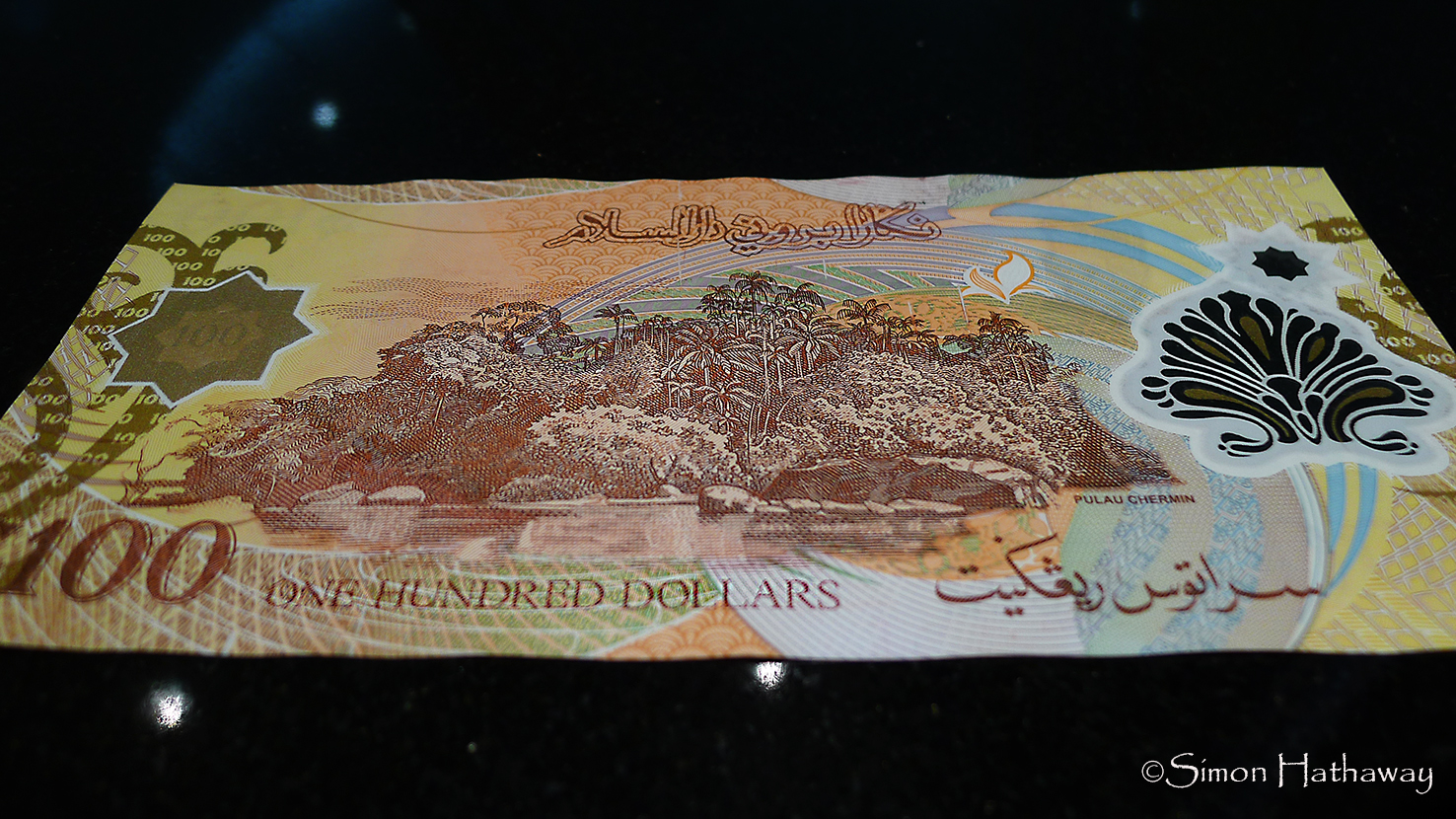
What changes is not the object you see, but the way you see it.
©Boo Ahm
All writing ©Boo Ahm. All images ©Simon Hathaway

A. Bush.
Commentary:
How beautiful! Taking off all his clothing, he is showing himself naked.

©Boo Ahm
All writing ©Boo Ahm. All images ©Simon Hathaway
 Zen Fools