Buddha, Buddhism, emptiness, empty, master, Meditation, Photography, Practice, root, self, student, true self, Truth, Uncategorized, Zen

Q322. The main idea of Buddhism is ‘non-I’. What on earth are we if there is no ‘I’?

A. Saying that there is no ‘I’ means not that there is no ‘I’, but that there is nothing specific worth mentioning as ‘I’. However, if there were no your ‘I’, what would get your body to read this writing now?


In fact, ‘non-I’ is another expression of the fact that everything is empty and one. When everything is empty, everything is oneness as emptiness. When everything including you is oneness, oneness is part of you and you are part of oneness. When everything including you is oneness, there is nothing else but oneness. Then oneness is all and nothing else. This means that all is you and there is nothing else that is not you since oneness is you. When there is nothing else but you, all is you and you are all.

017_8032a_thumb

In order for you to become you, there must be someone or something else that is not you that you can be discriminated from. When all is you and you are all, you are not you any more, just as red is not red any more when all is red. So ‘non-I’ means not that there is no ‘I’ at all but that there is only ‘I’. So, Buddha said, “In the whole universe, only I exist” when he was born.


Student: “What happens when there is no ‘I’?”

Master: “All becomes you.”


©Boo Ahm


All writing ©Boo Ahm. All images ©Simon Hathaway

Buddha, Buddhism, emptiness, empty, illusion, Meditation, Photography, root, self, true self, Truth, Uncategorized, Zen

Q317. What does ‘an illusion is the true-self’ mean?

A. An illusion is to the true-self as wind is to air. We divide air into many kinds of winds such as breeze, gale, waft, gust and so on. No matter how many kinds of winds there may be, the essence of them is the same, air. In the same way, we divide the true-self, emptiness into many forms by drawing imaginary lines or through labelling, and the forms are referred to as illusions. However many forms there may be, the essence of them is the true-self, emptiness. Therefore, it means that all illusions are true-self, just as all winds are air.

p1170207a_thumb


Student: “What is the true-self?”

Master: “An illusion is.”

Student: “What is an illusion?”

Master: “The true-self is.”

Student: “What is the difference between them?”

Master: “The difference is not between them at all but only in your view because they are one.”


©Boo Ahm


All writing ©Boo Ahm. All images ©Simon Hathaway

Buddha, Buddhism, Enlightenment, final goal, master, Meditation, One, Photography, root, self, student, true self, Truth, Uncategorized, Zen

Q309. Student: “What is the true-self?”

A. Master: “How can I explain it better than you?”

srh_1657a_thumb


Commentary:

Wisdom never scolds or speaks ill of foolishness.

©Boo Ahm


All writing ©Boo Ahm. All images ©Simon Hathaway

Buddha, Buddhism, desire, master, Meditation, Mind, Photography, Practice, Religion, self, student, true self, Truth, Uncategorized, Zen

Q308. Desire comes from the thoughts we cling to. What is the difference between desire and a goal? Humanity will never progress without having a goal to grow in life, which is the law of nature.

A. A goal comes from desire. It is a concrete expression of your desire. I never tell you not to have desire or a goal in your life. As you said, your desire is the motive to develop the world into a better place to live in. You love your family, and your goal in life is to make enough money to help them to enjoy an easy and comfortable life. Love is also another expression of desire.


The key problem is that we don’t control desire but are controlled by it. And we have seen what miserable and even disastrous things it can lead us to do when our life is run by our desire.

file14058a_thumb


What I mean is not that desire is bad and that you should not have it, but that we should be able to drive our desire instead of being driven by it through realising the root of your desire. When, aware of the root of your desire, you can run your desire instead of being run by it, your desire is called compassion. What Zen says is not that we should not have desire but that you should turn it into compassion, wise desire.

©Boo Ahm


All writing ©Boo Ahm. All images ©Simon Hathaway
Bible, Buddha, Buddhism, emptiness, empty, illusion, master, Meditation, Photography, Practice, Religion, root, self, student, true self, Truth, Uncategorized, Zen

Q307. What does the New Testament Matthew 5:29,30 mean?

Matthew 5:29,30:  29) “So if your right eye causes you to sin, take it out and throw it away! It is much better for you to lose a part of your body than to have your whole body thrown into hell. 30) If your right hand causes you to sin, cut it off and throw it away! It is much better for you to lose one of your limbs than to have your whole body go off to hell.”

A. Here your whole body means your true-self or your whole life, and parts of your body such as eyes and hands means illusions. To remove your eyes and hands means to stop following illusions. Having your whole body thrown into hell refers to leaving your true-self lost and living in the world of illusions. So, ‘losing parts of your body is much better than having your whole body thrown into hell’ means that to stop following illusions, although it is not easy, is much better than to live in the world of illusions.

Senegalese lady with traditionally decorated hands.. Image shot 2004. Exact date unknown.


Student: “How do you prevent your eyes and hands from sinning?”

Master: “I don’t have eyes and hands to sin.”


©Boo Ahm


All writing ©Boo Ahm. All images ©Simon Hathaway

Buddha, Buddhism, master, Meditation, Photography, root, self, student, true self, Uncategorized, Zen

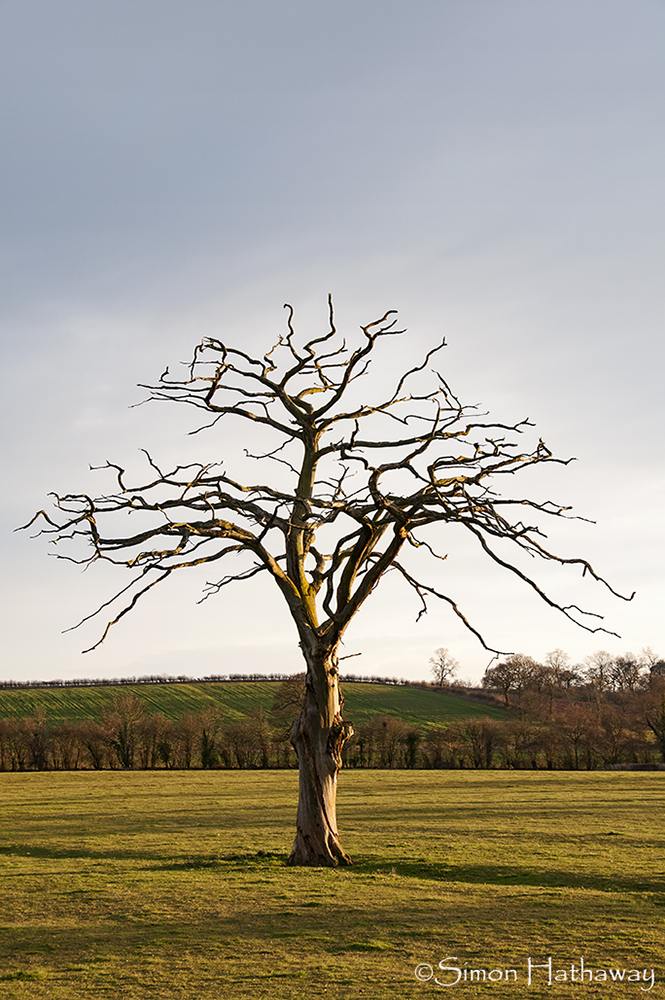
Q306. Student: “What happens when a tree withers and all its leaves are fallen?

A. Master: “Its body is revealed.”

_dsc1362a_thumb


Commentary:

Look look. Do you see its body now?

Don’t say that it is beyond words.

Even a child can explain it.


©Boo Ahm


All writing ©Boo Ahm. All images ©Simon Hathaway

Buddha, Buddhism, God, Happiness, master, Meditation, Mind, Photography, Practice, Religion, root, self, student, suffering, true self, Truth, Uncategorized, Zen

Q304. My life is still full of troublesome problems even though I practice Zen meditation. How can I be perfectly free from them?

A. There is no one who has no problems at all in the world. For a joke, it is said that even Buddha and God have a lot of troubles all the time because people don’t follow them and do a lot of bad things against their teachings. If you were perfectly free from troubles, the monotony of life might be your serious trouble.


You should know that Zen practice doesn’t change what happens to you but your view of what happens to you. As mentioned repeatedly earlier, everything is empty and neutral. Whether it is good or bad, useful or harmful, is in the eye of the beholder. Try to see everything as neutral even though you have not realised the truth. Why don’t you see your problems as good omens of good fortune to come? Why don’t you think that you are paying in advance for what you will enjoy later? When your view is changed, your thoughts are changed. When your thoughts are changed, your acts are changed. When your acts are changed, what happens to you will also be changed.

p1130905a_thumb


Student: “How can I get rid of enemies?”

Master: “Why don’t you make them your friends?”


©Boo Ahm


All writing ©Boo Ahm. All images ©Simon Hathaway

Buddha, Buddhism, emptiness, empty, Enlightenment, final goal, Koan, master, meditaion, Photography, root, self, student, true self, Truth, Uncategorized, Zen

Q300. Student: “What is the true self like?”

A. Master: “It is not the shape of male or female.”

srh_4591a_thumb


Commentary:

Don’t measure others by your yardstick.

It is the shape of male and female.


©Boo Ahm


All writing ©Boo Ahm. All images ©Simon Hathawa

Buddha, Buddhism, emptiness, empty, Enlightenment, final goal, master, Meditation, Mind, Photography, Religion, root, self, student, sutras, true self, Truth, Uncategorized, Zen

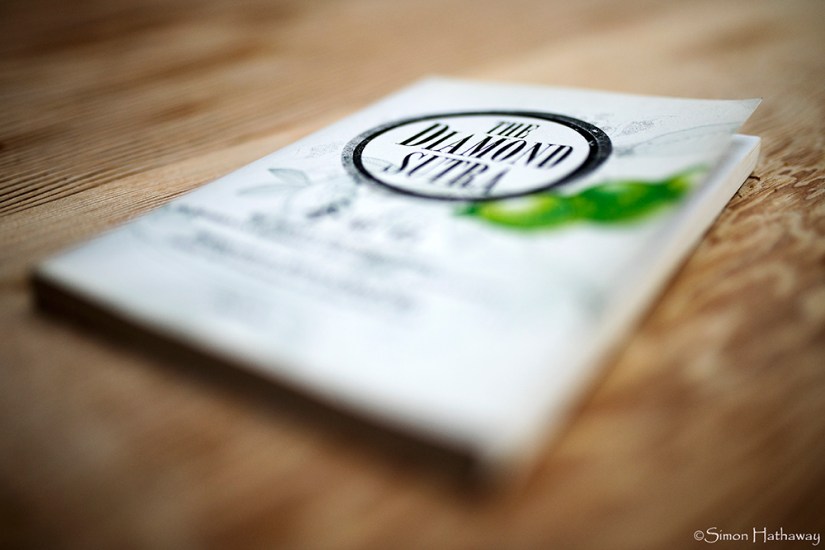
Q290. I have made it a rule to read the Diamond Sutra and Zen books every day for over ten years. Is this a good way?

A. It is said that going one kilometre by studying books is not as good as going one metre by practising. It’s because the former adds to illusions whereas the latter decreases them. The former regresses rather than advances us in Zen meditation. So, ancient masters would say, “Trying to attain enlightenment through books is like trying to pick the moon with a pole.”


Instead of spending so much time reading the Sutra and Zen books, I would like to advise you to allocate 90% of this time to practising meditation. The remaining 10% of this time can still be used for reading.

srh_3904a_thumb


Whatever you do, wherever you are, you are practising well only if you keep questioning what is making you do what you are doing. Reading the Sutras for ten hours is not as good as drinking tea, or washing the dishes for an hour with the question in your mind.


Master: “What did you do last night?”

Student: “I read the Diamond Sutra.”

Master: “How much did you read?”

Student: “I read three pages.”

Master: “You didn’t see the Sutra, let alone read it. The true Sutra has no pages.”


©Boo Ahm

All writing ©Boo Ahm. All images ©Simon Hathaway


Buddha, Buddhism, emptiness, empty, illusion, Koan, master, Meditation, Photography, root, self, student, true self, Truth, Uncategorized, Zen

Q288. Student: “You always say that everything including mountains and rivers is an illusion. What is not an illusion?”

Master: “Mountains and rivers.”

moss_force_panorama2a_thumb


Commentary:

Mountains and rivers block your insight into mountains and rivers.


©Boo Ahm


All writing ©Boo Ahm. All images ©Simon Hathaway