Buddha, Buddhism, Enlightenment, final goal, master, Meditation, Mind, Photography, Practice, Religion, root, self, student, true self, Truth, Uncategorized, Zen

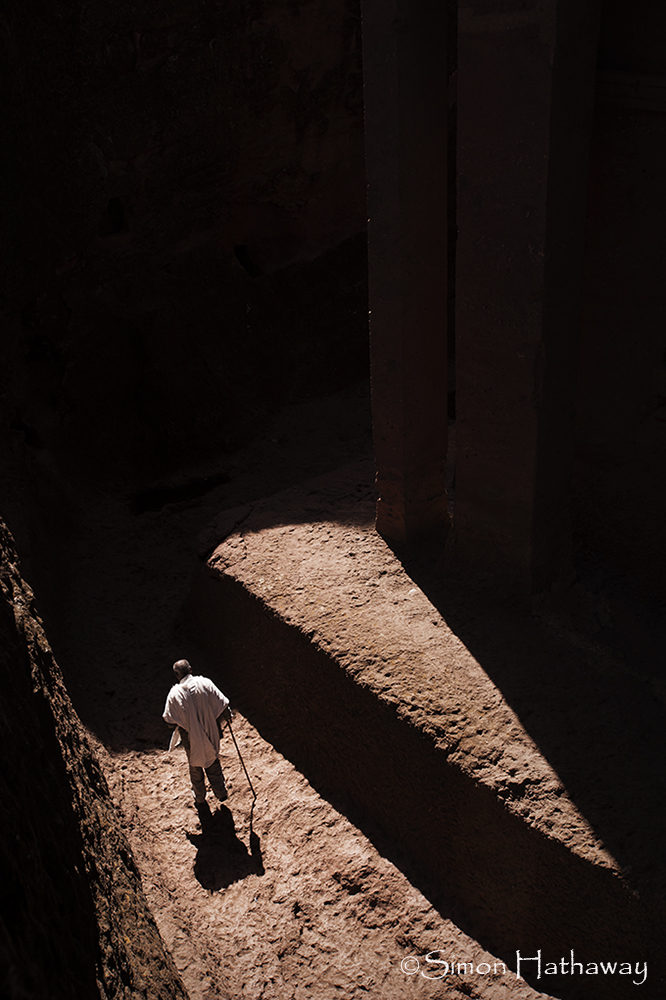
Q234. Student: “How can I enjoy an eternal life without birth and death?”

A. Master: “Live in the land without light and shade.”

Student: “Where is the land?”

Master: “There.”

Student: “Where is there?”

Master: “There.”

File0160a_thumb


Commentary:

You don’t have to dig the earth for gold with your hands full of gold.


©Boo Ahm


All writing ©Boo Ahm. All images ©Simon Hathaway

Bible, Buddha, Buddhism, desire, emptiness, empty, final goal, God, illusion, Meditation, Prayer, root, true self, Truth, Uncategorized, Zen

Q211. Why doesn’t God listen to me when I cry to him for help?

A. It is not that God doesn’t listen to you, but that you are deaf to him because you are involved in listening to only your familiar noises. It is not that he hides himself from you, but that you are blind to him since you are preoccupied in keeping company only with familiar figures. He sometimes whispers and sometimes shouts. He sometimes shakes you, from time to time pushes you and once in a while pulls you. It is not God but you that are to blame for not receiving help from him. If you can cut off all images and names, his voice and figure will sound and look clear to you.

File0162a_thumb

©Boo Ahm


All writing ©Boo Ahm. All images ©Simon Hathaway


Buddha, Buddhism, emptiness, empty, Enlightenment, final goal, Koan, master, Meditation, Mind, mindfulness, Practice, root, student, true self, Truth, Uncategorized, Zen

Q204. Student: “How is a tree when it withers and all its leaves are fallen?”

A. Master: “It totally reveals its body.”

SRH_1630a_thumb


Commentary:

It stands on the Earth supporting the sky and filling the universe to the full.


©Boo Ahm


All writing ©Boo Ahm. All images ©Simon Hathaway

Buddha, Buddhism, Enlightenment, final goal, God, Happiness, Meditation, Mind, One, Practice, Prayer, Religion, root, true self, Truth, Uncategorized, Zen

Q203. If I find myself affixed to a single path to truth: the path of prayer and praise, or the path of kindness and love, or the path of wisdom and meditation, or any other path of a singular mode, am I going in the wrong way?

A. No, you are not wrong at all. Feel free to choose any path that appeals to you and concentrate on seeking the root from which the path comes. Whichever path you may take, you will come to take the same way after all because they are from the same root, the truth that is not dual.

20160509_195019a_thumb


We should realise the fact that all other things, as well as all paths, are from the same root even though they may look different from each other. The root is the very truth. To realise what the root is should be the final goal of all religions.


©Boo Ahm


All writing ©Boo Ahm. All images ©Simon Hathaway

Bible, Buddha, Buddhism, emptiness, empty, Enlightenment, final goal, God, illusion, Meditation, Mind, Practice, Prayer, Religion, root, self, true self, Truth, Uncategorized, Zen

Q179. You say that the Sutras are not different from the Bible. Could you interpret ‘Jesus’s walking on the water’ from the Bible in your view?

A. Water represents our illusions. ‘Walking on the water’ symbolises ‘living free from the trap of illusions’, that is, Jesus didn’t sink in illusions, which means he was not fooled by them. The scenario that they were fishing in the water is symbolising our life that we are leading in illusions. The fact that Peter started walking on the water to Jesus means that he had a strong faith in Jesus and believed the water to be an illusion, even though he didn’t realise the truth himself. The scene, where noticing the strong wind, Peter was afraid and started to sink down in the water means that he didn’t realise the wind was also an illusion because he was not enlightened.

SRH_1825a_thumb


©Boo Ahm


All writing ©Boo Ahm. All images ©Simon Hathaway

Bible, Buddha, Buddhism, God, Meditation, Practice, Prayer, Religion, Zen

Q136. What do you think of praying to God or Buddha?

A. We can see a lot of people not only pray to them but also offer plenty of money to temples or churches as a token of their faith in Buddha or God, while ignoring many suffering people who are in need. People want to make a deal with God or Buddha, just like they may bribe public officials to do something they want to be done. In brief, they take advantage of their prayer to Buddha or God as a means to satisfy and justify their greed and hypocrisy.

It is said that God or Buddha is love itself, compassion itself and justice itself and that he is so almighty that he can fulfill our prayers. Why are so many starving in the world and why do endless wars break out and disasters befall people at this time while so many clergymen, priests and monks are praying all around the world? Why does a charitable God who says, “Love your neighbour as yourself” always seem to side with rich, strong countries or people? Why have so many countries been engaged in wars throughout history in the name of religion?

SRH_0014a_thumb

I don’t think that prayer itself is bad. However, why do these things happen in spite of so much prayer by so many people around the world? It is because they don’t know whom they pray to or worship because they don’t know themselves and therefore they do not know who is praying. They also don’t know how to worship or pray because they don’t know whom they worship or pray to. Therefore, they commit brutal carnage while speaking of Jesus’s love with their mouths, and spend an untold sum of money on producing weapons while saying their prayers.

I never discourage you from praying, but encourage you to pray in the right way. In order to pray in the right way, you should know at least who prays to whom. When you don’t know this, trying to find out who prays to whom it is a true prayer.

©Boo Ahm

All writing ©Boo Ahm. All images ©Simon Hathaway

Bible, Buddha, Buddhism, Enlightenment, final goal, illusion, Meditation, Religion, sutras, Truth, Zen

Q100. I don’t understand that the Sutras and the Bible are also illusions.

A. Ancient masters used to say that a nice saying which sounds reasonable can be a strong trap. A saying or a word, however great and nice, is nothing but an illusion. No one denies, for example, the truth that the sun is a mass of flames. However, your lips are never hot, not to mention being burnt, no matter how many times you may recite the word ‘sun’. In other words, sayings or words are not the truth itself but an illusion.

SRH_2660b_thumb

The more reasonable a saying sounds, however, the stronger we tend to make our attachment to it while taking it for the truth itself. The Sutras and the Bible are very typical examples that have great sayings we are likely to be tempted to attach ourselves to. We have a very interesting metaphor for such cases that shows how we should accept spiritual teachings: Don’t look at the finger pointing to the moon but the moon itself. The Sutras and the Bible are just like fingers pointing to the moon for people who want to see the moon, but they are not the moon itself.
©Boo Ahm

All writing ©Boo Ahm. All images ©Simon Hathaway

Bible, Buddha, Buddhism, Enlightenment, final goal, Koan, Truth, Zen

Q88. Why is it difficult to get the point of masters’ teachings?

A. You should remember that all sayings from the Sutras, the Bible and masters are all like a piece of broken tile for knocking on the door. Let’s suppose you are locked in a burning room and trying to get out of it. The room has a single window through which you can escape from it but unfortunately you are not aware of the window. I throw a piece of broken tile at the widow in order to let you know the existence of the window, the only exit.

What should you do now? As soon as you hear the strike of the broken tile on the window or see the broken tile thrown into the room, you should be able to escape from the burning room through the window.
However, most of you pick up the tile and try to analyse it: the elements of it, location of its production, its colour, its weight, the effect it can have on the room and so on. This is the way you accept masters’ teachings, so you can’t avoid finding it difficult to get to the point of the teachings.

P1190319a_thumb

Which is your way of approaching Zen?

In order to catch the point of the teachings, don’t cling to the words themselves, but try to grasp the main

intention of their being spoken.

©Boo Ahm

All writing ©Boo Ahm. All images ©Simon Hathaway.

intention of their being spoken.

©Boo Ahm

All writing ©Boo Ahm. All images ©Simon Hathaway.

Bible, Buddha, Buddhism, illusion, Meditation, self, sutras, Truth, Zen

Q86. If all is an illusion, are koans also illusions?

A. Of course they are also illusions. When I want people to stop making noise in a room, I can say to them, “Be quiet, please.” My words, “Be quiet, please” are also noise. Then I can be said to use noise in order to remove noise. Likewise, Zen questions, which are known as koans, are illusions used for the purpose of eliminating other illusions.

SRH_2661a_thumb

In fact, not only koans but also the Sutras and the Bible are illusions.

©Boo Ahm

All writing ©Boo Ahm. All images ©Simon Hathaway.

Bible, Enlightenment, illusion, Meditation, sutras, Truth, Zen

Q71. Why should we not read books?

A. Ancient masters always advised us not to read books if we hoped to reach the final goal. However good a book on enlightenment you may read, you can’t reach the final goal through reading books without practice. Masters discouraged us from reading books because reading leads us to feel as if we were approaching the final goal as we get more knowledge on the final goal. In fact, getting more knowledge is collecting more illusions and strengthening the solidity of your illusions while reaching the final goal means breaking illusions. Actually we are going farther away in the opposite direction from the final goal against our intention.

Why do few people reach the final goal though so many people are reading so many books including the Sutras and the Bible around the world? Are the Sutras and the Bible telling a lie? It is not because they are telling a lie but because we can’t digest what they mean. The final goal, the truth, is compared to a cure-all that gives an eternal life to ill people who take it. But the cure-all is so invisible that it is almost impossible to discern it. And what all books, including the Bible and the Sutras, are saying about it is not the cure-all itself but wrapping papers that can help people to recognise the contents, the cure-all. Most people mistake swallowing the wrapping paper for taking the contents, or cure-all. If we had taken a true cure-all, we would have become well instantly.

SRH_0664a_thumb

I don’t want to discourage you from reading books, but I’d like to invite you to change the way of reading books in order to take the cure-all, instead of swallowing the wrapping paper. You should bear it in mind that every single word of the book you read is the gate to the truth, the final goal. If you digest only a single word through your body from any book you read, you can reach the final goal. If you have not reached the final goal after reading so many books, it means that you have not understood even a single word of so many words you have read. You took only wrapping papers. Trace back to the root the word or a sentence you believe you understand, or you like. That is to try to see beyond the word, an illusion. This can be compared to tearing the wrapping paper. If you can see the root, you can be said to have digested the book perfectly, to have reached the final goal. Try to see the root of each word or each sentence as perfectly as possible, instead of trying to read as many books as possible. That is a kind of Zen practice as well.

All writing ©Boo Ahm. All images ©Simon Hathaway.