Bible, Buddha, Buddhism, emptiness, empty, Enlightenment, illusion, Meditation, Photography, true self, Truth, Uncategorized, Zen

Q295. Shouldn’t I remove not only illusions but also the true-self since illusions are the true-self?

A. Of course, you should remove the true-self, too if you can. You should remove not only the true-self but also your mother and father. Only when have you removed all of them can you see the true-self and the true form of your parents.


Jesus said, “Whoever does not hate his father and his mother cannot become a disciple to me. And whoever does not hate his brothers and sisters and take up his cross in my way, will not be worthy of me.” Ancient Masters also said, “If you are to see the Buddha, kill Buddha.”


Why did Jesus tell people to hate their parents while saying that we should love our neighbours as ourselves? Why did Masters talk people into killing Buddha while teaching how to see Buddha? Both advised us to remove names, which are just imaginary lines.


_srh4801a_thumb


When we say ‘the true-self’, the name ‘true-self’ is not the true-self but only a label used to express the true-self. The more important a thing is to you, the more difficult its name is to remove. So, Masters would say that the more reasonable a comment sounds, the more firmly it will stick to you.


You should remove all names, or labels, whatever they are and no matter how important they look to you.

©Boo Ahm


All writing ©Boo Ahm. All images ©Simon Hathaway

Buddha, Buddhism, Enlightenment, final goal, master, Meditation, Photography, Practice, root, student, true self, Truth, Uncategorized, Zen

Q293. Is it possible to transmit enlightenment to other people?

A. ‘Transmit enlightenment’ and ‘Transmit dharma’ are very common sayings in Zen. These, however, are very incorrect expressions that can bring about misunderstanding. Enlightenment is neither a physical matter nor a type of knowledge that we can give and take in the way that we can do with gold, or the four rules of arithmetic.


Suppose that there is a person who, not knowing that he is already part of the Earth, wishes to go to the Earth. As a result of your efforts to help him, one day he realises the truth that he is part of the Earth that he has been so anxious to reach. You can say to him, “At last you have now realised the truth that you are part of the Earth.” Likewise, saying ‘You’ve now realised dharma,’ usually while giving a symbolic thing like a piece of writing or a robe, is said to be the transmission of dharma. The bowl and robe given to his student by Bodhidharma is a good example of this. Therefore, ‘Transmit dharma’ doesn’t mean to transfer dharma but rather to approve a student’s realisation of dharma.

srh_8220a_thumb


Student: “How can I receive enlightenment?”

Master: “You should have no hands.”


©Boo Ahm


All writing ©Boo Ahm. All images ©Simon Hathaway

Buddha, Buddhism, emptiness, empty, Enlightenment, final goal, Koan, master, Meditation, Photography, Practice, student, true self, Truth, Uncategorized, Zen

Q291. Student: “How can I become one with the universe?”

A. Master: “You should melt everything and make it you.”

Student: “How can I do it?”

Master: “Make yourself melt into air.”

p1090984b_thumb


Commentary:

When there is no ‘I’, there is nothing that is not ‘I’.


©Boo Ahm


All writing ©Boo Ahm. All images ©Simon Hathaway

Buddha, Buddhism, emptiness, empty, Enlightenment, final goal, master, Meditation, Mind, Photography, Religion, root, self, student, sutras, true self, Truth, Uncategorized, Zen

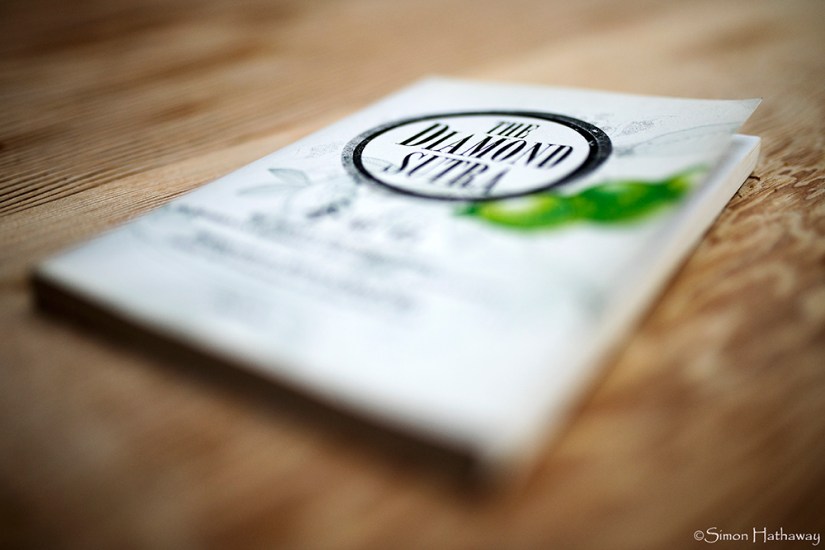
Q290. I have made it a rule to read the Diamond Sutra and Zen books every day for over ten years. Is this a good way?

A. It is said that going one kilometre by studying books is not as good as going one metre by practising. It’s because the former adds to illusions whereas the latter decreases them. The former regresses rather than advances us in Zen meditation. So, ancient masters would say, “Trying to attain enlightenment through books is like trying to pick the moon with a pole.”


Instead of spending so much time reading the Sutra and Zen books, I would like to advise you to allocate 90% of this time to practising meditation. The remaining 10% of this time can still be used for reading.

srh_3904a_thumb


Whatever you do, wherever you are, you are practising well only if you keep questioning what is making you do what you are doing. Reading the Sutras for ten hours is not as good as drinking tea, or washing the dishes for an hour with the question in your mind.


Master: “What did you do last night?”

Student: “I read the Diamond Sutra.”

Master: “How much did you read?”

Student: “I read three pages.”

Master: “You didn’t see the Sutra, let alone read it. The true Sutra has no pages.”


©Boo Ahm

All writing ©Boo Ahm. All images ©Simon Hathaway


Bible, Buddha, Buddhism, emptiness, empty, illusion, master, Meditation, Photography, Practice, Religion, student, suffering, Uncategorized, Zen

Q289. Why should we give without expecting anything in return?

A. When you give help to someone, you should not expect anything in return for it but rather forget it. If you do expect anything, then it is not help but business disguised as help. This may result in your harming yourself later.


If you remember the favour you bestowed on someone and expect something in return, you are more likely to feel disappointed, or even betrayed by his refusal when you ask him for help than you would be if you did not give him any help. You are also likely to be less grateful when you are helped because you are apt to take his help for granted, rather than thank him for it, while thinking of it as repayment of the debt he owes you for your help. In the end, your help will cause you anger or unhappiness, or deprive you of happiness. It’s like your hurting yourself.

srh_8483a_thumb


So, ancient masters always advised people to do without doing. When you realise that everything is empty and think that your help is also empty, you can be said to help without helping. As an expedient means to teach how to do without doing, they would say, “Don’t even let your right hand know what it did, not to mention your left hand.”


©Boo Ahm


All writing ©Boo Ahm. All images ©Simon Hathaway
Buddha, Buddhism, Enlightenment, final goal, Koan, master, Meditation, Mind, Photography, Practice, root, self, student, true self, Truth, Uncategorized, Zen

Q285. Student: “You always say that everything within sight is the true-self. How can you show it to me?”

A. Master: “Am I not within your sight?”

_srh4603a_thumb


Commentary:

Why can’t the student see what is within his sight even though there is no barrier between them?

Instead, put up a barrier and he will see it.


©Boo Ahm


All writing ©Boo Ahm. All images ©Simon Hathaway
Buddha, Buddhism, Happiness, Meditation, Photography, Practice, root, self, student, true self, Truth, Uncategorized, Zen

Q284. How many hours a day should I practice?

A. The more the better, but you should never allow your practice to a make mess of not only your normal life but also your Zen meditation by practising too hard. In the beginning, in order to get used to keeping the question, you had better make it a rule to practice for at least an hour a day at a set time everyday, for example, before going to bed or immediately after waking up. However, once you have learned how to keep the question, you need not confine your practice to a given period of time and be bound by time since time is a typical illusion which we should remove.

20161103_104321a_thumb


Then, erase all time lines from your mind and think that you practice all the time forever. Identify yourself with the question. Then whatever you do, your question will do it. Your question, for example, will drink tea when you drink tea, and your question will chat even when you chat. Then, your practice will go on by itself. Until you reach this stage, practice at least an hour a day and try to keep the question all the time.


©Boo Ahm


All writing ©Boo Ahm. All images ©Simon Hathaway

Bible, Buddha, Buddhism, empty, Enlightenment, final goal, illusion, Koan, Meditation, One, Photography, Practice, Religion, root, self, true self, Truth, Uncategorized, Zen

Q283. Sometimes you say that we should remove all illusions, but sometimes you say there is nothing that is not the true-self. How can this be?

A. It’s true that everything is the true-self and there is nothing that is not the true-self. However, it is also true that everything is an illusion and there is nothing that is not an illusion. To remove illusions doesn’t mean to detach illusions from the true-self and throw them away to a remote place. If you happen to think this way, you are going in the opposite direction away from your goal because you separate illusions from the true-self and make them two.

20160705_213552a_thumb


As we have mentioned many times, the purpose of Zen meditation is to realise oneness or non-duality. Jesus also said, “When you make the two one, and when you make the inside like the outside and the outside like the inside, and the above like the below, and when you make the male and the female one and the same, so that the male is not male nor the female female; then will you enter the kingdom.” To remove illusions means to realise the truth that all illusions are the true-self and both of them are one. Therefore, when we are not enlightened, that is, when we can’t see things as they are, everything is an illusion, but when we are enlightened, there is nothing that is not the true-self.


©Boo Ahm


All writing ©Boo Ahm. All images ©Simon Hathaway

Bible, Buddha, Buddhism, compassion, Enlightenment, final goal, love, master, Meditation, Photography, Practice, Religion, root, self, student, true self, Truth, Uncategorized, Zen

Q280. Why is Zen meditation selfish?

A. What makes you think Zen meditation is selfish? Do you happen to think so because Zen doesn’t emphasise compassion during the teaching, that is to say, that we should help the poor or those in trouble? Zen expresses the same message in a different way.


Zen teaches people that we are one with the poor and the weak, that is, they are part of us and we are part of them by getting people to realise the truth that we are oneness with all the universe, rather than say that we should help them.

srh_4092a_thumb


Which is the more appealing and more persuasive of the following two scenarios, “This boy lost his parents and has no food to eat and no shelter to live in. We should help him because he is likely to become a criminal and harm our society in the future if he is left uncared for now” or “Take a close look at this boy. This is part of you.”? This is what the Biblical scripture, ‘Love your neighbour as yourself’ means.


©Boo Ahm


All writing ©Boo Ahm. All images ©Simon Hathaway

Bible, Buddha, Buddhism, emptiness, empty, Enlightenment, final goal, God, master, Meditation, Mind, One, Photography, Practice, Religion, root, self, student, sutras, true self, Truth, Uncategorized, Zen

Q277. How can I, as a Christian, go to Heaven?

A. If you are to go to Heaven you should, above all, know where it is in order to go there, and then you should also know how to get there. I am going to quote from Jesus about where it is and how to get there.


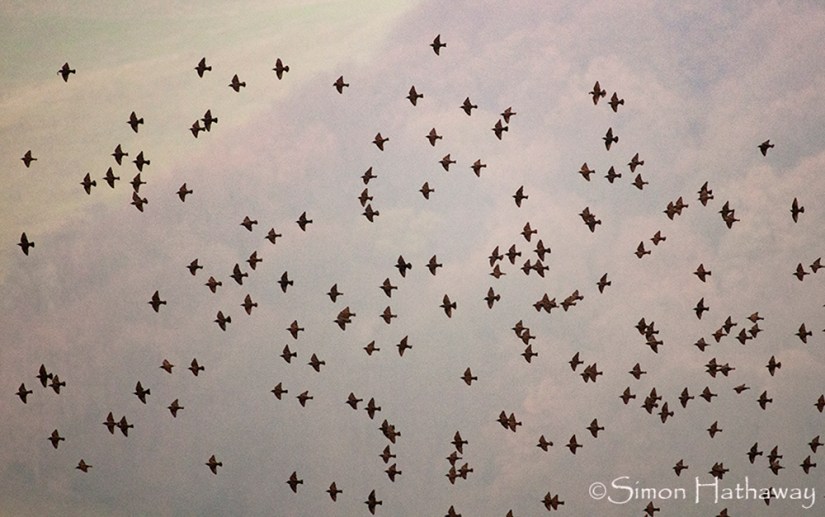
Jesus said, “If those who lead you say to you, ‘See, the kingdom is in the sky,’ then the birds of the sky will precede you. If they say to you, ‘It is in the sea,’ then the fish will precede you. Rather, the kingdom is inside of you, and it is outside of you.” In other words, everything, whether Heaven or Hell, is produced by your mind. Where you are now is both Heaven and Hell. Whether it is Heaven or Hell depends on your mind.

_srh4739a_thumb


Jesus said to them, “When you make the two one, and when you make the inside like the outside and the outside like the inside, and the above like the below, and when you make the male and the female one and the same, so that the male is not be male nor the female the female; and when you fashion an eye in the place of an eye, and a hand in place of a hand, and a foot in place of a foot, and a likeness in place of a likeness; then will you enter the kingdom.” Put more simply, this means that in order to enter Heaven, we should not discriminate. We have a very similar saying in Zen: Make the smallest distinction and you are as far from it as Heaven is from Earth. In conclusion, to realise that Heaven and Hell are only illusions produced by your mind is to enter Heaven.


Student: “How can I enter Heaven?”

Master: “Enter Hell.”


©Boo Ahm


All writing ©Boo Ahm. All images ©Simon Hathaway