Master: “Mountains and rivers.”

Commentary:
Mountains and rivers block your insight into mountains and rivers.
©Boo Ahm
All writing ©Boo Ahm. All images ©Simon Hathaway


Master: “Mountains and rivers.”
Commentary:
Mountains and rivers block your insight into mountains and rivers.
©Boo Ahm
All writing ©Boo Ahm. All images ©Simon Hathaway

A. The Buddha Land, interpreted literally, is a land without any sentient beings where only Buddhas are. When there is only Buddha without any sentient beings, Buddha is not Buddha any more than the right is the right when there is no left.
In fact, the Buddha Land is not a land somewhere else other than the Earth where we live but simply a non-discriminating mind without any illusions. Buddha and sentient beings are, in fact, illusions, all fruits of discrimination. In other words, when we don’t make any discrimination, there is neither Buddha nor sentient beings, which is called Buddha Land. So, one of the famous ancient masters used to say, “Pass by quickly where there is no Buddha, and don’t stay where there is Buddha.”

Student: “Where is the Buddha Land?”
Master: “In your house.”
Student: “There is no Buddha, and there are only my wife and children in my house.
Master: “There is no sun to a blind man even at midday.”
©Boo Ahm
All writing ©Boo Ahm. All images ©Simon Hathaway

A. They mean that you should eliminate the illusions of you, that is, all the labels attached to you, or all the words used to describe your identity. This is because all suffering is from your mistaking the labels attached to you as you and at the same time being attached to them.

When you are deluded by labels, like this, they are referred to as illusions. The final goal of Zen is to realise that labels are not real but only imaginary lines and to see what you are like free from labels. That is called seeing your true-self, or attaining enlightenment.
Student: “How can I discard my ‘I’?”
Master: “You should know that all you believe to be you is not you but just an illusion.”
©Boo Ahm
All writing ©Boo Ahm. All images ©Simon Hathaway
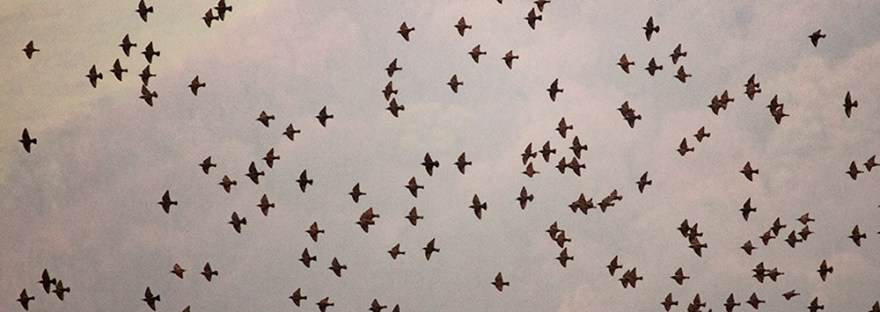
A. If you are to go to Heaven you should, above all, know where it is in order to go there, and then you should also know how to get there. I am going to quote from Jesus about where it is and how to get there.
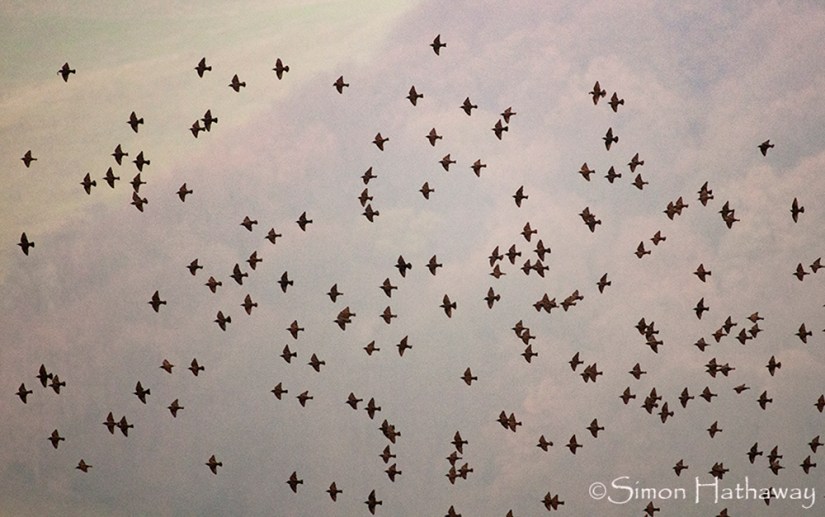
Jesus said, “If those who lead you say to you, ‘See, the kingdom is in the sky,’ then the birds of the sky will precede you. If they say to you, ‘It is in the sea,’ then the fish will precede you. Rather, the kingdom is inside of you, and it is outside of you.” In other words, everything, whether Heaven or Hell, is produced by your mind. Where you are now is both Heaven and Hell. Whether it is Heaven or Hell depends on your mind.
Jesus said to them, “When you make the two one, and when you make the inside like the outside and the outside like the inside, and the above like the below, and when you make the male and the female one and the same, so that the male is not be male nor the female the female; and when you fashion an eye in the place of an eye, and a hand in place of a hand, and a foot in place of a foot, and a likeness in place of a likeness; then will you enter the kingdom.” Put more simply, this means that in order to enter Heaven, we should not discriminate. We have a very similar saying in Zen: Make the smallest distinction and you are as far from it as Heaven is from Earth. In conclusion, to realise that Heaven and Hell are only illusions produced by your mind is to enter Heaven.
Student: “How can I enter Heaven?”
Master: “Enter Hell.”
©Boo Ahm
All writing ©Boo Ahm. All images ©Simon Hathaway

A. It may be due to the impression that comes from the stereotype of the word ’emptiness’ that you have such a feeling. Some people are worried that if they fall into emptiness, everybody they love comes to look like a shadow or a ghost, and that they may lose the feeling of love and connection they have shared with them so far. They may also think that everything will seem to be so valueless and useless because it looks empty to them. In the end, they are afraid that they are likely to become pessimistic.

Don’t misunderstand emptiness. The word ’emptiness’ used in Zen doesn’t mean what you have imagined so far. Its meaning is much closer to freedom than to void in that we free ourselves from all the yokes of life. Having fear of falling into emptiness is like having fear of falling into great eternal happiness because you have never experienced such happiness. Emptiness is where you are from and are to return to, so that you may obtain eternal happiness. Don’t be afraid to face this unknown happiness.
©Boo Ahm
All writing ©Boo Ahm. All images ©Simon Hathaway

A. Yes, it’s from the true-self as well. There is nothing that is not from the true-self. Everything from the true-self, however, is empty and neutral since the true-self is empty. It follows that not only the cause of suffering but also suffering itself is inherently empty and neutral. Whether a phenomenon is seen as a blessing or suffering is determined by our discrimination. A thing, or an incident, becomes suffering only because we think of it as suffering. Rain, for example, can be a blessing to umbrella sellers but a suffering to fan sellers, even though the rain has no intention to do good to the former or harm to the latter.

To conclude, suffering is from our discrimination that comes from ignorance of the emptiness of everything. To realise the truth that suffering is empty is to escape from suffering.
Student: “How can I remove my suffering?”
Master: “Don’t be deceived by yourself.”
©Boo Ahm
All writing ©Boo Ahm. All images ©Simon Hathaway

A. Master: “Together all the time.”
Student: “How can I tell them apart?”
Master: “Speak to them. One who speaks to you is a thief, and the other who doesn’t is a guest.”

Commentary:
Don’t mistake a guest as being dumb. If you ask him about the true-self, he never fails to give you a correct answer.
©Boo Ahm
All writing ©Boo Ahm. All images ©Simon Hathaway

A. Above all, you ought to know not that you are in the three worlds, but that the three worlds are in you. As long as you try to escape from them while thinking that you are locked in them, you can’t succeed in escaping by any means.
To realise they are also nothing but illusions is to escape from them. However good or bad they look, they are no more than illusions produced by your imagination. The harder you try to escape from them, the firmer you will make them as long as you regard these illusions as real.

Student: “How can I escape from the three worlds?”
Master: “Have you ever seen them?”
Student: “No.”
Master: “Then, you are not in them.”
©Boo Ahm
All writing ©Boo Ahm. All images ©Simon Hathaway

A. Holding on to the meaning of the Sutras means keeping the words without perfect understanding, in other words keeping food undigested in the stomach. Letting go of it means to ignore and forget it. For better understanding, let’s take the following as an example.
Buddha had a student who was notorious for having killed many people and even tried to kill Buddha before becoming a monk. One day this monk happened to visit one of Buddha’s lay students, when his wife was having a hard time being in labour. The layman said to the monk, “Please relieve my wife of this terrible suffering with your power.” The monk responded, “I still don’t have such divine power. I will go and ask my master, Buddha for this favour for your wife.” Upon returning to Buddha, the monk explained the situation and asked him what he should do. Buddha answered, “You go back to the house, and tell her that you have never killed anyone.” The monk did as he was told to, and then, on hearing his words, she was relieved of her suffering.

This metaphor implies that everything is empty.
When Buddha said to his disciple, “Tell her that you have never killed anyone”, he meant that whatever bad and cruel things, or whatever good and beautiful things we may do, they are all empty, so the young monk’s murder was also empty. He likened her childbirth to the young monk’s murder. The woman in labour, on hearing what the monk said, realised the truth that the suffering she was going through was also empty, just as the murders the monk committed were empty.
We should understand what the Sutras say, in the same way that the woman in labour understood Buddha’s remark passed on by his student. The moment she heard Buddha’s message, she made it part of herself. If she had ignored, let go of the message or remembered it only as a meaningful saying, or held on to the meaning of it, she couldn’t have been relieved of her suffering.
Master: “What did Buddha tell his student to say to the woman in labour?”
Student: “He told him to say, ‘I’ve never killed anyone’.”
Master: “Why did Buddha tell him to say so?”
Student: “Because He wanted to teach her that everything is empty.”
Master: “You are still holding on to the meaning of Buddha’s teaching.”
Student: “Then, what did He say?”
Master: “He didn’t say anything, and his student didn’t go to her house.”
©Boo Ahm
All writing ©Boo Ahm. All images ©Simon Hathaway

A. Master: “It’s already open”

Commentary:
If you stick to ‘open’, it’s already locked.
©Boo Ahm
All writing ©Boo Ahm. All images ©Simon Hathaway
 Zen Fools