
Buddha, Buddhism, emptiness, empty, Enlightenment, final goal, master, Meditation, Mind, Photography, Religion, root, self, student, sutras, true self, Truth, Uncategorized, Zen

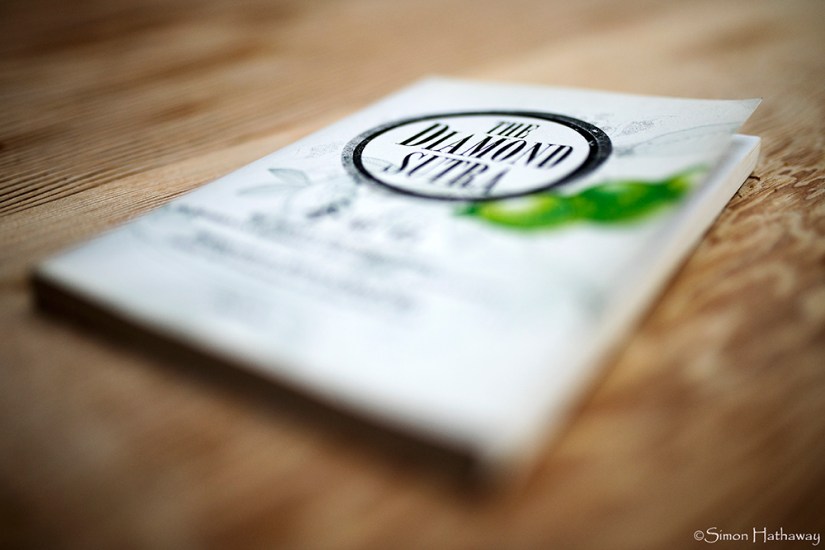
Q290. I have made it a rule to read the Diamond Sutra and Zen books every day for over ten years. Is this a good way?

A. It is said that going one kilometre by studying books is not as good as going one metre by practising. It’s because the former adds to illusions whereas the latter decreases them. The former regresses rather than advances us in Zen meditation. So, ancient masters would say, “Trying to attain enlightenment through books is like trying to pick the moon with a pole.”


Instead of spending so much time reading the Sutra and Zen books, I would like to advise you to allocate 90% of this time to practising meditation. The remaining 10% of this time can still be used for reading.
srh_3904a_thumb


Whatever you do, wherever you are, you are practising well only if you keep questioning what is making you do what you are doing. Reading the Sutras for ten hours is not as good as drinking tea, or washing the dishes for an hour with the question in your mind.


Master: “What did you do last night?”

Student: “I read the Diamond Sutra.”

Master: “How much did you read?”

Student: “I read three pages.”

Master: “You didn’t see the Sutra, let alone read it. The true Sutra has no pages.”


©Boo Ahm

All writing ©Boo Ahm. All images ©Simon Hathaway


Bible, Buddha, Buddhism, emptiness, empty, illusion, master, Meditation, Photography, Practice, Religion, student, suffering, Uncategorized, Zen

Q289. Why should we give without expecting anything in return?

A. When you give help to someone, you should not expect anything in return for it but rather forget it. If you do expect anything, then it is not help but business disguised as help. This may result in your harming yourself later.


If you remember the favour you bestowed on someone and expect something in return, you are more likely to feel disappointed, or even betrayed by his refusal when you ask him for help than you would be if you did not give him any help. You are also likely to be less grateful when you are helped because you are apt to take his help for granted, rather than thank him for it, while thinking of it as repayment of the debt he owes you for your help. In the end, your help will cause you anger or unhappiness, or deprive you of happiness. It’s like your hurting yourself.

srh_8483a_thumb


So, ancient masters always advised people to do without doing. When you realise that everything is empty and think that your help is also empty, you can be said to help without helping. As an expedient means to teach how to do without doing, they would say, “Don’t even let your right hand know what it did, not to mention your left hand.”


©Boo Ahm


All writing ©Boo Ahm. All images ©Simon Hathaway

Buddha, Buddhism, emptiness, empty, illusion, Koan, master, Meditation, Photography, root, self, student, true self, Truth, Uncategorized, Zen

Q288. Student: “You always say that everything including mountains and rivers is an illusion. What is not an illusion?”

Master: “Mountains and rivers.”

moss_force_panorama2a_thumb


Commentary:

Mountains and rivers block your insight into mountains and rivers.


©Boo Ahm


All writing ©Boo Ahm. All images ©Simon Hathaway

Buddha, Buddhism, emptiness, empty, Enlightenment, final goal, illusion, master, Meditation, Mind, One, Photography, root, student, true self, Truth, Uncategorized, Zen

Q287. Why did ancient masters say that there is no Buddha in the Buddha Land?

A. The Buddha Land, interpreted literally, is a land without any sentient beings where only Buddhas are. When there is only Buddha without any sentient beings, Buddha is not Buddha any more than the right is the right when there is no left.

In fact, the Buddha Land is not a land somewhere else other than the Earth where we live but simply a non-discriminating mind without any illusions. Buddha and sentient beings are, in fact, illusions, all fruits of discrimination. In other words, when we don’t make any discrimination, there is neither Buddha nor sentient beings, which is called Buddha Land. So, one of the famous ancient masters used to say, “Pass by quickly where there is no Buddha, and don’t stay where there is Buddha.”

srh_3243a_thumb


Student: “Where is the Buddha Land?”

Master: “In your house.”

Student: “There is no Buddha, and there are only my wife and children in my house.

Master: “There is no sun to a blind man even at midday.”


©Boo Ahm


All writing ©Boo Ahm. All images ©Simon Hathaway

Buddha, Buddhism, emptiness, empty, Enlightenment, final goal, illusion, master, Meditation, Mind, One, Photography, root, self, student, true self, Truth, Uncategorized, Zen

Q286. Masters tell us to discard our ‘I’. How can I do it?

A. They mean that you should eliminate the illusions of you, that is, all the labels attached to you, or all the words used to describe your identity. This is because all suffering is from your mistaking the labels attached to you as you and at the same time being attached to them.

_srh8619a_thumb

When you are deluded by labels, like this, they are referred to as illusions. The final goal of Zen is to realise that labels are not real but only imaginary lines and to see what you are like free from labels. That is called seeing your true-self, or attaining enlightenment.


Student: “How can I discard my ‘I’?”

Master: “You should know that all you believe to be you is not you but just an illusion.”


©Boo Ahm


All writing ©Boo Ahm. All images ©Simon Hathaway

Buddha, Buddhism, Enlightenment, final goal, Koan, master, Meditation, Mind, Photography, Practice, root, self, student, true self, Truth, Uncategorized, Zen

Q285. Student: “You always say that everything within sight is the true-self. How can you show it to me?”

A. Master: “Am I not within your sight?”

_srh4603a_thumb


Commentary:

Why can’t the student see what is within his sight even though there is no barrier between them?

Instead, put up a barrier and he will see it.


©Boo Ahm


All writing ©Boo Ahm. All images ©Simon Hathaway

Buddha, Buddhism, Koan, master, Meditation, One, Photography, student, Truth, Uncategorized, Zen

Q282. Student: “When only one of your shoes is left, where has the other gone?”

A. Master: “Scattered.”

srh_6182a_thumb


Commentary:

Scattered, scattered.

How clear it is!

One swallowed the other.


©Boo Ahm


All writing ©Boo Ahm. All images ©Simon Hathaway

Buddha, Buddhism, final goal, Happiness, illusion, master, Meditation, Mind, Photography, self, suffering, true self, Truth, Uncategorized, Zen

Q281. Can Zen help us to deal with our physical problems?

A. The physical problems that we experience due to aging, unexpected injuries from accidents and illnesses are, if not desirable, unavoidable challenges that all of us are subject to. The key point here is how to confront them. Our mind is to our body as a driver is to a car. In the same way that how long and how well a car runs depends upon the driver, our physical health counts on our mind.

p1130940a_thumb


Zen helps us to see everything as it is, so that we can avoid worsening situations by overreacting to them when faced with difficulties. For instance, there is a saying that the unreasonable fear of cancer is more dangerous than cancer itself. This is because the fear of cancer, if not surmounted, can harm patients more than cancer itself can. This is true when people can’t see things as they are. Zen meditation, by enabling us to see things as they are, helps us to know how to fear what ought to be feared and how not to fear what ought not to be feared. For that reason, I think Zen can help us to deal with our physical problems.


©Boo Ahm


All writing ©Boo Ahm. All images ©Simon Hathaway


Bible, Buddha, Buddhism, compassion, Enlightenment, final goal, love, master, Meditation, Photography, Practice, Religion, root, self, student, true self, Truth, Uncategorized, Zen

Q280. Why is Zen meditation selfish?

A. What makes you think Zen meditation is selfish? Do you happen to think so because Zen doesn’t emphasise compassion during the teaching, that is to say, that we should help the poor or those in trouble? Zen expresses the same message in a different way.


Zen teaches people that we are one with the poor and the weak, that is, they are part of us and we are part of them by getting people to realise the truth that we are oneness with all the universe, rather than say that we should help them.

srh_4092a_thumb


Which is the more appealing and more persuasive of the following two scenarios, “This boy lost his parents and has no food to eat and no shelter to live in. We should help him because he is likely to become a criminal and harm our society in the future if he is left uncared for now” or “Take a close look at this boy. This is part of you.”? This is what the Biblical scripture, ‘Love your neighbour as yourself’ means.


©Boo Ahm


All writing ©Boo Ahm. All images ©Simon Hathaway

Buddha, Buddhism, Enlightenment, final goal, illusion, master, Meditation, Mind, Photography, root, self, student, true self, Truth, Uncategorized, Zen

Q279. Master: “Your true-self was before this world was created, and it will not collapse even when the whole universe collapses.”

Q. Student: “What is the true-self?”

A. Master: “Your body.”

Student: “This also collapses when the universe collapses. What is the true-self?”

Master: “Your body.”

file0234a_thumb


Commentary:

Don’t say that your body collapses.

If you know how it collapses, your true-self will be clear before you.


©Boo Ahm


All writing ©Boo Ahm. All images ©Simon Hathaway