
Buddha, Buddhism, emptiness, empty, Enlightenment, final goal, illusion, Meditation, Photography, Practice, suffering, true self, Truth, Uncategorized, Zen

Q347. My thoughts of doom and the resultant feelings of fear or terror have become almost constant. I am trying to overcome it in many ways, but the fear is too strong to overcome. What more can I do? Please tell me there’s nothing to fear.

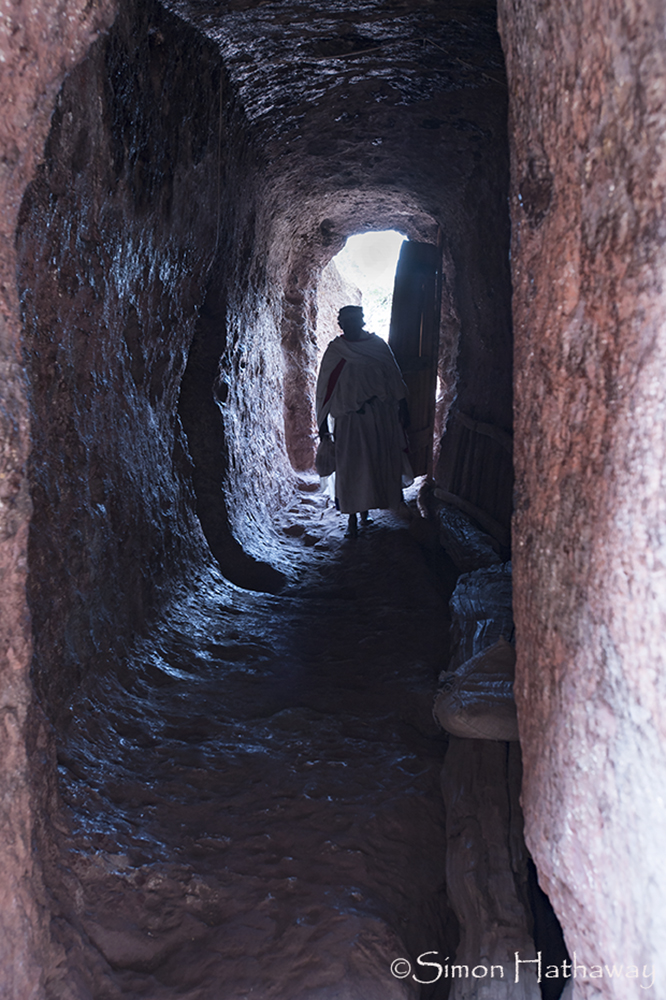
A You are showing a good example of being deluded by illusions. You say that you are overwhelmed by the fear of doom. What is doom? The key problem here is that you don’t know what doom is even while suffering from the fear of it. You are being harassed by something imaginary drawn by you. Being pleased or troubled with imaginary figures, like this, is said to be being deluded by illusions, which can be compared to a dream. You are dreaming of being chased by the fear of doom. In fact, not only you but also all of us are dreaming in that we are being deluded by illusions. The reason why others don’t have such feelings of fear as yours is that each of us is dreaming a different dream. The best way to overcome the fear is to wake up from your dream, that is, to realise what you fear is.

_SRH2291b_thumb
You seem likely to become a good Zen student because curiosity about the doom of death and illness was the starting point of Buddhism. Buddha, when young, had such strong curiosity concerning the doom of birth, ageing, illness and death that he gave up even his succession to the throne. His strong curiosity led him to enlightenment, which is to know clearly what the essence of these is. After enlightenment, he said that our life is like a dream and that we should wake up from the dream in order to attain eternal happiness.


What matters is not for me to tell you that there is nothing to fear but for you to realise it in person. I’d like to tell you to wake up from your nightmare instead of telling you that there is nothing to fear.

©Boo Ahm


All writing ©Boo Ahm. All images ©Simon Hathaway

Bible, Buddha, Buddhism, emptiness, empty, Enlightenment, final goal, God, illusion, master, Meditation, One, Photography, Practice, Religion, true self, Truth, Uncategorized, Zen

Q346. The Bible says that it is easier for a camel to go through the eye of a needle than for a rich man to enter the kingdom of God. How can the rich enter the kingdom of God?

A. A rich man here means a man with a lot of illusions, rather than a man with a lot of knowledge or a lot of wealth. ‘Enter the kingdom of God’ means to attain eternal life in Christianity, or enlightenment in Buddhism. Only people who can see things as they are, may enter the kingdom of God. Seeing things as they are means not being deluded by illusions, which is to be able to see things as empty. In brief, only people who are free from illusions by seeing things as empty can enter the kingdom.

SRH_1123a_thumb


My answer to your question is: ‘They can enter the kingdom of God if they realise how to put Mount Everest into a grain of a mustard seed’. To realise how to put Mount Everest into a grain of a mustard seed means to realise that everything is empty. When everything is empty, Both Mount Everest and a mustard seed are empty. When they are empty, there is no ‘large’ and ‘small’ in them. Then, each of them can enter each other freely.


To conclude, rich people, whether rich with illusions or rich with money and knowledge, can enter the kingdom when they can see everything, including all their possessions, as empty. When everything is empty, a camel and the eye of a needle are also empty just like Mount Everest and a mustard seed are. Then, it will be a piece of cake for the rich to pass through the eye of a needle.


©Boo Ahm


All writing ©Boo Ahm. All images ©Simon Hathaway

Bible, Buddha, Buddhism, emptiness, empty, Enlightenment, final goal, illusion, master, Photography, Religion, root, self, student, true self, Truth, Uncategorized, Zen

Q345. Christians say that Christ died on the cross to save us from our sins. How should we understand this?

A. Buddhism has similar metaphors. Buddha said, “Those who want to see me through my voice and body won’t see me.” He also said, “Kill me when you meet me if you do want to see me.”


According to the Gospel of Thomas, Jesus once said, “When you see one who was not born of woman, prostrate yourselves on your faces and worship him. That one is your father.” Who is one who was not born of woman? He is not one who is doomed to birth and death. You should know him. ‘Christ died on the cross to save us from our sins’ means that he died on the cross in public in order to teach people that his physical body was not him and tell them not to be deluded by the illusion of his body. If you cling to the idea that the young crucified person is Jesus, you are being deluded by an illusion. In other words, you can see the true Jesus when you are free from the illusion of Jesus.

SRH_8943a_thumb


Student: “Why did Jesus die on the cross, saying that his father was almighty?”

Master: “Don’t insult him. He didn’t die but gave his teaching.”


©Boo Ahm


All writing ©Boo Ahm. All images ©Simon Hathaway

Bible, Buddha, Buddhism, Enlightenment, illusion, master, meditaion, One, Photography, Practice, Religion, root, self, student, true self, Truth, Uncategorized, Zen

Q344. What do you think of Easter in Christianity?

A. Easter is a Christian holiday when Christians remember the death of Jesus and his return to life. The death of Jesus means removing illusions, and his return to life means the revealing of the true-self. So, Easter is a great lesson that reminds us of the Christian teaching that we should remove illusions and see the true-self, the true Jesus.

The Bible describes well how the true-Jesus exists in Luke 24:15, 16: ‘As they walked and discussed, Jesus himself drew near and walked along with them; they saw him, but somehow did not recognise him.’ He is always with us wherever we are. He is with you even at this moment when you are reading this writing. The problem is that we don’t recognise him, because we are deluded by illusions. The purpose of Christianity is to recognise him. To recognise him is to attain eternal life in Christianity, or enlightenment in Buddhism.

017_8141a_thumb

True Easter is not a specific day of the year but the day when we can recognise the true-Jesus. Following the literal meaning is being deluded by illusions and far from the true teaching of Christ.

Student: “How can I see the true Jesus?”

Master: “Thank you for showing the true Jesus.”

©Boo Ahm


All writing ©Boo Ahm. All images ©Simon Hathaway

Buddha, Buddhism, emptiness, empty, Enlightenment, final goal, illusion, master, Meditation, Photography, Practice, student, Truth, Uncategorized, Zen

Q343. If everything is empty, why should I try to keep my empty life without giving it up?

A. Don’t be deluded by the word ’empty’ but try to experience through your whole body what it actually means. Saying that everything is empty doesn’t mean that everything is void and useless or nothing. This, on the contrary, means that it is unlimitedly useful and infinitely valuable beyond its labels. And the purpose of Zen meditation is to help people to realise the unlimited value of it that has been neglected so far because we are deluded by the labels. So, ancient masters would say, “Once you realise emptiness, all rubbish heaps turn into piles of treasure.”

017_8071a_thumb


Student: “Why should I try to keep my empty life without giving it up?”

Master: “When your life is empty, there is no life to give up.”


©Boo Ahm


All writing ©Boo Ahm. All images ©Simon Hathaway

Buddha, Buddhism, Enlightenment, final goal, illusion, master, meditaion, Mind, mindful, Photography, Practice, Religion, root, student, sutras, true self, Truth, Uncategorized, Zen

Q342. “Why can’t I feel the same way as they did?”

A. The wind was blowing a temple flag, and two monks were arguing about the flag. One said, “The flag is moving.” The other said, “The wind is moving.” They could not agree, no matter how hard they debated. Then, the sixth patriarch, Huineng, happening to come by and overhearing this, said, “Not the wind, not the flag. It is the mind that is moving!” The two monks were struck with awe.


Student: “The two monks were struck with awe by the saying ‘The wind is moving’. Why can’t I feel the same way as they did?”

Master: “Because you think that he said ‘The mind is moving'”

Student: “What did he say?”

Master: “The mind is moving.”

SRH_7792a_thumb


Commentary:

Don’t regard an order to get out of a house as an invitation to go into another house.

The wise never enter any other house after getting out of a house.

You should stand alone in a barren field without any shelter to enter.

©Boo Ahm


All writing ©Boo Ahm. All images ©Simon Hathaway

Buddha, Buddhism, emptiness, empty, illusion, Meditation, Mind, One, Photography, Practice, root, Truth, Uncategorized, Zen

Q341. How should we understand this: ‘There is no connection whatsoever to our outside circumstances and what we feel’?

A. In the realm of form there is inevitable connection between our outside circumstances and what we feel. There is a theory called the butterfly effect that shows well how we influence and are influenced: A flap of a butterfly’s wings in Brazil can set off a tornado in Texas. We can’t avoid being connected to our outside circumstances regardless of whether we are conscious of the fact or not. For example, the price hike of oil in the Middle East can cause the prices of gas and petroleum products of your country to rise, which can lead you to feel the cost of living getting more expensive. In fact, how could you ask this question without the result of connection to your outside circumstances?

_SRH2573a_thumb


However, in the realm of emptiness where you see everything as empty and feel oneness with all the universe, there is no connection between outside circumstances and what you feel, because, then, both outside circumstances and you yourself are empty and there is no division between them.


To conclude, there is connection between them in the realm of from, but not in the realm of emptiness. When we can see it in both ways, we can avoid being deluded by the illusions of connection in the realm of form.


©Boo Ahm


All writing ©Boo Ahm. All images ©Simon Hathaway

Bible, illusion, love, meditaion, Photography, Religion, root, true self, Truth, Uncategorized, Zen

Q340. In the Bible, Proverbs 13:20 it says “You are the company that you keep.” What is this warning about?

A. If you are the company you keep, the company you keep is you. In other words, you are one with the company you keep. Whoever you keep as company, your company is you. Whoever you meet, a wise man, foolish man, a thief, a robber or an imposter, he is you. If he is a thief, he is a thief because you think he is a thief. If he is a wise man, he is a wise man because you think so. In other words, seeing a person as a thief means having an illusion of a thief in your mind.

File0509a_thumb


This scripture means, therefore, that you should not discriminate when you meet people but see them as you or one with you. When you become one with others and other things, you can love your neighbours as yourself.


©Boo Ahm


All writing ©Boo Ahm. All images ©Simon Hathaway

Buddha, Buddhism, emptiness, empty, Enlightenment, final goal, Happiness, illusion, Koan, master, Meditation, Mind, One, Photography, Practice, Religion, root, self, student, sutras, true self, Truth, Uncategorized, Zen

Q339. What is the True Dharma the Buddha entrusted to Mahakashyapa?

A. When Shakyamuni Buddha was at Vulture Peak, he held out a flower to his listeners. Everyone was silent. Only Mahakashyapa broke into a broad smile.


The Buddha said, “I have the True Dharma Eye, the Marvellous Mind of Nirvana, the True Form of the Formless, and the Subtle Dharma Gate, independent of words and transmitted beyond doctrine. This I have entrusted to Mahakashyapa.”


Student: “What is the True Dharma the Buddha entrusted to Mahakashyapa?”

Master: “Mahakashyapa broke into a smile.”

Student: “Why did he break into a smile when the Buddha held out a flower?”

Master: “Because he didn’t see the flower.”

SRH_1039a_thumb


Commentary:

Don’t be deluded to think that the Buddha entrusted the True Dharma to Mahakashyapa.

This is not what can be neither entrusted nor taken away.

Don’t be deluded by thinking that the Buddha held out a flower and Mahakashyapa broke into a smile at the flower.

Had he seen the flower, he would not have broken into a smile.


©Boo Ahm


All writing ©Boo Ahm. All images ©Simon Hathaway
Bible, Buddha, Buddhism, Enlightenment, final goal, God, master, Meditation, Photography, Practice, Religion, root, student, sutras, true self, Truth, Uncategorized, Zen

Q338. What does the story of Noah’s Ark in Genesis mean?

A. At that time Noah was the only person that followed God. People who, following Noah’s direction, got aboard the Ark could save their lives. So, the Ark symbolises God’s teaching to attain eternal life. Buddhism has a similar metaphor to this. Buddha compared his teaching to a boat by which we can cross the river of birth and death, and said that we should abandon the boat after crossing the river without being attached to it.

_SRH9927a_thumb


Student: “How can we board the boat to cross the river of birth and death?”

Master: “If you don’t board it, you can’t cross the river, but if you board it, you will sink under the water with it.”


©Boo Ahm


All writing ©Boo Ahm. All images ©Simon Hathaway