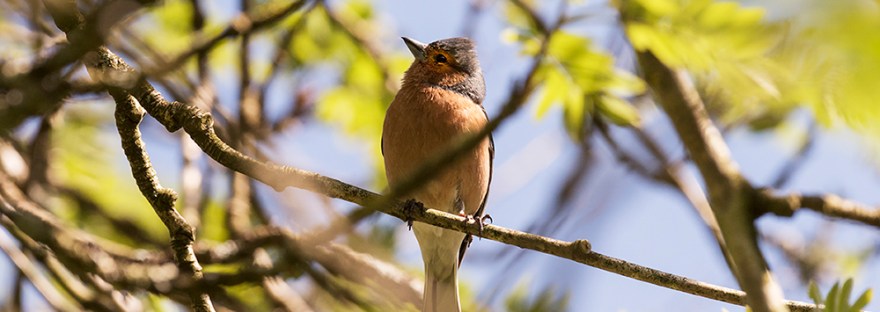
A. Master: “Because both are from the same source.
![]()
Commentary:
Sea-fish don’t think that seawater is salty, and freshwater fish don’t think that river-water is sweet.
©Boo Ahm
All writing ©Boo Ahm. All images ©Simon Hathaway
A. Master: “Because both are from the same source.
![]()
Commentary:
Sea-fish don’t think that seawater is salty, and freshwater fish don’t think that river-water is sweet.
©Boo Ahm
All writing ©Boo Ahm. All images ©Simon Hathaway
A. Don’t think that you have no master around but think that you are not ready to meet him. Ready yourself to meet a master by asking yourself the questions that you will ask a master when you meet him. When a student is ready, a master will appear. When not ready, a student can’t recognise a master even though he appears before him. In fact, he is already beside you and always ready to help you. He is waiting to be recognised by you.
![]()
All the people and everything around you are your master. Even you yourself are your master, too. They are giving Dharma talks to you every moment. Even you yourself are giving Dharma talks all the time. The point is that you are still not ready enough to hear the Dharma talk. Make yourself ready to meet him by practising hard and, sooner or later, he will suddenly appear before you.
©Boo Ahm
All writing ©Boo Ahm. All images ©Simon Hathaway
A. The primary means emptiness or the true-self and the secondary forms or illusions. This means that you should not follow illusions while forsaking the true-self. But this doesn’t mean to sort out the true-self from illusions, but means to realise that illusions are no other than the true-self. If you fall into the division of the true-self and illusions and regard illusions as different and separate from the true-self, you come to think that you should follow the former and avoid the latter. This is to be deluded by the illusions of the true-self and illusions, which is to follow the secondary while forsaking the primary. You can stop this by ceasing to discriminate.
![]()
©Boo Ahm
All writing ©Boo Ahm. All images ©Simon Hathaway
A. Master: “How can I explain it better than you?”
![]()
Commentary:
Wisdom never scolds or speaks ill of foolishness.
©Boo Ahm
All writing ©Boo Ahm. All images ©Simon Hathaway
A. A goal comes from desire. It is a concrete expression of your desire. I never tell you not to have desire or a goal in your life. As you said, your desire is the motive to develop the world into a better place to live in. You love your family, and your goal in life is to make enough money to help them to enjoy an easy and comfortable life. Love is also another expression of desire.
The key problem is that we don’t control desire but are controlled by it. And we have seen what miserable and even disastrous things it can lead us to do when our life is run by our desire.
![]()
What I mean is not that desire is bad and that you should not have it, but that we should be able to drive our desire instead of being driven by it through realising the root of your desire. When, aware of the root of your desire, you can run your desire instead of being run by it, your desire is called compassion. What Zen says is not that we should not have desire but that you should turn it into compassion, wise desire.
©Boo Ahm
All writing ©Boo Ahm. All images ©Simon Hathaway

Matthew 5:29,30: 29) “So if your right eye causes you to sin, take it out and throw it away! It is much better for you to lose a part of your body than to have your whole body thrown into hell. 30) If your right hand causes you to sin, cut it off and throw it away! It is much better for you to lose one of your limbs than to have your whole body go off to hell.”
A. Here your whole body means your true-self or your whole life, and parts of your body such as eyes and hands means illusions. To remove your eyes and hands means to stop following illusions. Having your whole body thrown into hell refers to leaving your true-self lost and living in the world of illusions. So, ‘losing parts of your body is much better than having your whole body thrown into hell’ means that to stop following illusions, although it is not easy, is much better than to live in the world of illusions.
![]()
Student: “How do you prevent your eyes and hands from sinning?”
Master: “I don’t have eyes and hands to sin.”
©Boo Ahm
All writing ©Boo Ahm. All images ©Simon Hathaway
A. Master: “Its body is revealed.”
![]()
Commentary:
Look look. Do you see its body now?
Don’t say that it is beyond words.
Even a child can explain it.
©Boo Ahm
All writing ©Boo Ahm. All images ©Simon Hathaway
A. ‘Have to know the mind prior to a thinking’ is a very common saying in Zen circles. This makes sense. The problem is that people, not grasping the point of the saying, follow the words: They struggle to divide their mind into two, and distinguish the mind prior to thinking from the mind after thinking.
![]()
The core teaching of Buddhism is non-duality, oneness. Your mind is not dual or multiple. You should know that the mind which is producing thinking at this moment is not different and separate from the mind prior to thinking, but it is the very mind prior to thinking that you want to know. The mind that is reading this writing at this moment is the mind you should realise. There is no other mind than this.
Student: “What is the mind prior to thinking?”
Master: “Why do you ask me where your tongue is?”
©Boo Ahm
All writing ©Boo Ahm. All images ©Simon Hathaway
A. There is no one who has no problems at all in the world. For a joke, it is said that even Buddha and God have a lot of troubles all the time because people don’t follow them and do a lot of bad things against their teachings. If you were perfectly free from troubles, the monotony of life might be your serious trouble.
You should know that Zen practice doesn’t change what happens to you but your view of what happens to you. As mentioned repeatedly earlier, everything is empty and neutral. Whether it is good or bad, useful or harmful, is in the eye of the beholder. Try to see everything as neutral even though you have not realised the truth. Why don’t you see your problems as good omens of good fortune to come? Why don’t you think that you are paying in advance for what you will enjoy later? When your view is changed, your thoughts are changed. When your thoughts are changed, your acts are changed. When your acts are changed, what happens to you will also be changed.
![]()
Student: “How can I get rid of enemies?”
Master: “Why don’t you make them your friends?”
©Boo Ahm
All writing ©Boo Ahm. All images ©Simon Hathaway
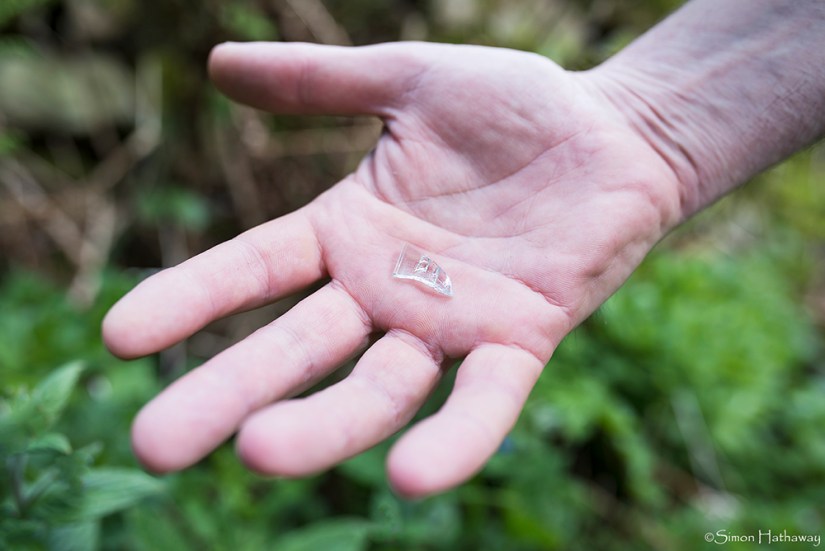
A. Master: “If you describe it, you are wrong.”
![]()
Commentary:
If you cannot describe it, you are also wrong.
What he does speaks louder than what he speaks.
©Boo Ahm
All writing ©Boo Ahm. All images ©Simon Hathaway