Buddha, Buddhism, Enlightenment, final goal, illusion, master, meditaion, Mind, mindful, Photography, Practice, Religion, root, student, sutras, true self, Truth, Uncategorized, Zen

Q342. “Why can’t I feel the same way as they did?”

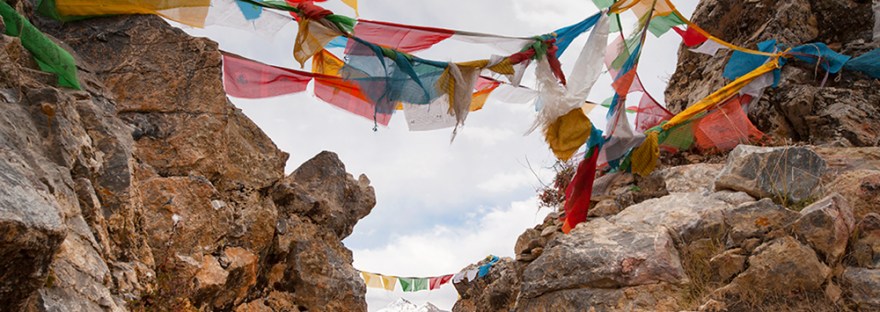
A. The wind was blowing a temple flag, and two monks were arguing about the flag. One said, “The flag is moving.” The other said, “The wind is moving.” They could not agree, no matter how hard they debated. Then, the sixth patriarch, Huineng, happening to come by and overhearing this, said, “Not the wind, not the flag. It is the mind that is moving!” The two monks were struck with awe.


Student: “The two monks were struck with awe by the saying ‘The wind is moving’. Why can’t I feel the same way as they did?”

Master: “Because you think that he said ‘The mind is moving'”

Student: “What did he say?”

Master: “The mind is moving.”

SRH_7792a_thumb


Commentary:

Don’t regard an order to get out of a house as an invitation to go into another house.

The wise never enter any other house after getting out of a house.

You should stand alone in a barren field without any shelter to enter.

©Boo Ahm


All writing ©Boo Ahm. All images ©Simon Hathaway

Buddha, Buddhism, emptiness, empty, illusion, Meditation, Mind, One, Photography, Practice, root, Truth, Uncategorized, Zen

Q341. How should we understand this: ‘There is no connection whatsoever to our outside circumstances and what we feel’?

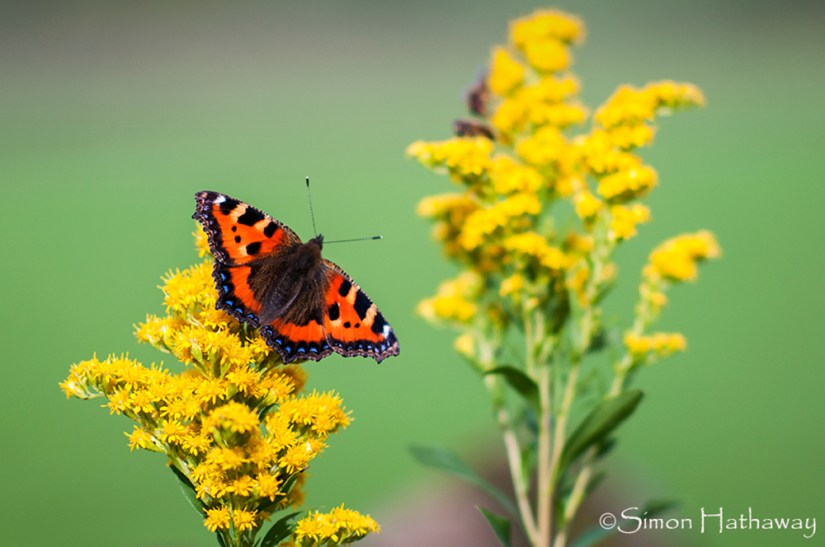
A. In the realm of form there is inevitable connection between our outside circumstances and what we feel. There is a theory called the butterfly effect that shows well how we influence and are influenced: A flap of a butterfly’s wings in Brazil can set off a tornado in Texas. We can’t avoid being connected to our outside circumstances regardless of whether we are conscious of the fact or not. For example, the price hike of oil in the Middle East can cause the prices of gas and petroleum products of your country to rise, which can lead you to feel the cost of living getting more expensive. In fact, how could you ask this question without the result of connection to your outside circumstances?

_SRH2573a_thumb


However, in the realm of emptiness where you see everything as empty and feel oneness with all the universe, there is no connection between outside circumstances and what you feel, because, then, both outside circumstances and you yourself are empty and there is no division between them.


To conclude, there is connection between them in the realm of from, but not in the realm of emptiness. When we can see it in both ways, we can avoid being deluded by the illusions of connection in the realm of form.


©Boo Ahm


All writing ©Boo Ahm. All images ©Simon Hathaway
Buddha, Buddhism, emptiness, empty, Enlightenment, final goal, Happiness, illusion, Koan, master, Meditation, Mind, One, Photography, Practice, Religion, root, self, student, sutras, true self, Truth, Uncategorized, Zen

Q339. What is the True Dharma the Buddha entrusted to Mahakashyapa?

A. When Shakyamuni Buddha was at Vulture Peak, he held out a flower to his listeners. Everyone was silent. Only Mahakashyapa broke into a broad smile.


The Buddha said, “I have the True Dharma Eye, the Marvellous Mind of Nirvana, the True Form of the Formless, and the Subtle Dharma Gate, independent of words and transmitted beyond doctrine. This I have entrusted to Mahakashyapa.”


Student: “What is the True Dharma the Buddha entrusted to Mahakashyapa?”

Master: “Mahakashyapa broke into a smile.”

Student: “Why did he break into a smile when the Buddha held out a flower?”

Master: “Because he didn’t see the flower.”

SRH_1039a_thumb


Commentary:

Don’t be deluded to think that the Buddha entrusted the True Dharma to Mahakashyapa.

This is not what can be neither entrusted nor taken away.

Don’t be deluded by thinking that the Buddha held out a flower and Mahakashyapa broke into a smile at the flower.

Had he seen the flower, he would not have broken into a smile.


©Boo Ahm


All writing ©Boo Ahm. All images ©Simon Hathaway

Buddha, Buddhism, emptiness, empty, illusion, Meditation, Photography, Practice, true self, Truth, Uncategorized, Zen

Q337. To what extent are we the choices we make and actions we take, particularly with regard to how these affect other people and the world around us?

A. What we are is the result of the choices we make and actions we take regardless of whether we are conscious of the fact or not. This is called ‘the law of cause and effect’ or ‘causation’. We can’t avoid affecting other people and the world around us, and nor can we be avoid being affected by them. We should try to have a good effect on others and to do that, we should make good choices and take good actions.

_SRH4500a_thumb


In order to make good choices and take good actions, we should know how to accept the effect from others and the world around us. This is not only because we are more influenced by how we accept what they do to us than what they actually do us, but also because how we accept the effect from them determines our choices and actions.


So that we may accept the effect from outside well, we should be able to see it as it is without being deluded by the illusions of it. The purpose of Zen meditation is to teach people how to see things as they really are.


©Boo Ahm


All writing ©Boo Ahm. All images ©Simon Hathaway

Buddha, Buddhism, Enlightenment, final goal, illusion, Koan, master, Meditation, Photography, Practice, student, true self, Truth, Uncategorized, Zen

Q336. Every time an ancient Zen master gave a dharma talk, a certain old man would come to listen. He usually left after the talk, but one day he remained. The master asked, “Who is there?”

A. The man said, “I am not actually a human being. I lived and taught on this mountain at the time of Kashyapa Buddha. One day a student asked me, ‘Does a person who practises with great devotion still fall into cause and effect?’ I said to him, ‘No, such a person doesn’t.’ Because I said this I was reborn as a wild fox for five hundred lifetimes. Sir, please tell me the correct answer and free me from this wild fox’s body.”

Then he asked the master, “Does a person who practises with great devotion still fall into cause and effect?”

The master said, “He isn’t deluded by cause and effect.”

Immediately the man had great realisation.

My Pictures0192a_thumb


Student: “What answer would you have made if you had been in his shoes?”

Master: “I would have said, ‘Such a man doesn’t fall into cause and effect’.”

Student: “Why on earth do you copy the wrong answer?”

Master: “Because of cause and effect.”

Student: “What would the old man have become if he had given a correct answer?”

Master: “A fox.”

Student: “Why would he have become a fox if he had given a correct answer?”

Master: “Because of cause and effect.”


Commentary:

Everything is the gate to the enlightenment.

When you know clearly what cause and effect is,

it is also the gate to the enlightenment.

When you don’t know what it is,

it is a trap that turns you into a fox.


©Boo Ahm


All writing ©Boo Ahm. All images ©Simon Hathaway

Buddha, Buddhism, Enlightenment, final goal, Happiness, Meditation, Photography, Practice, root, sutras, true self, Truth, Uncategorized, Zen

Q335. If everything is empty, is it important to actually attain enlightenment? After enlightenment, can you really hold on to it? Are you then walking around as ‘an enlightened being’? In my opinion, it’s impossible to sustain that experience because it’s empty. Is it a bit like trying to hold onto quick sand?

A. Enlightenment doesn’t mean ‘void’ or ‘valueless’ but means ‘perfection’, ‘perfect freedom’, ‘perfect happiness’ or ‘unlimited possibility’.


Attaining enlightenment is compared to a patient’s recovering perfectly from serious illness after taking good medicine. A patient is always ill wherever he is, whatever he does. He walks around as an ill being, and drinks tea as an ill being. However, once he has recovered perfectly from illness, he is well all the time whatever he does, wherever he is. He walks around as a healthy being and drinks tea as a healthy being. He is quite different from what he was when he was ill. He never wants to return to the previous state because he remembers how terrible he felt while ill and can feel how much happier he is now than before.

_SRH1728a_thumb


The difference between attaining enlightenment and recovering from illness is that you, once getting enlightened, can’t return to the unenlightened state, while you can lose your health again if not taking care of it. Whatever you do, wherever you are, you are always in the state of enlightenment forever without any effort to stay in, or sustain the state. So, a Sutra says that once you pass the gate of enlightenment, the gate is closed behind you forever.


©Boo Ahm


All writing ©Boo Ahm. All images ©Simon Hathaway
Buddha, Buddhism, emptiness, empty, Enlightenment, illusion, Koan, master, Meditation, Photography, self, student, true self, Truth, Uncategorized, Zen

Q333. Student: “What is not changing when everything, including mountains and rivers, changes?”

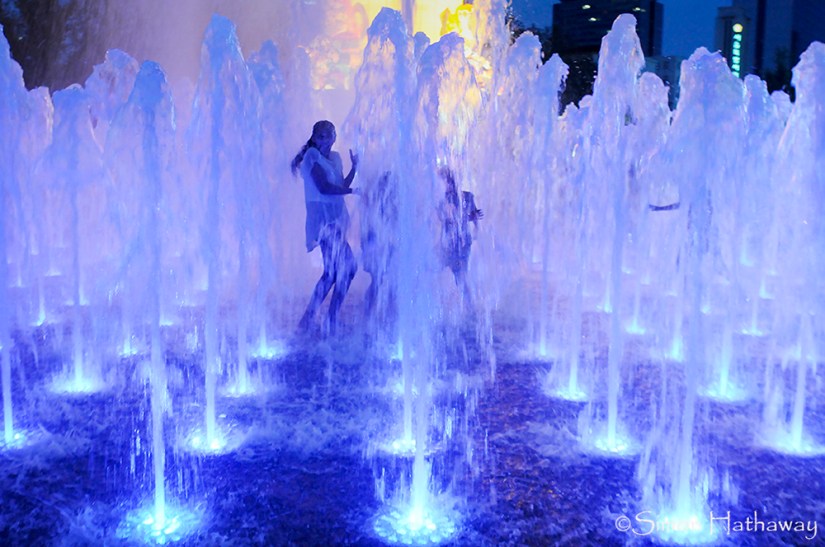
A. Master: “Mountains and rivers.”

SRH_3196a_thumb


Commentary:

Master’s tongue is not long enough to say the answer.

You had better hear him with your eyes.


©Boo Ahm


All writing ©Boo Ahm. All images ©Simon Hathaway

Buddha, Buddhism, illusion, master, Meditation, Photography, student, Truth, Uncategorized, Zen

Q330. Student: “Where is the land without light and shade?”

A. Master: “That’s where light and shade is.”

SRH_1057a_thumb


Commentary:

Light and shade is no other than the land without light and shade.


©Boo Ahm


All writing ©Boo Ahm. All images ©Simon Hathaway

Buddha, Buddhism, emptiness, empty, illusion, Meditation, moment, present, root, Truth, Uncategorized, Zen

Q328. Is everything empty because it is always changing and not everlasting?

A. Absolutely not. Everything is empty not because it is always changing and not everlasting but because it doesn’t have its own fixed nature unless you grant it labels such as hard, soft, fragile, flexible et cetera. Emptiness is the state without any label or imaginary line, where there is no time.

017_8052a_thumb


Time is a typical imaginary line. When there is no time, no change can take place since change means the passage of time. When there is no change, there is no life and death. Therefore, when you experience the truth that you are emptiness itself, you are said to escape from the yoke of life and death.


©Boo Ahm


All writing ©Boo Ahm. All images ©Simon Hathaway

Buddha, Buddhism, emptiness, empty, illusion, Koan, master, Meditation, Mind, Photography, Practice, root, self, student, true self, Truth, Uncategorized, Zen

Q327. Student: “How can I keep my plot of mind free from light and shade?”

A. Master: “Telling you the way is very easy. But I am afraid that I may induce you to make light and shade.”

Student: “Please, tell me the way.”

Master: “Everything is empty.”

Student: “I already know that, too.”

Master: “That is making light and shade in your plot.”

_srh2424a_thumb


Commentary:

However efficacious medicine may be, an internal medicine will cause trouble if put into eyes or ears.


©Boo Ahm


All writing ©Boo Ahm. All images ©Simon Hathaway