Buddha, Buddhism, Enlightenment, final goal, Happiness, illusion, Koan, true self, Truth, Uncategorized, Zen

Q151. I heard that we should remove our ‘I’ and experience ‘non-ego’ in order to see the true-self. How can I remove my ‘I’?

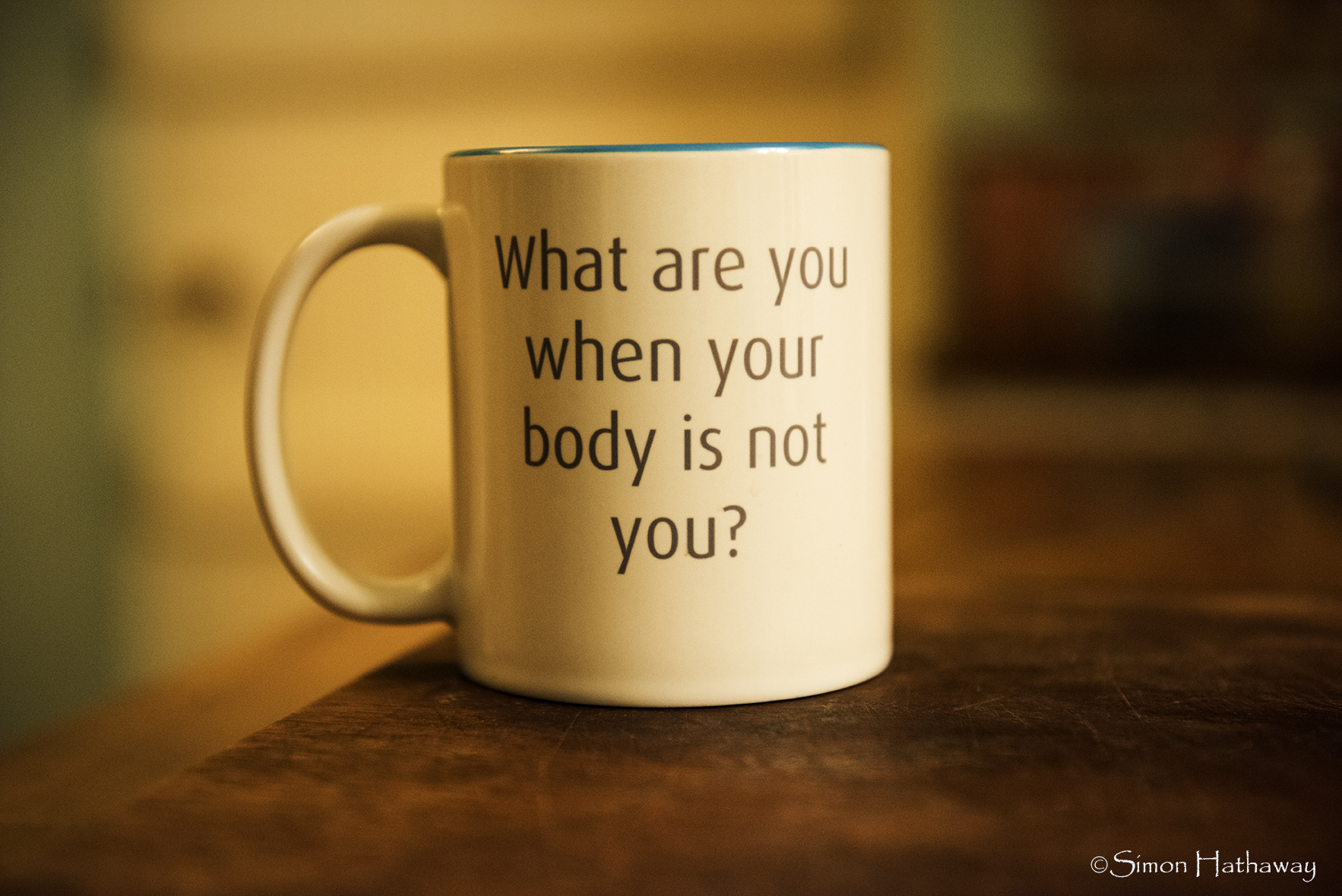
A. Don’t try in vain to remove your ‘I’. You can’t do so because you don’t know what it is. Just try to know what you are when your body is not you. When you reach the final goal, you realise that it is not worth mentioning ‘I’. In short, the illusion of your ‘I’ will disappear. Then, you can be said to experience or realise ‘non-ego’.

_SRH6218a_thumb


When you can’t see yourself as you are, you see the illusion of your ‘I’ as yourself. When you can see yourself as you are, you come to realise the essence of your being, your true-self called Buddha Nature. When you don’t know what you are, your ego is you, but when you know what you are, you have no ‘I’ to remove. Then you feel oneness.

Buddha, Buddhism, Enlightenment, final goal, illusion, Meditation, Mind, sutras, Truth, Uncategorized, Zen

Q150. Does enlightenment have anything to do with gender?

A. Absolutely not. It is a very common belief that only males can attain enlightenment and so females have to be reborn as males in order to attain enlightenment. However, it makes no sense at all. That is against Buddha’s teaching that everything is empty and equal. Gender is also empty and is an illusion.

_SRH8315a_thumb


Enlightenment is to realise your true-self, that is, what you are when your body is not you. When your body is not you, how can you be male or female? Enlightenment has nothing at all to do with gender but a lot to do with how hard you practice and whether or not you practice in the right way.

©Boo Ahm

All writing ©Boo Ahm. All images ©Simon Hathaway

Buddha, Buddhism, Enlightenment, final goal, Meditation, Practice, true self, Truth, Uncategorized, Zen

Q140. What should I do when I encounter a question during practice or when reading something about Zen?

A. First of all, never try to satisfy your curiosity about Zen or enlightenment by reading books. When you hit upon a question during practice or when reading books concerning Zen, don’t depend on books for the answer to your question. The books will present you with new questions, which will lead you to read more books and they will pose yet more questions. This will be endless. That is like trying to meet your hunger with pictures of food. You can not reach the final goal through reading books any more than you can satisfy your hunger by looking at pictures of food.

P1030890a_thumb
When you encounter a question beyond your understanding, ask yourself the question rather than consult another book. It might take some time, but you will never fail to get the right answer from yourself. So, ancient Masters would say that reading for a day is not as valuable as practising for an hour.
Remember that Buddha attained enlightenment not by reading books but by practice. When he was asked by his disciples on his deathbed how they should practice after he passed away, he replied, “You should practice depending on the lantern of yourself and the Dharma”.

©Boo Ahm

All writing ©Boo Ahm. All images ©Simon Hathaway

Buddha, Buddhism, Enlightenment, final goal, Meditation, Mind, mindful, mindfulness, Practice, present, Truth, Uncategorized, Zen

Q139. Do you think that all kinds of meditation can lead to enlightenment like the saying, ‘All roads lead to Rome’?

A. It is true that all roads lead to Rome. However, why have most people who have tried to reach Rome failed to do so? Even if we take the right road but go in the wrong direction we will never get to Rome. Only when we take the right road in the right direction can we reach Rome. If we go in the wrong direction, then the harder we try the further we will get from Rome.

SRH_4123a_thumb


Which road we should take doesn’t matter since all roads lead to Rome. However, in order to take the right road in the right direction, we should first of all know exactly where we are. The most important and the first thing to do in order to reach your destination, is to find out where you are standing when you are lost in a strange place. When you can realise your location, then your destination, Rome will reveal itself.
©Boo Ahm

All writing ©Boo Ahm. All images ©Simon Hathaway

Bible, Buddha, Buddhism, God, Meditation, Practice, Prayer, Religion, Zen

Q136. What do you think of praying to God or Buddha?

A. We can see a lot of people not only pray to them but also offer plenty of money to temples or churches as a token of their faith in Buddha or God, while ignoring many suffering people who are in need. People want to make a deal with God or Buddha, just like they may bribe public officials to do something they want to be done. In brief, they take advantage of their prayer to Buddha or God as a means to satisfy and justify their greed and hypocrisy.

It is said that God or Buddha is love itself, compassion itself and justice itself and that he is so almighty that he can fulfill our prayers. Why are so many starving in the world and why do endless wars break out and disasters befall people at this time while so many clergymen, priests and monks are praying all around the world? Why does a charitable God who says, “Love your neighbour as yourself” always seem to side with rich, strong countries or people? Why have so many countries been engaged in wars throughout history in the name of religion?

SRH_0014a_thumb

I don’t think that prayer itself is bad. However, why do these things happen in spite of so much prayer by so many people around the world? It is because they don’t know whom they pray to or worship because they don’t know themselves and therefore they do not know who is praying. They also don’t know how to worship or pray because they don’t know whom they worship or pray to. Therefore, they commit brutal carnage while speaking of Jesus’s love with their mouths, and spend an untold sum of money on producing weapons while saying their prayers.

I never discourage you from praying, but encourage you to pray in the right way. In order to pray in the right way, you should know at least who prays to whom. When you don’t know this, trying to find out who prays to whom it is a true prayer.

©Boo Ahm

All writing ©Boo Ahm. All images ©Simon Hathaway

Buddhism, desire, Enlightenment, Happiness, illusion, Meditation, Mind, poisons, Practice, true self, Truth, Zen

Q122. What are the antidotes for the three poisons against happiness?

A. The antidote for the poison of ignorance is wisdom, which means the ability to see everything as it is. That enables us to see a piece of broken rope as a piece of broken rope and rotten food as rotten food.

The antidote for the poison of greed is the precepts, which aim to control greed. We should suppress greed artificially before getting enlightened. To obey the precepts in the strictest sense, however, is not to suppress greed artificially but to have no greed to control through realising that everything is an illusion. Only then can we be said to obey the precepts. For example, when we have the wisdom to see everything as it is, we don’t have any desire to run away from the piece of broken rope, or to chase after rotten food because we can see rope as rope and rotten food as rotten food.

File0070a_thumb

The antidote for the poison of anger is stillness, which naturally comes about when we obey the precepts. That is, when we obey the precepts, we have no greed. Then we need not struggle to fulfill our greed. When we don’t have to strive to satisfy our greed, there is no anger or disappointment that comes from the failure to meet our greed. Then our life becomes still.

In fact, the core of the three poisons is ignorance, and that of the three antidotes is the wisdom to see things as they are.
©Boo Ahm

All writing ©Boo Ahm. All images ©Simon Hathaway

Buddha, Buddhism, Enlightenment, final goal, illusion, meditaion, Meditation, self, true self, Truth, Zen

Q109. If everything is the true-self, can I say that I am looking at my true-self while looking at this cup?

A. No, you can’t, because you are looking at a cup. As long as you see a cup as a cup, you can’t say that you see your true-self. Seeing a cup as a cup means seeing a car as a car and a person as a person, which means that all the labels or lines dividing one into many still remain. Your eyes, it is said, are covered with illusions or you are an open-eyed blind man.

SRH_2266a_thumb

The Buddha said, “If you realise that form is not form, you will see your true-self.”
Being able to see the cup as non-cup means that a car is not a car, a person is not a person any more to you and you are not you because all illusions have disappeared. The disappearance of all illusions means the disappearance of the lines that divide one into many. When all the lines disappear, many become one. There is no seer and no seen and no speaker and no listener in the situation where a cup is not a cup. It can be said that the seer is one with the seen, and speaker is one with the listener. There is nothing to mention, and speech is not speech any more here. Then everything, it is said, is the true-self. To experience this through your body in person is to realise the true-self.
©Boo Ahm

All writing ©Boo Ahm. All images ©Simon Hathaway

Buddha, Buddhism, illusion, Koan, Meditation, Practice, Truth, Zen

Q104. Sometimes angels appear during my practice. Am I practising in the wrong way? What shall I do?

A. There are times like that. I am sure that you are not wide awake to your question during the experience. Some people say that they see beautiful angels or even the Buddha and Jesus Christ, some say they see their late parents or grandparents, some say that they see their previous lives, and others say they see ghosts or monsters as if having a nightmare. Do remember that everything you experience during your practice is nothing but an illusion whether fantastic or terrible. When you experience something beautiful you have never experienced in your life before, you are apt to feel attracted by it. They are only the actions of your emotions hidden in your sub-consciousness. If you feel attached to great figures like the Buddha or Jesus and scared of the terrible figures, you are fooled by illusions. Leave them alone and focus on your question, and they will disappear by themselves.

SRH_3522a_thumb
©Boo Ahm

All writing ©Boo Ahm. All images ©Simon Hathaway

Meditation, Truth, Zen

Q60. How can I obey the precepts (Buddhist commandments) well?

A. Once upon a time there lived an old man in a village, who was well known as a good Buddhist and respected by all the people in the village. People often came to him for advice when they had problems in their lives. One day he happened to talk with an old monk.

Monk: I’ve heard that you are much respected as a very good Buddhist. How do you lead your life?
Old man: I always try to obey five precepts.
Monk: (looking surprised) Do you still obey the precepts?
Old man: (looking surprised) Of course, don’t you obey the precepts?
Monk: No, I don’t.
Old man: (looking more surprised) Do you break the precepts then?
Monk: Of course not.
Old man: What do you mean by that?
Monk: I neither break the precepts nor obey them.

_SRH5046_thumb - Copy
Let me take an example. What do you think is the most important to keep your life? Of course, to be alive we need a lot of things such as food, water, air and so on. However, no one can deny that air is the most essential of all we need to keep our life because we can’t maintain our life even for a few minutes without air though we can stay alive for a few days without water and even for over a month without food. In other words, not a moment can we live without breathing. Then do we feel ourselves breathing every moment we breathe because breathing is very important?
Of course, we don’t feel ourselves breathing as long as we are healthy even though we can feel it if we try to feel it consciously. If someone, feeling himself breathing every moment, tries hard to breathe, he must have a problem in his health, especially in his breathing system of his body. Likewise, if someone, Buddhist or Christian, conscious of the precepts every moment, has to try to obey them, he must have a problem in his life.

How can we obey precepts as naturally as a healthy person breathes? In a word, the precepts should become part of ourselves, and we should be able to obey them so naturally that we can obey them unconsciously just as we breathe.
Only then can we be said to obey the precepts perfectly.
Strictly speaking, to obey precepts perfectly means not that we hold back our desires to break the precepts but that we have no precepts to obey in our mind because we have realised by practising that everything including desires to break the precepts and even the precepts themselves, is an illusion.

I don’t mean that we need not obey the precepts until we realise that everything is an illusion. We should try to obey the precepts consciously because trying to obey the precepts is not only part of practice but also the minimum moral attitude we must take as human beings. Whenever you are tempted to break a precept, trace back the temptation to its root and the temptation will die away before you know it. That is a good Zen practice as well as a way to obey the precepts. With time the precepts will become part of you naturally like breathing.

All writing ©Boo Ahm. All images ©Simon Hathaway.

Buddhism, Enlightenment, Meditation, Mind, Practice, Zen

Q18. Whenever I practice Zen meditation, a lot of thoughts and ideas prevent me from focusing my attention to my question. I spend most practice time struggling to get rid of the thoughts. How can I remove my thoughts and concentrate on my question?

A. Very good question. That is the most common problem we are faced with during practice. Even very old memories of your childhood you have forgotten so far come into your mind and keep you from focusing your attention to your question. Don’t try to stop your thinking or remove your thoughts. The harder you try to do away with the thoughts, the more thoughts will arise. So, don’t try to fight against your thoughts. You will lose the battle exhausted. If you repeat the same pattern many times, you will be so exhausted and discouraged that you might come to give up your practice in the long run. However, the solution to the problem is very simple and easy.

SRH_4915a_thumb - Copy

Just trace back to the root which the thoughts stem from. When you are angry, just trace back to the root from which your anger comes out. The moment you see or reach the root, you will see yourself as you are, or reach your final goal. What an easy and nice practice this is! Then, the more thoughts come to you, the more practice you can do. Why should we struggle to remove our thoughts? In this way you can turn your problems into practice.

All writing ©Boo Ahm. All images ©Simon Hathaway.