A. Master: “Get aboard.”

Commentary:
If you get aboard, you will sink.
If not, you won’t cross the river.
©Boo Ahm
All writing ©Boo Ahm. All images ©Simon Hathaway


A. Master: “Get aboard.”
Commentary:
If you get aboard, you will sink.
If not, you won’t cross the river.
©Boo Ahm
All writing ©Boo Ahm. All images ©Simon Hathaway
A. There are two kinds Samadhi: one before enlightenment and one after enlightenment.
The former is the state of mind that usually occurs during practice when we are fully focused on the question. Your mind is then very stable and comfortable, and you are not conscious of time passing. You feel as if you yourself were the question and separate from reality. In brief, your meditation practice is going in an ideal way, and is close to the final goal.
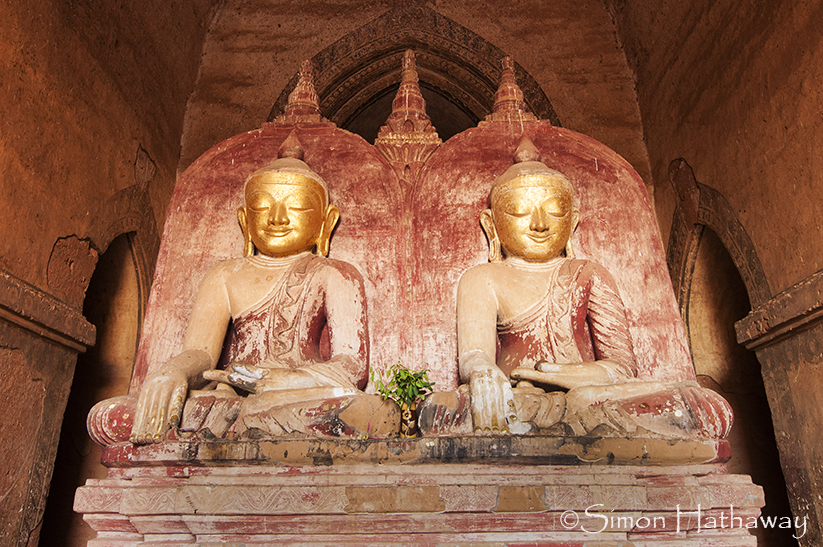
The latter is the state of mind we have every day after realising what we are when our body is not us, that is enlightenment. Here you are truth itself, eternity itself and perfection itself, and so no words can be applied to it. You feel oneness with the whole universe and know that everything you can feel is made by no other than your discriminating mind. You can see things in both ways; emptiness and form at the same time. In other words, you know that all illusions are not different from the truth.
©Boo Ahm
All writing ©Boo Ahm. All images ©Simon Hathaway
A. People who start Zen meditation can find it somewhat difficult to concentrate on the question in the beginning. You don’t have to be concerned about the matter since that is a very common phenomenon for beginners.
In fact, you should know that this is rather a good time to practise because what you are seeking is revealing itself. The root of the idea that you can’t concentrate on the question is the very thing that you should realise.
If you, while thinking that you can’t concentrate on you question, take the idea as true, you are being tricked by the illusion. You, however, are practising well if you try to find out where the idea comes from, because the purpose of our practice is to realise the root, or the source of our thoughts.
Try to focus on your question. When your concentration is very weak and it occurs to you that you don’t practice well, don’t agree with the idea but trace the thought back to the root from which it comes. Sooner or later you will find yourself absorbed in the question.
©Boo Ahm
All writing ©Boo Ahm. All images ©Simon Hathaway
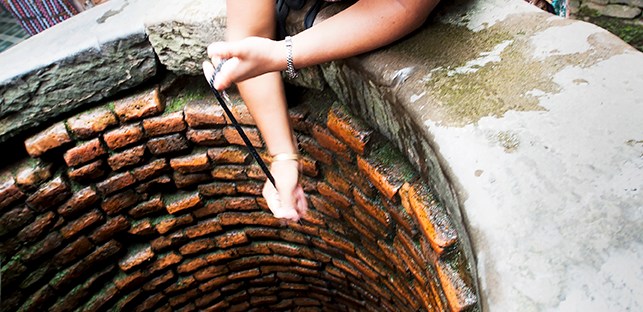
A. Master: “An old well.”
Student: “What is it like?”
Master: “Its bottom is invisible.”
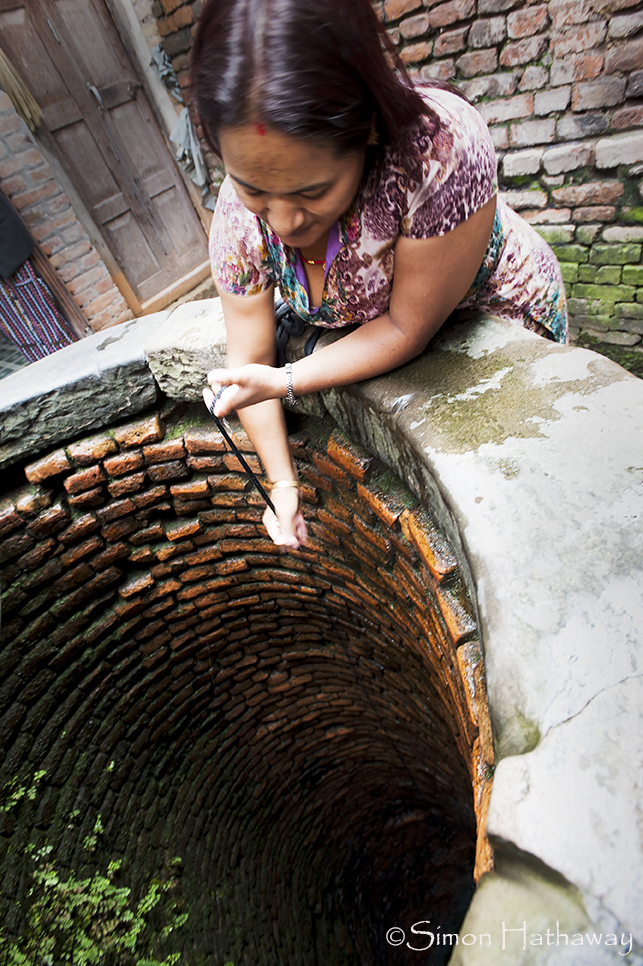
Commentary:
It is too deep to see the bottom of it.
It will quench your thirst forever if you drink it.
©Boo Ahm
All writing ©Boo Ahm. All images ©Simon Hathaway

A. Water represents our illusions. ‘Walking on the water’ symbolises ‘living free from the trap of illusions’, that is, Jesus didn’t sink in illusions, which means he was not fooled by them. The scenario that they were fishing in the water is symbolising our life that we are leading in illusions. The fact that Peter started walking on the water to Jesus means that he had a strong faith in Jesus and believed the water to be an illusion, even though he didn’t realise the truth himself. The scene, where noticing the strong wind, Peter was afraid and started to sink down in the water means that he didn’t realise the wind was also an illusion because he was not enlightened.

©Boo Ahm
All writing ©Boo Ahm. All images ©Simon Hathaway
A. A foolish man tries to control his thoughts while a wise man tries to control his mind. If you want to control your thoughts as you please, you should conquer your mind, that is, realise your mind. Trying to control each of your thoughts is like trying to win the battle by fighting individually each of the thousands of enemy soldiers in the battle field. There is no hope for success in this way. The most efficient and best way to win the battle is to capture the General who directs all the enemy soldiers. To realise your mind which is the root of all your thoughts is to capture the General.

What makes it difficult to capture the General is that we can’t recognise him easily because he is hidden disguised as one of the enemy soldiers. You should capture a soldier and interrogate him deliberately to find out who orders him. If he dies, get another captive and examine him more deliberately. Be determined to continue this to the end. Before long, the General will appear and say, “Why are you wasting your effort while I am always with you?”
©Boo Ahm
All writing ©Boo Ahm. All images ©Simon Hathaway

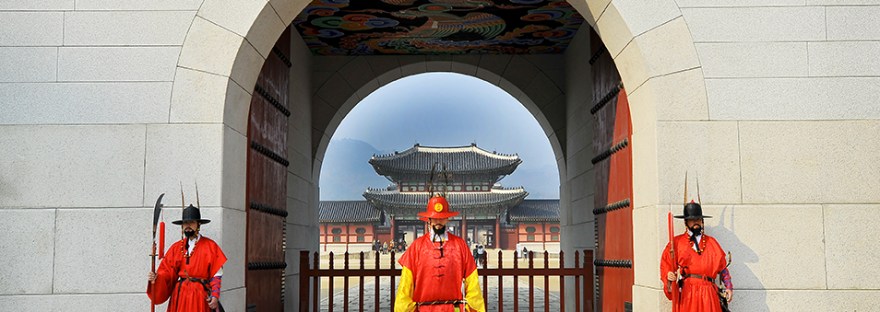
A. Master: “A gate.”
Student: “How can I see it?”
Master: “Open it.”
Student: “How can I open it?”
Master: “Break it open.”

Commentary:
All gates are wide open.
Don’t bump into the gate itself, just pass through the gateway.
Trying to open it is turning your back on it.
©Boo Ahm
All writing ©Boo Ahm. All images ©Simon Hathaway

A. If you are anxious to know where you will go after death, you should know where you are now. How could you expect to know your future which is invisible, not knowing the present right before your eyes? Once you know where you are standing now, you can know not just where you will go after death but also where you were before you were born. In order to know where you are, you, first of all, should know what you are. How could you know where you are, not knowing what you are?

Your true-self is not born and does not die. It has always been and will be the same without any change forever. It never changes at all. You are eternity itself. Death and birth are only illusions. The problem is that you are not aware of this truth because you can’t see things as they are. The end of Zen meditation is to experience the truth through your body.
Do you want to know where you will go after your death?
Watch carefully what you are stepping on.
©Boo Ahm
All writing ©Boo Ahm. All images ©Simon Hathaway

A. Thoughts are to mind what winds are to the air and waves are to the sea. In other words, thoughts are the actions of mind, and thoughts are temporary but mind is permanent. In brief, mind is the root of all thoughts, and is called true-self as well in Buddhism.

When we can see mind, the root of thoughts clearly, we can control thoughts, but most people are controlled by them because they cannot see mind for thoughts. After all, we become enslaved by the thoughts produced by us. Zen meditation is a practice to see mind.
©Boo Ahm
All writing ©Boo Ahm. All images ©Simon Hathaway
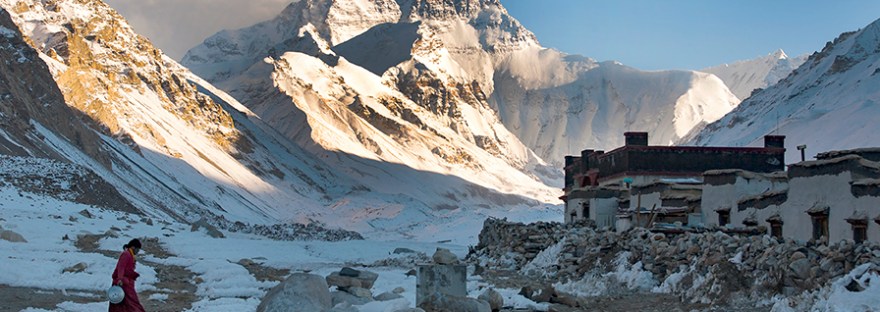
A. Master: “It’s like a mountain.”

Commentary:
Oh! Mountain!
It’s also like a rat.
If I were asked the question, I would say, “A mountain runs like a rat.”
©Boo Ahm
All writing ©Boo Ahm. All images ©Simon Hathaway
 Zen Fools