Bible, Buddha, Buddhism, compassion, Enlightenment, final goal, love, master, Meditation, Photography, Practice, Religion, root, self, student, true self, Truth, Uncategorized, Zen

Q280. Why is Zen meditation selfish?

A. What makes you think Zen meditation is selfish? Do you happen to think so because Zen doesn’t emphasise compassion during the teaching, that is to say, that we should help the poor or those in trouble? Zen expresses the same message in a different way.


Zen teaches people that we are one with the poor and the weak, that is, they are part of us and we are part of them by getting people to realise the truth that we are oneness with all the universe, rather than say that we should help them.

srh_4092a_thumb


Which is the more appealing and more persuasive of the following two scenarios, “This boy lost his parents and has no food to eat and no shelter to live in. We should help him because he is likely to become a criminal and harm our society in the future if he is left uncared for now” or “Take a close look at this boy. This is part of you.”? This is what the Biblical scripture, ‘Love your neighbour as yourself’ means.


©Boo Ahm


All writing ©Boo Ahm. All images ©Simon Hathaway

Buddha, Buddhism, empty, Enlightenment, final goal, illusion, master, Meditation, Mind, Photography, Practice, root, self, student, sutras, true self, Truth, Uncategorized, Zen

Q278. How can I see my true-self through illusions?

A. There is nothing that is not your true-self. The way all things are showing themselves is the way your true-self reveals itself. The problem is that you don’t see them as they are. In other words, it is not they but you that deceive yourself. The very things that you hear and see are called illusions when you can’t see them as they are, but called your true-self when you can see them as they are. The Sutras say that illusions are the true-self.


So, seeing and hearing what you are looking at, or listening to, at this moment as they are, is both eliminating illusions and seeing your true-self. Jesus said, “Recognise what is in your sight, and that which is hidden from you will become plain to you. For there is nothing hidden which will not become manifest.”

srh_3048a_thumb


Student: “How can I see my true-self?”

Master: “Don’t forsake your true-self.”


©Boo Ahm


All writing ©Boo Ahm. All images ©Simon Hathaway

Bible, Buddha, Buddhism, emptiness, empty, Enlightenment, final goal, God, master, Meditation, Mind, One, Photography, Practice, Religion, root, self, student, sutras, true self, Truth, Uncategorized, Zen

Q277. How can I, as a Christian, go to Heaven?

A. If you are to go to Heaven you should, above all, know where it is in order to go there, and then you should also know how to get there. I am going to quote from Jesus about where it is and how to get there.


Jesus said, “If those who lead you say to you, ‘See, the kingdom is in the sky,’ then the birds of the sky will precede you. If they say to you, ‘It is in the sea,’ then the fish will precede you. Rather, the kingdom is inside of you, and it is outside of you.” In other words, everything, whether Heaven or Hell, is produced by your mind. Where you are now is both Heaven and Hell. Whether it is Heaven or Hell depends on your mind.

_srh4739a_thumb


Jesus said to them, “When you make the two one, and when you make the inside like the outside and the outside like the inside, and the above like the below, and when you make the male and the female one and the same, so that the male is not be male nor the female the female; and when you fashion an eye in the place of an eye, and a hand in place of a hand, and a foot in place of a foot, and a likeness in place of a likeness; then will you enter the kingdom.” Put more simply, this means that in order to enter Heaven, we should not discriminate. We have a very similar saying in Zen: Make the smallest distinction and you are as far from it as Heaven is from Earth. In conclusion, to realise that Heaven and Hell are only illusions produced by your mind is to enter Heaven.


Student: “How can I enter Heaven?”

Master: “Enter Hell.”


©Boo Ahm


All writing ©Boo Ahm. All images ©Simon Hathaway

Buddha, Buddhism, Enlightenment, final goal, illusion, master, Meditation, Photography, Practice, root, self, student, true self, Truth, Uncategorized, Zen

Q276. Student: “Why is the true-self so invisible?”

A. Master: “Don’t speak ill of it. It has never hidden itself.”

srh_5140a_thumb


Commentary:

It’s like a lost child who has not seen his mother for so long that he can’t recognise her while being in her bosom.


©Boo Ahm


All writing ©Boo Ahm. All images ©Simon Hathaway

Buddha, Buddhism, emptiness, empty, Enlightenment, final goal, Happiness, illusion, Meditation, Mind, Photography, Practice, root, true self, Truth, Uncategorized, Zen

Q275. I am a little frightened that I may fall into emptiness.

A. It may be due to the impression that comes from the stereotype of the word ’emptiness’ that you have such a feeling. Some people are worried that if they fall into emptiness, everybody they love comes to look like a shadow or a ghost, and that they may lose the feeling of love and connection they have shared with them so far. They may also think that everything will seem to be so valueless and useless because it looks empty to them. In the end, they are afraid that they are likely to become pessimistic.

srh_0589a_thumb


Don’t misunderstand emptiness. The word ’emptiness’ used in Zen doesn’t mean what you have imagined so far. Its meaning is much closer to freedom than to void in that we free ourselves from all the yokes of life. Having fear of falling into emptiness is like having fear of falling into great eternal happiness because you have never experienced such happiness. Emptiness is where you are from and are to return to, so that you may obtain eternal happiness. Don’t be afraid to face this unknown happiness.


©Boo Ahm


All writing ©Boo Ahm. All images ©Simon Hathaway

Buddha, Buddhism, emptiness, empty, final goal, illusion, master, Meditation, Mind, Photography, poisons, Practice, root, self, student, true self, Truth, Uncategorized, Zen

Q272. How can I escape from the three worlds: the world of greed, the world of form and the world of formlessness?

A. Above all, you ought to know not that you are in the three worlds, but that the three worlds are in you. As long as you try to escape from them while thinking that you are locked in them, you can’t succeed in escaping by any means.


To realise they are also nothing but illusions is to escape from them. However good or bad they look, they are no more than illusions produced by your imagination. The harder you try to escape from them, the firmer you will make them as long as you regard these illusions as real.

srh_2413a_thumb


Student: “How can I escape from the three worlds?”

Master: “Have you ever seen them?”

Student: “No.”

Master: “Then, you are not in them.”


©Boo Ahm


All writing ©Boo Ahm. All images ©Simon Hathaway

Buddha, Buddhism, emptiness, empty, Enlightenment, final goal, illusion, Koan, master, Meditation, Mind, Photography, Practice, root, student, suffering, sutras, true self, Truth, Uncategorized, Zen

Q271. What does the phrase ‘You should neither hold on to the meaning of the Sutras nor let go of it’ mean?

A. Holding on to the meaning of the Sutras means keeping the words without perfect understanding, in other words keeping food undigested in the stomach. Letting go of it means to ignore and forget it. For better understanding, let’s take the following as an example.


Buddha had a student who was notorious for having killed many people and even tried to kill Buddha before becoming a monk. One day this monk happened to visit one of Buddha’s lay students, when his wife was having a hard time being in labour. The layman said to the monk, “Please relieve my wife of this terrible suffering with your power.” The monk responded, “I still don’t have such divine power. I will go and ask my master, Buddha for this favour for your wife.” Upon returning to Buddha, the monk explained the situation and asked him what he should do. Buddha answered, “You go back to the house, and tell her that you have never killed anyone.” The monk did as he was told to, and then, on hearing his words, she was relieved of her suffering.


_srh6149a_thumb


This metaphor implies that everything is empty.


When Buddha said to his disciple, “Tell her that you have never killed anyone”, he meant that whatever bad and cruel things, or whatever good and beautiful things we may do, they are all empty, so the young monk’s murder was also empty. He likened her childbirth to the young monk’s murder. The woman in labour, on hearing what the monk said, realised the truth that the suffering she was going through was also empty, just as the murders the monk committed were empty.


We should understand what the Sutras say, in the same way that the woman in labour understood Buddha’s remark passed on by his student. The moment she heard Buddha’s message, she made it part of herself. If she had ignored, let go of the message or remembered it only as a meaningful saying, or held on to the meaning of it, she couldn’t have been relieved of her suffering.


Master: “What did Buddha tell his student to say to the woman in labour?”

Student: “He told him to say, ‘I’ve never killed anyone’.”

Master: “Why did Buddha tell him to say so?”

Student: “Because He wanted to teach her that everything is empty.”

Master: “You are still holding on to the meaning of Buddha’s teaching.”

Student: “Then, what did He say?”

Master: “He didn’t say anything, and his student didn’t go to her house.”


©Boo Ahm


All writing ©Boo Ahm. All images ©Simon Hathaway


Buddha, Buddhism, Enlightenment, final goal, illusion, Koan, master, Meditation, Mind, Photography, Practice, root, student, Truth, Uncategorized, Zen

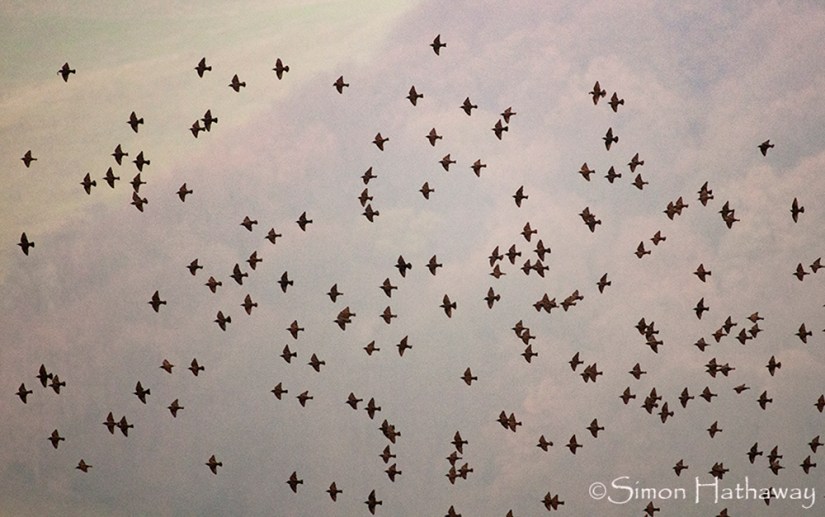
Q270. Student: “Are the birds in the tree singing or crying?”

A. Master: “Why don’t you ask yourself?”

srh_1436a_thumb


Commentary:

They are laughing at you.


©Boo Ahm


All writing ©Boo Ahm. All images ©Simon Hathaway
Buddha, Buddhism, Enlightenment, final goal, illusion, master, meditaion, Mind, Photography, Practice, root, self, student, Truth, Uncategorized, Zen

Q269. Should I stop reading books on Zen meditation as told by masters?

A. You don’t have to stop reading books, but should not entirely depend on books for grasping the core meaning of the books. Think of reading books on Zen as listening to masters’ dharma talks. When you come across what seems to make no sense in reading books, try to find out the meaning through practice, not by reading other books.

booksa_thumb


To consult other books to understand problems from a book is like eating more food to digest some undigested food. When some undigested food remains in your stomach, you should try to digest it by taking digestive medicine, rather than eat other food. The digestive medicine means to practice.

Undigested knowledge is to your enlightenment as undigested food is to your body. Just as what we need is not more food but digestive medicine when we suffer from indigestion, so it is not more books but practice that we need for our undigested knowledge.


©Boo Ahm


All writing ©Boo Ahm. All images ©Simon Hathaway

Buddha, Buddhism, Enlightenment, final goal, illusion, master, Meditation, Mind, mindful, Photography, Practice, root, self, student, Truth, Uncategorized, Zen

Q268. Why do I neither understand any words of Zen, nor feel any advance or change, even though I have practiced calming my mind for over 30 years?

A. Practising hard is very important. However, what is more important is practising in the right way. Practising hard in the wrong way can lead you nowhere, or far away from your goal. For instance, after strong determination to reach London on foot from Manchester, you decide to walk 8 hours a day without fail. If you take the right path, you will be sure to get nearer and nearer your destination with time and reach there some day. If you, however, walk hard only in your garden, or in the opposite direction, no matter how hard and long you may walk, you will still be in the same place, your garden or farther away from your destination in spite of your vigorous effort.


So, checking whether you are taking the right way is as important as practising hard. You seem to have tried in vain to calm your mind by holding it firmly while not knowing what it is. The purpose of Zen meditation is not to keep your mind still but to realise what your mind is. Try to see what your mind is from now on instead of trying to calm it. If you see it clearly, you don’t have to try to calm it because it is always calm.

file32645_thumb


Student: “Why can’t I calm down my mind?”

Master: “Because you try to calm it down.”


©Boo Ahm


All writing ©Boo Ahm. All images ©Simon Hathaway