Buddha, Buddhism, emptiness, empty, Enlightenment, final goal, illusion, master, Meditation, Photography, Practice, root, self, student, sutras, true self, Truth, Uncategorized, Zen

Q353. I have read the Diamond Sutra every morning for over 20 years. Is reading the Sutra helpful?

A. Reading thousands of books and the Sutras is not as good as grasping a single word out of the books you read. Trying to realise the true meaning of a single word of the Sutra is much more beneficial than reading the Sutra a thousand times.


You should know that all books including the Sutras are not the essence of the true-self but only a kind of manual that describes the true-self. In other words, the core of what the Sutra says is not in the Sutra but in you who are reading the Sutra. You should know that the true Sutra is not the one made of paper put before you, but your true-self that is making your body read it.

017_8178a_thumb


You should also know that each word of the Sutra contains all the contents of the Sutra. So, if you can grasp only a single word from the Sutra, you can know the rest of the Sutra, which is enlightenment. You should think that each word is the gate to enlightenment, and try to understand it clearly rather than read many books, or read a book many times. Then it takes longer to read the Sutra than before. It may take more than a year to read the Sutra that you could previously read in two hours. Then your reading is not reading any more but practice. This is the way of reading the Sutra that I’d love to recommend.


Master: “What did you do last night?”

Student: “I read the Diamond Sutra.”

Master: “What does it say?”

Student: “It says that everything is empty.”

Master: “Did you read only that one sentence?”

Student: “I read many other sentences as well, but I don’t remember all of them.”

Master: “Don’t say that you read the Sutra after picking up and eating black beans.”


©Boo Ahm


All writing ©Boo Ahm. All images ©Simon Hathaway

Buddha, Buddhism, Enlightenment, final goal, illusion, master, Meditation, Photography, Practice, self, student, sutras, true self, Truth, Uncategorized, Zen

Q352. If hand-copying the Sutras is meditation, can anything be regarded as meditation?

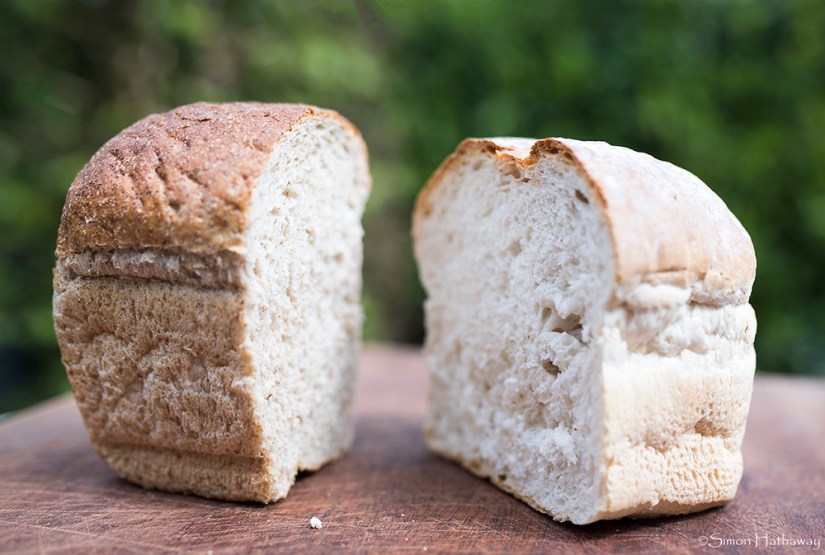
A. Hand-copying the Sutras itself is not meditation just like wheat flour itself is not bread. It can be meditation only when you keep the question, ‘Who or what is making my body copy this Sutra?’ just as wheat flour becomes bread only when you knead the flour and bake it.

017_8166a_thumb


If you can keep such curiosity, all of your acts, whatever you may do, can be meditation. During a walk, you can practice walking meditation. When drinking tea, you can practice tea meditation. When talking with others, you practice talking meditation. If you can turn all your acts into meditation like this, you can be said to have become one with your practice. This means that you are very near the final goal. However, hand-copying the Sutras without such a question may enhance your penmanship, but it has nothing to do with enlightenment.


Master: “How do you practice these days in order to attain enlightenment?”

Student: “I hand-copy the Diamond Sutra.”

Master: “How long does it take to hand-copy the Sutra?”

Student: “It takes almost a day.”

Master: “You still don’t know how to copy the Sutras. You should be able to do it in a second.”

Student: “How can you do that in a second?”

Master: “Shall I show you how?”

Student: “Of course, Sir.”

Master: (slapping the student in the face) “Do you see the Sutra?”


©Boo Ahm


All writing ©Boo Ahm. All images ©Simon Hathaway
Buddha, Buddhism, Enlightenment, master, Meditation, Photography, student, true self, Truth, Uncategorized, Zen

Q351. Why did Joshu rate the same actions of the two hermits differently?

A. Joshu went to a hermit’s place and said, “Hello, anybody in?” The hermit lifted up his fist. Joshu said, “The water is too shallow to anchor here,” and went away. Joshu visited another hermit a few days later and said, “Hello, anybody in?” The hermit raised his fist too. Then Joshu said, “You know how to release and how to catch, and how to kill and how to save.” And he bowed to the hermit.

_SRH5116a_thumb


Student: “Why did Joshu rate the same actions of the two hermits differently?”

Master: “Why do you blame Joshu for your fault?”


Commentary:

Who releases and catches whom?

Who kills and saves whom?

Don’t blame Joshu.

It was only for the sake of sentient beings

that Joshu soiled himself with mud and jumped into water.


©Boo Ahm


All writing ©Boo Ahm. All images ©Simon Hathaway

Buddha, Buddhism, desire, emptiness, empty, Meditation, Photography, suffering, true self, Truth, Uncategorized, Zen

Q350. My grandmother, a Buddhist, always says that our greed is the main root of our unhappiness. Is she right?

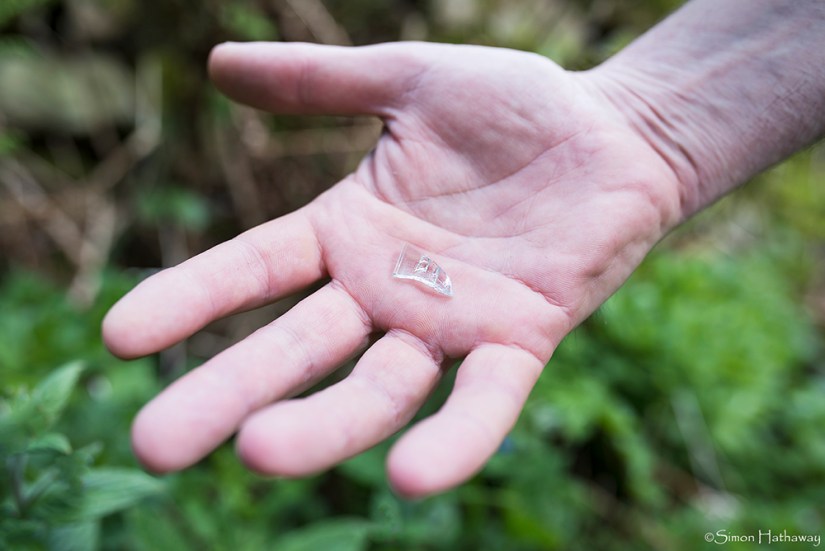
A. She is not wrong, but in order not to have greed we should know why we have greed. The reason that we have greed is that we can’t see things as they are. For example, when we mistake a piece of broken glass for a piece of diamond, we come to have greed and strive to attain it. When we fail to attain it, we feel disappointed and even frustrated. Even when we succeed in attaining it, we often hurt our hands in the middle of grasping it. After getting it, we are disappointed to find that it is not diamond but glass, or we keep hurting our hands while playing with it.

017_8143a_thumb


In conclusion, we come to have greed because we can’t see things as they are, and we try to satisfy our greed only to fail. As a result of this failure, we become unhappy. So, the main root of our unhappiness is not greed itself, but rather our foolishness in that we can’t see things as they are.


©Boo Ahm


All writing ©Boo Ahm. All images ©Simon Hathaway

Buddha, Buddhism, emptiness, empty, illusion, Meditation, One, Photography, root, self, true self, Truth, Uncategorized, Zen

Q349. If bubbles in a bottle of water are the true Self, as well as the bottle itself and its surroundings, how can the true Self contain the true Self? Which of these elements represents the true Self? Or is it everything?

A. The true-self is non-duality, oneness. There is nothing that is not the true-self, which is often compared to the universe. Bubbles, bottle, water and surroundings are all part of the universe. Which of them doesn’t belong to the universe? It is because you separate them from the universe by putting labels or drawing imaginary lines on them that you think that the universe contains them. In fact, it is impossible to break or tear the universe whatever we may do, because even we who try to break it are the universe itself. Even when things change or are changed into other forms whether visible or invisible, their changes are part of the universe as well.

SRH_9557a_thumb


To conclude, there is nothing that is not the true-self. The reason why you think that a bottle contains water is that you put different labels on them. I’d like to recommend that you think over the phrase ‘You should be able to put Mt. Everest into a grain of mustard seed’.

©Boo Ahm


All writing ©Boo Ahm. All images ©Simon Hathaway

Buddha, Buddhism, emptiness, empty, Enlightenment, final goal, Koan, master, Meditation, One, Photography, Practice, student, true self, Truth, Uncategorized, Zen

Q348. Kyogen said, “Let’s suppose a man is hanging by his teeth from a branch of a tree that is leaning over a precipice. His hands grasp no branch, his feet rest on no limb, and under the tree another man asks him, ‘Why did Bodhidharma come to China from the West (India)?’ If the man in the tree does not answer, he misses the question, and if he answers, he falls and loses his life. Now what shall he do?”

A. Student: “How can you both answer the question and save your life?”

Master: “In danger.”

Student: “Who is in danger?”

Master: “You are in danger.”

_SRH9861a_thumb

Commentary:

Don’t stumble over the lines drawn on flat land by you.

They can’t catch your feet however tangled they are.

Don’t be scared of your shadow.

It can’t harm you however horrible it may look.

©Boo Ahm


All writing ©Boo Ahm. All images ©Simon Hathaway
Buddha, Buddhism, emptiness, empty, Enlightenment, final goal, illusion, Meditation, Photography, Practice, suffering, true self, Truth, Uncategorized, Zen

Q347. My thoughts of doom and the resultant feelings of fear or terror have become almost constant. I am trying to overcome it in many ways, but the fear is too strong to overcome. What more can I do? Please tell me there’s nothing to fear.

A You are showing a good example of being deluded by illusions. You say that you are overwhelmed by the fear of doom. What is doom? The key problem here is that you don’t know what doom is even while suffering from the fear of it. You are being harassed by something imaginary drawn by you. Being pleased or troubled with imaginary figures, like this, is said to be being deluded by illusions, which can be compared to a dream. You are dreaming of being chased by the fear of doom. In fact, not only you but also all of us are dreaming in that we are being deluded by illusions. The reason why others don’t have such feelings of fear as yours is that each of us is dreaming a different dream. The best way to overcome the fear is to wake up from your dream, that is, to realise what you fear is.

_SRH2291b_thumb
You seem likely to become a good Zen student because curiosity about the doom of death and illness was the starting point of Buddhism. Buddha, when young, had such strong curiosity concerning the doom of birth, ageing, illness and death that he gave up even his succession to the throne. His strong curiosity led him to enlightenment, which is to know clearly what the essence of these is. After enlightenment, he said that our life is like a dream and that we should wake up from the dream in order to attain eternal happiness.


What matters is not for me to tell you that there is nothing to fear but for you to realise it in person. I’d like to tell you to wake up from your nightmare instead of telling you that there is nothing to fear.

©Boo Ahm


All writing ©Boo Ahm. All images ©Simon Hathaway

Bible, Buddha, Buddhism, emptiness, empty, Enlightenment, final goal, God, illusion, master, Meditation, One, Photography, Practice, Religion, true self, Truth, Uncategorized, Zen

Q346. The Bible says that it is easier for a camel to go through the eye of a needle than for a rich man to enter the kingdom of God. How can the rich enter the kingdom of God?

A. A rich man here means a man with a lot of illusions, rather than a man with a lot of knowledge or a lot of wealth. ‘Enter the kingdom of God’ means to attain eternal life in Christianity, or enlightenment in Buddhism. Only people who can see things as they are, may enter the kingdom of God. Seeing things as they are means not being deluded by illusions, which is to be able to see things as empty. In brief, only people who are free from illusions by seeing things as empty can enter the kingdom.

SRH_1123a_thumb


My answer to your question is: ‘They can enter the kingdom of God if they realise how to put Mount Everest into a grain of a mustard seed’. To realise how to put Mount Everest into a grain of a mustard seed means to realise that everything is empty. When everything is empty, Both Mount Everest and a mustard seed are empty. When they are empty, there is no ‘large’ and ‘small’ in them. Then, each of them can enter each other freely.


To conclude, rich people, whether rich with illusions or rich with money and knowledge, can enter the kingdom when they can see everything, including all their possessions, as empty. When everything is empty, a camel and the eye of a needle are also empty just like Mount Everest and a mustard seed are. Then, it will be a piece of cake for the rich to pass through the eye of a needle.


©Boo Ahm


All writing ©Boo Ahm. All images ©Simon Hathaway

Bible, Buddha, Buddhism, emptiness, empty, Enlightenment, final goal, illusion, master, Photography, Religion, root, self, student, true self, Truth, Uncategorized, Zen

Q345. Christians say that Christ died on the cross to save us from our sins. How should we understand this?

A. Buddhism has similar metaphors. Buddha said, “Those who want to see me through my voice and body won’t see me.” He also said, “Kill me when you meet me if you do want to see me.”


According to the Gospel of Thomas, Jesus once said, “When you see one who was not born of woman, prostrate yourselves on your faces and worship him. That one is your father.” Who is one who was not born of woman? He is not one who is doomed to birth and death. You should know him. ‘Christ died on the cross to save us from our sins’ means that he died on the cross in public in order to teach people that his physical body was not him and tell them not to be deluded by the illusion of his body. If you cling to the idea that the young crucified person is Jesus, you are being deluded by an illusion. In other words, you can see the true Jesus when you are free from the illusion of Jesus.

SRH_8943a_thumb


Student: “Why did Jesus die on the cross, saying that his father was almighty?”

Master: “Don’t insult him. He didn’t die but gave his teaching.”


©Boo Ahm


All writing ©Boo Ahm. All images ©Simon Hathaway

Bible, Buddha, Buddhism, Enlightenment, illusion, master, meditaion, One, Photography, Practice, Religion, root, self, student, true self, Truth, Uncategorized, Zen

Q344. What do you think of Easter in Christianity?

A. Easter is a Christian holiday when Christians remember the death of Jesus and his return to life. The death of Jesus means removing illusions, and his return to life means the revealing of the true-self. So, Easter is a great lesson that reminds us of the Christian teaching that we should remove illusions and see the true-self, the true Jesus.

The Bible describes well how the true-Jesus exists in Luke 24:15, 16: ‘As they walked and discussed, Jesus himself drew near and walked along with them; they saw him, but somehow did not recognise him.’ He is always with us wherever we are. He is with you even at this moment when you are reading this writing. The problem is that we don’t recognise him, because we are deluded by illusions. The purpose of Christianity is to recognise him. To recognise him is to attain eternal life in Christianity, or enlightenment in Buddhism.

017_8141a_thumb

True Easter is not a specific day of the year but the day when we can recognise the true-Jesus. Following the literal meaning is being deluded by illusions and far from the true teaching of Christ.

Student: “How can I see the true Jesus?”

Master: “Thank you for showing the true Jesus.”

©Boo Ahm


All writing ©Boo Ahm. All images ©Simon Hathaway