Buddha, Buddhism, emptiness, empty, Enlightenment, final goal, illusion, Meditation, Mind, Religion, root, self, true self, Truth, Uncategorized, Zen

Q217. What happens to our true-self when our bodies die? How can we, as living creatures, ever know this while we are still alive?

A. The reason why we can’t know what happens to our true-self when our bodies die, is that we can’t see the situation now, I think.

Let me ask you a question, ‘2 + 3 = (  )’. What is the suitable number for the blank? I am sure you know that the correct answer is ‘5’ because it is such a simple question. How can you work out the right answer when there is nothing visible, not even a number in the blank?

SRH_0251a_thumb


You know the right answer since you can clearly understand the visible thing, ‘2 + 3’. If you don’t understand even one of the three visible things, ‘2’, ‘+’, and ‘3’, you can’t know the appropriate number for the blank. Likewise, if you can see everything as really it is, clearly knowing all things that you see and hear, then you can perfectly perceive invisible things as clearly as if you saw them now, in the same way that you would know the right number for the blank, as clearly as if you saw the number ‘(5)’ written there.


©Boo Ahm

All writing ©Boo Ahm. All images ©Simon Hathaway

Buddha, Buddhism, emptiness, empty, illusion, Meditation, Mind, root, self, student, true self, Truth, Uncategorized, Zen

Q216. Student: “What is the true-self?”

A. Master: “Behold the puppets prancing on the stage, and see the man behind who pulls the strings.”

Student: “Who is the man?”

Master: “He is pulling the strings now.”

 SRH_1954b_thumb

Commentary:

Seeing leaves fluttering, we can be aware of the existence of wind.

Seeing a feather flying in the air, we can be conscious of the existence of a bird.


©Boo Ahm


All writing ©Boo Ahm. All images ©Simon Hathaway

Buddha, Buddhism, compassion, emptiness, empty, Enlightenment, illusion, Meditation, Mind, mindful, Practice, self, suffering, true self, Truth, Uncategorized, Zen

Q214. My husband was once unfaithful to me. I said that I would forgive him when he asked me for forgiveness. However, we have had a lot of trouble since, and now we are on the point of breaking up. What shall I do?

A. The point is not whether to break up or not, but whether you forgave him or not. True forgiveness brings peace and happiness to the forgiver as well as to those who are forgiven.

Ask yourself if you really forgave your husband. Are you sure that you forgave him? If you are not sure, ask yourself whether or not you happen to have any concerns about his unfaithfulness and your forgiveness in your mind, or feel that you did something very big for him and that he should be grateful to you for your forgiveness and recompense you for it. If you think even a little in this way, your forgiveness is not forgiveness at all but a penalty wrapped in the sweet-sounding word ‘forgiveness’. You actually didn’t forgive him but are demanding reparation for your suffering.

SRH_1018a_thumb


In Zen, forgiveness means to regard your husband’s affair as empty and think that there is nothing to forgive him for, and to realise that even your forgiveness is empty as well. If you can’t forgive him like this, try to see the situation as empty. Your effort to see your situation as empty will make your life peaceful and stable regardless of your husband’s reaction to your endeavour.

Don’t expect a quick reaction from him. A sick person usually takes time to return to what he was after his disease is cured. Likewise, it might take time for him to return to what he was because he still needs more time to forgive himself.

©Boo Ahm


All writing ©Boo Ahm. All images ©Simon Hathaway

Buddha, Buddhism, Enlightenment, final goal, Happiness, master, Meditation, Mind, now, Practice, root, self, student, true self, Truth, Uncategorized, Zen

Q213. Student: “What is the true-self?”

A. Master: “A word”

Student: “Where is it?”

Master: “In your mouth”

_SRH6253a_thumb


Commentary:

It cooks, and chats.

It brings peace, and causes troubles.

It makes the light and the darkness.

It does all these things.


©Boo Ahm


All writing ©Boo Ahm. All images ©Simon Hathaway

Buddha, Buddhism, emptiness, empty, Enlightenment, final goal, illusion, master, Meditation, Mind, One, Practice, root, self, student, true self, Truth, Uncategorized, Zen

Q212. Did ancient masters obtain enlightenment?

A. No master says that he has attained enlightenment because it is also an illusion. Masters are those who have realised the truth that everything is empty as an illusion and there is nothing to gain or lose. When everything including the master himself is empty, who would attain what? It is, for example, like, after struggling a lot to reach the Earth, finding the truth that they are originally part of the Earth and there is no other place to reach than where they are. So after enlightenment, they would say that all the efforts they had made were of no use at all. In order to describe such people, we use the phrase ‘attained enlightenment’ for the sake of convenience. If a master happens to think that he has obtained anything, he is not enlightened.

SRH_9150a_thumb


Master: “Why did you come here?”

Student: “I came here to attain enlightenment.”

Master: “I don’t have such a thing here.”

Student: “Why do many people try to attain enlightenment?”

Master: “Because they have not confirmed the truth that there is nothing to gain or lose.”


©Boo Ahm


All writing ©Boo Ahm. All images ©Simon Hathaway

Bible, Buddha, Buddhism, desire, emptiness, empty, final goal, God, illusion, Meditation, Prayer, root, true self, Truth, Uncategorized, Zen

Q211. Why doesn’t God listen to me when I cry to him for help?

A. It is not that God doesn’t listen to you, but that you are deaf to him because you are involved in listening to only your familiar noises. It is not that he hides himself from you, but that you are blind to him since you are preoccupied in keeping company only with familiar figures. He sometimes whispers and sometimes shouts. He sometimes shakes you, from time to time pushes you and once in a while pulls you. It is not God but you that are to blame for not receiving help from him. If you can cut off all images and names, his voice and figure will sound and look clear to you.

File0162a_thumb

©Boo Ahm


All writing ©Boo Ahm. All images ©Simon Hathaway


Buddha, Buddhism, emptiness, empty, Enlightenment, final goal, illusion, Meditation, Mind, Practice, root, student, true self, Truth, Uncategorized, Zen

Q210. Student: “What is the true-self?”

A. Master: “A room”

P1210311a_thumb


Commentary:

To take you out of a room is not difficult.

However, it is very difficult to take the room out of you.


©Boo Ahm


All writing ©Boo Ahm. All images ©Simon Hathaway

Buddha, Buddhism, emptiness, empty, Enlightenment, final goal, illusion, master, Meditation, Mind, Practice, self, student, true self, Truth, Uncategorized, Zen

Q209. I was advised to forget and give up ‘self’ by my former master. How can I do it?

A. If you are to forget and give up yourself, try to know what ‘yourself’ is prior to seeking to forget and give it up. One of the most common mistakes we make in Zen meditation is trying to do something we don’t know at all. The reason why you find it difficult to forget and give up yourself is that you don’t know what yourself is.

SRH_0587a_thumb


How could you forget and give up yourself without knowing what it is? Make every effort to realise what ‘yourself’ is, which is the core of Zen meditation. If you succeed in realising what it is, you will become oneness with the whole universe and realise that there is nothing worth being labelled as ‘you’; then, there is nothing to forget or give up.


©Boo Ahm


All writing ©Boo Ahm. All images ©Simon Hathaway

Buddha, Buddhism, emptiness, empty, final goal, illusion, master, Meditation, Mind, mindfulness, Practice, root, student, true self, Truth, Uncategorized, Zen

Q208. During my practice, I sometimes feel fear, as well as joy and bliss. Is this normal? How should I react to it?

A. It’s a very common feeling that you can experience during practice. Whatever scenes and whatever emotions, good or bad, neither avoid nor follow them. They are all illusions. Just try to trace them back to the root from which they come. The purpose of Zen meditation is to realise what the root of all illusions is. It is because you are making a little progress that you have such feelings. From now on, do think of them as a gate to the final goal, your true-self, and your practice will make big progress.

File31175a_thumb


Student: “Sir, I feel fear during my practice.”

Master: “That is an action of your true-self.”

Student: “You said that fear is an illusion.”

Master: “It is when you don’t know that fear is an action of your true-self that it is an illusion.”


©Boo Ahm


All writing ©Boo Ahm. All images ©Simon Hathaway

Buddha, Buddhism, emptiness, empty, Enlightenment, Happiness, illusion, master, Meditation, Mind, One, Practice, root, true self, Truth, Uncategorized, Zen

Q206. Isn’t Zen meditation nihilistic?

A. People might think that Zen meditation leads people to nihilism, or pessimism because it says that everything is empty. However, when Zen says that everything is empty, it doesn’t mean that everything is useless like rubbish and that you should throw it away, but it means that the illusions of everything, which are its names and images, are empty. Zen helps you to realise the truth that we are more than what we think we are, that is, we are perfection itself, eternity itself, beauty itself, happiness itself and holiness itself. Also, Zen meditation leads you to see the essence of everything, not mere illusions of it, which allows you to realise and enjoy the real value of all that you have overlooked so far.

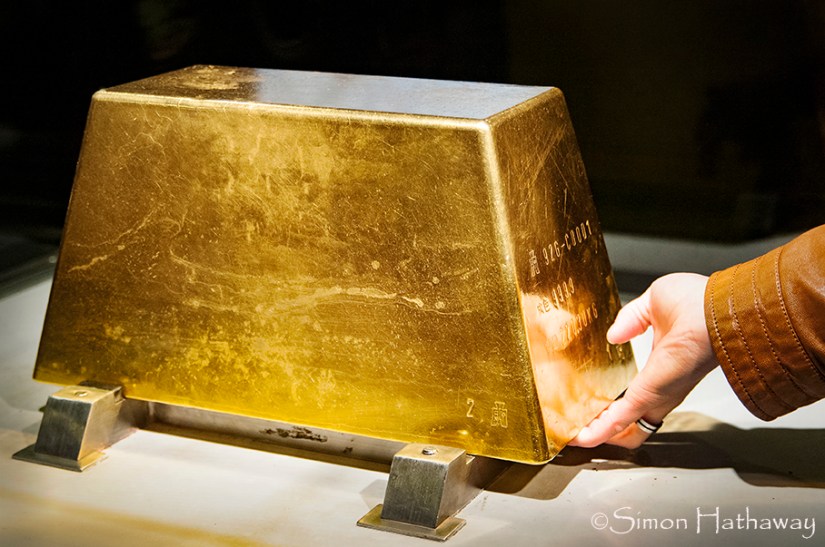
Let me take a metaphor of a child who is playing with two golden toys: One of them is a very ugly devil-shaped monster and the other is a very handsome, brave-looking lion. The child is attracted only by the form of the handsome lion, without realising the value of the gold of which the lion is made. Likewise, he, if not disliking the monster, is apt to like it less than the lion since he is ignorant of the real value of it and the fact that both are the same in essence. All he knows about the toys is that they are a handsome brave looking lion and an ugly, cruel-looking monster. When he regards the names and the images of the toys as their totality, without realising the value of gold, he is said to be trapped in illusions of them.
File31530a_thumb


When I say that everything is empty, I mean that the illusions of everything are empty. When saying that the lion is empty, I mean that the illusions of the toy lion are empty. We, grown-ups, cherish the toys more than the child does because we know the essence of them behind their illusions, such as their names and images, that is, we realise that they are made of gold. Also, we don’t value the monster less than the lion since we know both of them are the same in essence. When I, saying that everything is empty, tell you to remove illusions, I am encouraging you to see the gold, not the images of the toys.

However, I don’t mean that we should not pay any attention to the names and the images which are called illusions. They are very important and indispensable to maintain our reality of life. In fact, to remember as many of them as exactly as possible and apply them well to each situation of our lives, might be essential elements for successful living. I mean that you should realise that the names and the images of a thing are not the unchangeable essence of it, but mere illusions that can change anytime. I encourage you to see the essence of all things, including yourself.

Then, you can realise the truth that an illusion is the truth itself and an illusion is not separate and different from the truth, just as the toy lion is not separate and different from gold. Afterwards, all things in your life look more important and more beautiful than they used to. In the end, your life becomes happier and more meaningful than before.


King: (Showing an apple and a tomato to a master) “Sir, why do they

have different names from each other even though they are the

same size and colour?”

Master: “Your Majesty, it’s like you wear official robes during your office

hours and change into everyday garments after work.”


©Boo Ahm


All writing ©Boo Ahm. All images ©Simon Hathaway