Buddha, Buddhism, Enlightenment, final goal, Happiness, illusion, master, Meditation, Mind, One, root, self, student, true self, Truth, Uncategorized, Zen

Q200. How can I discard ignorance and attain wisdom?

A. Don’t try in vain to abandon one and attain the other. It’s like trying to discard the left and attain only the right. In fact, both are one when you know them. They only look separate and different from each other when you don’t know them. Try to realise what the ignorance is that you think you have, rather than striving to attain the wisdom you think you don’t have. Wisdom is none other than to know what ignorance is. Becoming Buddha is realising what a sentient being is.

SRH_2774a_thumb


Student: “What shall I do when I have a thief in my house?”

Master: “Once you know him, he is not an enemy any longer.”


©Boo Ahm


All writing ©Boo Ahm. All images ©Simon Hathaway

Buddha, Buddhism, emptiness, empty, Enlightenment, final goal, Happiness, illusion, Meditation, Mind, present, true self, Truth, Uncategorized, Zen

Q199. I am always so disturbed by the noises of my family members during my practice that I end up getting upset and spoiling my practice. What can I do to solve this problem?

A. Don’t think of them as obstructions but as helpers. Your idea is like complaining that the wind is preventing you from finding air when you are diligently looking for air. The wind can be likened to your family members and air to your final goal. In fact, they are what you are looking for even though they look different from what you are seeking. They only look so because you can’t see them as they are.


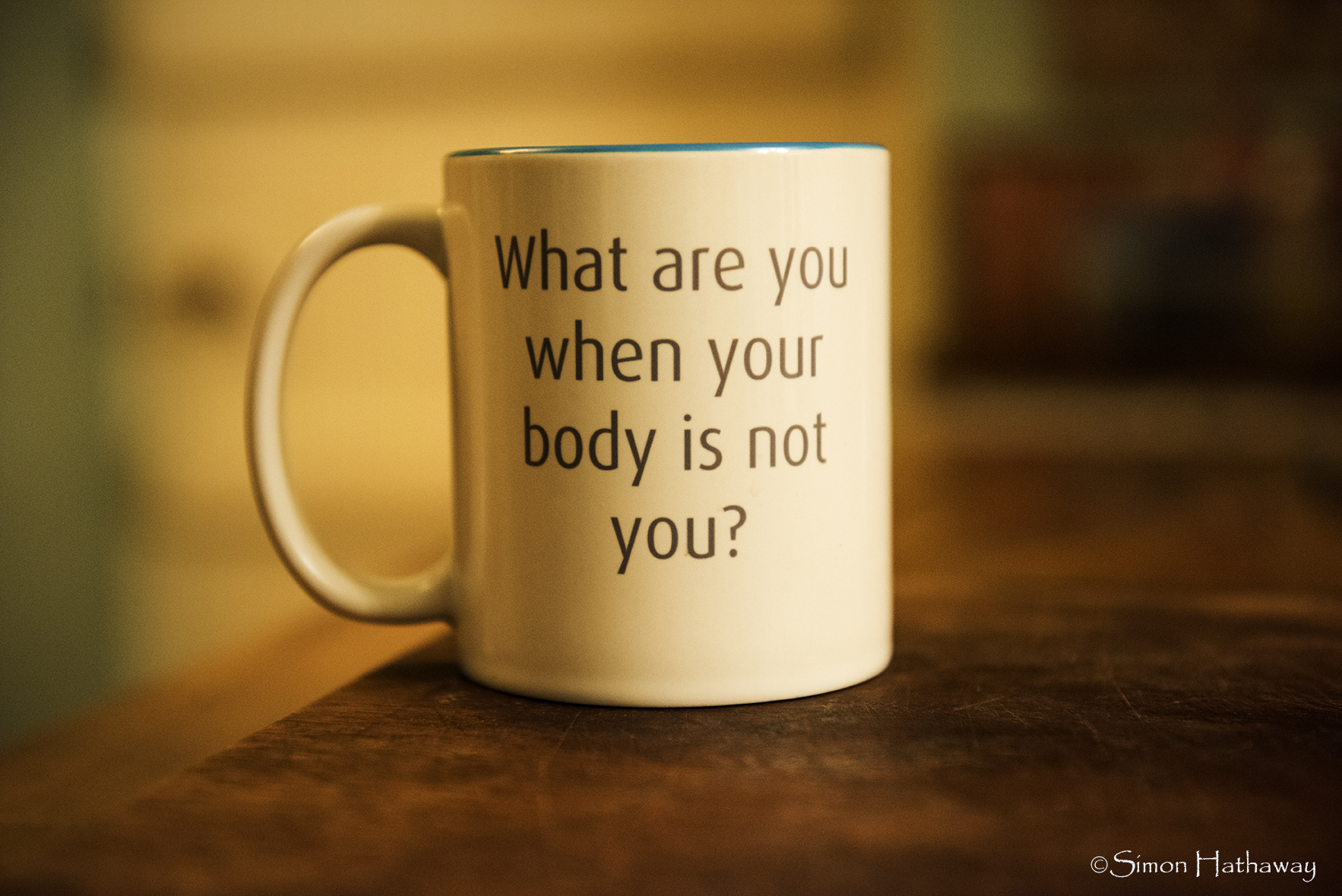
Everything is the gate to enlightenment. If you can see only a single thing, whatever it is, as it is, you will reach the final goal. Your family members are also the gate to enlightenment even though they appear otherwise. Ask yourself what makes your body hear the noises and makes your body get angry. Ask yourself what they are when their bodies are not them and what causes their bodies to make such noises. Sooner or later, you might feel more grateful rather than angry with them. If you can find the correct answer to either of these two questions, you can be said to have attained enlightenment.

_SRH6170a_thumb


Student: “What is the true-self?”

Master: “There is nothing that is not it.”

Student: “Why can’t I see it?”

Master: “Because you seek something else other than what you see and hear.”


©Boo Ahm


All writing ©Boo Ahm. All images ©Simon Hathaway

Buddha, Buddhism, Enlightenment, final goal, Happiness, illusion, Meditation, Practice, true self, Truth, Uncategorized, Zen

Q142. Should ‘I’ be thrown away to attain enlightenment?

A. It is a very common saying in Zen that we should discard ‘I’ in order to attain enlightenment. This saying, however, is like putting the cart before the horse. This nonsensical saying is possible because we don’t know what we say. How would it be possible to discard ‘I’ without so much as knowing what it is? However hard we may try to discard ‘I’, it never disappears unless we realise what it is.

SRH_0724a_thumb


In fact, it is can’t be removed by force but disappears by itself when we realise what it is. The truth is not that it disappears, but that you realise that there is no ‘I’. In other words, you should realise that what seems to be your ‘I’ is just an illusion.

Trying to remove your ‘I’ without knowing what it is, is like trying to sweep away a shadow cast on the ground. If you are to remove your ‘I’, try to realise what it is instead of trying in vain to eliminate it.

©Boo Ahm

All writing ©Boo Ahm. All images ©Simon Hathaway

Enlightenment, illusion, Meditation, Mind, mindful, mindfulness, self, true self, Truth, Zen

Q118. Where is the true-self when my mind is full of illusions?

A. Your mind is no other than the true-self and all the illusions are the actions of your mind. What matters here is that, while saying that your mind is full of illusions, you, in fact, don’t know what your mind is. If you knew it clearly, you could be said to be enlightened.

_SRH7799a_thumb

In order to know your mind clearly, try to trace illusions back to their root and know it clearly instead of trying to avoid or remove them in vain. Their root is your mind, which is the true-self. So you, it is said, can realise your true-self through illusions.
©Boo Ahm

All writing ©Boo Ahm. All images ©Simon Hathaway

final goal, illusion, Meditation, true self, Truth, Zen

Q116. How can I remove illusions that cover my true-self?

A. Even though most people think illusions cover the true-self and try to see it by removing them, they in fact don’t know what illusions are and what the true-self is. In brief, they can’t distinguish illusions from the true-self because they’ve never seen the true-self. So they are not aware of the truth that the illusions are no other than the true-self.

SRH_2758a_thumb

Whatever you think of as illusions, don’t try to remove them by force. You can’t eliminate them since they are the true-self. Don’t strive to attain your true-self. You can’t not get it because it is already with you.
Don’t think we are looking for something that is hidden in a secret place we don’t know just like hunting for treasure on a treasure island. We are trying to ascertain in person the fact that we are the truth, i.e. eternity itself. Never try to remove illusions, but try to find the root from which they come.
The moment you find it, all the illusions will turn into the truth, your true-self.
©Boo Ahm

All writing ©Boo Ahm. All images ©Simon Hathaway

Enlightenment, final goal, Koan, Meditation, self, true self, Zen

Q112. Why do you explain the true-self to us while saying it can’t be expressed with words?

A. It’s true that it can’t be explained with words, but paradoxically we can’t avoid using words to express it.
When masters, saying that it can’t be expressed with words, use words, we should know that they have another intention in using their words besides using them as a language. This alternative intention is primary and the language is secondary. So masters used to advise their students not to follow the secondary forsaking the primary. You should know their teachings are not the true-self itself, but signposts to the true-self.

_SRH2436a_thumb

©Boo Ahm

All writing ©Boo Ahm. All images ©Simon Hathaway

Buddha, Buddhism, Enlightenment, final goal, illusion, meditaion, Meditation, self, true self, Truth, Zen

Q109. If everything is the true-self, can I say that I am looking at my true-self while looking at this cup?

A. No, you can’t, because you are looking at a cup. As long as you see a cup as a cup, you can’t say that you see your true-self. Seeing a cup as a cup means seeing a car as a car and a person as a person, which means that all the labels or lines dividing one into many still remain. Your eyes, it is said, are covered with illusions or you are an open-eyed blind man.

SRH_2266a_thumb

The Buddha said, “If you realise that form is not form, you will see your true-self.”
Being able to see the cup as non-cup means that a car is not a car, a person is not a person any more to you and you are not you because all illusions have disappeared. The disappearance of all illusions means the disappearance of the lines that divide one into many. When all the lines disappear, many become one. There is no seer and no seen and no speaker and no listener in the situation where a cup is not a cup. It can be said that the seer is one with the seen, and speaker is one with the listener. There is nothing to mention, and speech is not speech any more here. Then everything, it is said, is the true-self. To experience this through your body in person is to realise the true-self.
©Boo Ahm

All writing ©Boo Ahm. All images ©Simon Hathaway

Buddha, Buddhism, Enlightenment, final goal, illusion, Meditation, self, true self, Truth, Zen

Q101. Why can’t we see our true-self?

A. Don’t think that you can’t see it. You are seeing and hearing it even at this moment. You can’t avoid seeing and hearing it. The key problem is that you can’t discern it because your eyes and ears are covered with illusions. Never think that your true-self is somewhere else out of your reach. There is nothing that doesn’t belong to your true-self. Even you yourself are not an exception. Whatever you do, cry, smile, commit a cruel crime or do good deeds, they are all actions of your true-self. In summary, you can no more get away from your true-self even for a moment than you can get away from the universe. So if you chase it for a moment, it is said, you will be going the wrong way.

SRH_8400a_thumb

Student: “What is the true-self like, Sir?”
Master: “Why do you ask me the taste of your saliva in your mouth?”
©Boo Ahm

All writing ©Boo Ahm. All images ©Simon Hathaway

Buddha, Buddhism, Enlightenment, final goal, Meditation, self, true self, Truth, Zen

Q82. I was told to treasure my True-self. How can I treasure it well?

A. In order to treasure your True-self, you, above all, should know exactly what it is. How can you treasure your True-self, if you don’t know it? You can’t treasure it whatever you may do unless you realise it through experience. However, once you realise your True-self through experience, you don’t have to try to treasure it because it is so perfect that there is nothing you can do for it. You can neither throw it away, treasure, destroy, purify nor protect it. It is always perfect without any change, regardless of whether you do something for it or not. If you have any intention to do something to treasure or protect it, it is also rather an illusion to stain it. So the best way to treasure your True-self is to realise it through experience.

_SRH7369b_thumb

©Boo Ahm

All writing ©Boo Ahm. All images ©Simon Hathaway.