Buddha, Buddhism, desire, emptiness, empty, Enlightenment, final goal, master, Meditation, Photography, root, self, true self, Truth, Uncategorized, Zen

Q266. How can I be free from all past karma if causation is inevitable?

A. ‘Cause and effect’ is a rule for explaining the world of form. No one can escape it. Buddha, while alive, said that he himself couldn’t avoid it as well as long as living in the world of form. To become free from karma is not to remove, or do away with it, but to realise that karma is empty.

Let’s suppose there is a golden cup. It can be dented, or crushed when dropped from a height, or hit on a hard thing. It is dented in just the same way regardless of whether a foolish man drops it or Buddha does. This is called karma, or cause and effect.

To be free from karma is not to remove it, but to change our view of it.

People who see the cup only as a cup, without realising that its essence is gold, will get upset and disappointed when the cup loses its form of a cup, or is disfigured by any number of causes such as dropping or hitting it. Thinking that all of its value is gone, they are sometimes so frustrated that they may even give it up.

srh_5939a_thumb

However, those who are aware that the cup is made of gold know that the essence and its intrinsic value never change regardless of what form it takes on. They are not swayed by the change of the form of it because they know that the essence of the cup is not the form of a cup but gold itself, and that there is no change at all in the essence. To realise the emptiness of things and not to be swayed by the change of them is said to be freedom from karma.


©Boo Ahm


All writing ©Boo Ahm. All images ©Simon Hathaway

Buddha, Buddhism, emptiness, empty, Enlightenment, final goal, illusion, master, Meditation, Photography, Practice, root, self, true self, Truth, Uncategorized, Zen

Q263. What is emptiness?

A. Emptiness is not void but being both existent and non-existent at the same time, as it were, before division into ‘being existent’ and ‘being non-existent’. That is a state or an appearance without any imaginary lines. When asked what emptiness is like, some masters would say that it is full and others that it is active. All you can feel is emptiness. Even your body is emptiness. There is nothing that is not empty. If you follow emptiness, you will forsake it.

srh_3576a_thumb


Student: “What is emptiness?”

Master: “Don’t forsake it.”


©Boo Ahm


All writing ©Boo Ahm. All images ©Simon Hathaway

Buddha, Buddhism, emptiness, empty, Enlightenment, final goal, illusion, master, Meditation, Mind, One, Practice, Religion, root, true self, Truth, Uncategorized, Zen

Q262. The phrase ‘Striving to reach London while staying in London’ doesn’t make any sense to me. What does it mean?

A. The purpose of Zen meditation is to experience emptiness in person. London is a symbol of emptiness and reaching London means to experience emptiness. It means, in other words, that we are trying to experience emptiness while being emptiness itself. Reaching emptiness is realising the truth that we ourselves are emptiness, not reaching it by moving towards it.

p1170114b_thumb


In order to see whether you grasp these words clearly, ask yourself the following question.


Student: “How do you feel when you realise emptiness?”

Master: “I’ll be wrong if I answer your question.”


©Boo Ahm


All writing ©Boo Ahm. All images ©Simon Hathaway

Bible, Buddha, Buddhism, emptiness, empty, Enlightenment, final goal, illusion, master, Meditation, Mind, Photography, Practice, Religion, root, self, true self, Truth, Uncategorized, Zen

Q254. You always advise us not to follow language, but how can we understand you unless we follow your language?

A. There is a well-known saying ‘If following words, you will fall into the hell. If not grasping the meaning of words, you will be deluded’. When I tell you not to follow my language, I don’t mean that you should ignore my language but that you should not follow the superficial meaning of it.


When pointing to the moon, we can use a finger, a wooden stick, a plastic stick or an iron stick. We can point to the moon even with a fork or a knife if we are asked what the moon is in the middle of eating. Regrettably, people pay all their attention only to studying and analysing the things used to point to the moon: what they are made of, how old they are, what shape they are and so on.


When I use a lot of different words and expressions to point to the true-self, my language is like the things above used to point to the moon. If you accept my words in the way you understand general knowledge, you are like a person who studies the stick or the spoon used to point to the moon. Then, you are said to follow or be deceived by language. If you are deceived by language like this, you will be immersed in illusions and even all Sutras and the Bible will become illusions.

_srh2418a_thumb


Student: “What’s the true-self?”

Master: “Don’t follow my language.”


©Boo Ahm


All writing ©Boo Ahm. All images ©Simon Hathaway

Buddha, Buddhism, Enlightenment, illusion, master, Meditation, Mind, Photography, Practice, present, student, true self, Truth, Uncategorized, Zen

Q253. What is the best posture for Zen meditation?

A. There is no fixed best posture for Zen meditation even though sitting upright is commonly said to be the best posture, especially for novices. The best posture is the posture that can enable you to focus all your attention to your question.

_srh3400b_thumb


Student: “What is the best posture for Zen practice?”

Master: “Don’t sit. Don’t stand. Don’t lie down.”

Student: “What posture shall I take then?”

Master: “Any posture that helps you focus on the question is the best because your true-self neither sits, lies, nor stands.”


©Boo Ahm


All writing ©Boo Ahm. All images ©Simon Hathaway

Buddha, Buddhism, emptiness, empty, Enlightenment, final goal, Koan, master, Meditation, Mind, Practice, Religion, root, student, true self, Truth, Uncategorized, Zen

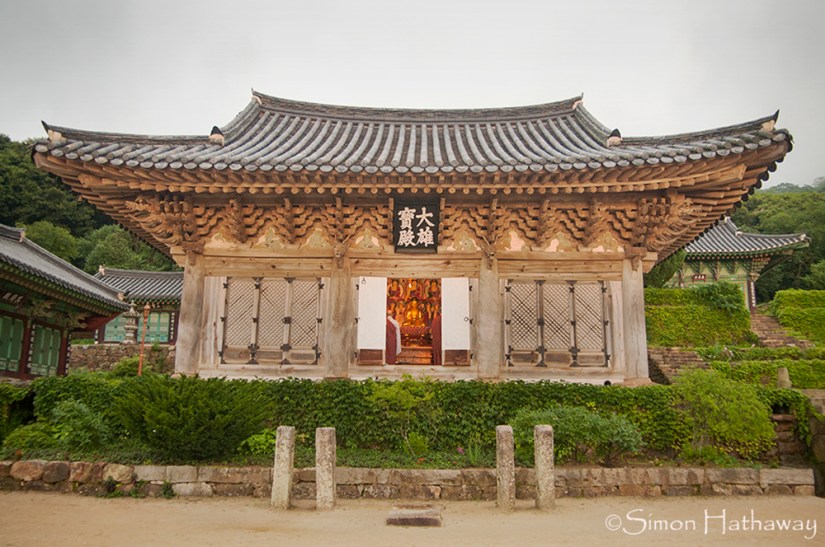
Q252. Student: “What is Buddha?”

A. Master: “It’s in the Buddha hall.”

Student: “Isn’t it just a statue made of clay?”

Master: “Yes, it is.”

Student: “What is Buddha then?”

Master: “It’s in the Buddha hall.”

_srh3638a_thumb


Commentary:

It is a top secret.

Keep away all your acquaintances when looking and listening.

Look and listen by yourself.


©Boo Ahm


All writing ©Boo Ahm. All images ©Simon Hathaway

Buddha, Buddhism, master, Meditation, Mind, Practice, Religion, student, suffering, Truth, Uncategorized, Zen

Q251. What is fear and how shall we deal with it?

A.Fear is a very natural and instinctive feeling we have in order to protect ourselves. Its role is to warn us of danger that has or will come so that we may get ready to cope with it. It is like a sentry. If it were not for the feeling of fear, we would take less care of ourselves and therefore be more likely to lose our lives earlier by taking more reckless actions and having more accidents. In that sense, fear is very essential and useful for our survival.


However, sometimes fear itself can be more dangerous and harmful than the danger that it warns us of. In other words, you are more threatened by your sentry than by the danger itself. This is a good instance of showing how we are deluded by illusions.


Therefore, the best way to deal with it is to try to see fear as it is by tracing it back to its root, keeping in mind that everything is an empty illusion.


p1100738a_thumb


Student: “Sir, I am very afraid. How can I remove my fear?”

Master: “Bring it to me and I will keep it.”

Student: “I can’t find it anywhere.”

Master: “Then your fear is already removed.”

Buddha, Buddhism, emptiness, empty, Enlightenment, final goal, Koan, master, Meditation, Mind, Photography, Religion, root, self, student, true self, Truth, Uncategorized, Zen

Q 246. Master: “How old are you?”

A. Student: “I’m fifty years old.”

Master: “How old is fifty years?”

Student: “I don’t know.”

Master: “How come you still don’t know your age?”

Student: “How old are you, Sir?”

Master: “Eighty years old.”

Student: “How old is eighty years?”

Master: “Eight times ten is eighty.”

SRH_8123a_thumb


Commentary:

Don’t think that the student’s right answer is five times ten.

The curved can’t contain the straight.


©Boo Ahm


All writing ©Boo Ahm. All images ©Simon Hathaway

Bible, Buddha, Buddhism, emptiness, empty, Enlightenment, final goal, God, illusion, Meditation, Practice, Prayer, Religion, root, self, student, sutras, true self, Truth, Uncategorized, Zen

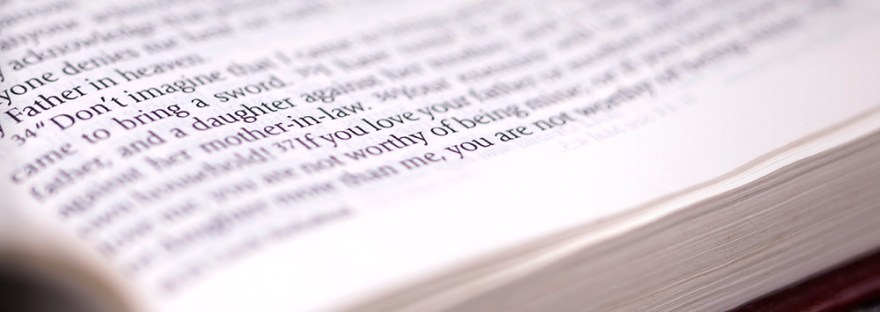
Q245. How should I accept the part of the Bible, Matthew 10:37 that says, “Those who love their father or mother more than me are not fit to be my disciples.”?

A. Zen has a similar saying, ‘Kill Buddha and your parents if you are to see your true-self’. Even Buddha, while alive, would say to his disciples, “If you see me, kill me.” Here, killing Buddha and your parents means removing the illusions of them and not actually killing Buddha and your real parents. Logically speaking, how would it be possible to kill the historical Buddha who passed away about 2500 years ago? The reason why masters would use such a radical expression is that the illusions of Buddha and your parents are among the illusions that are the most difficult to remove.

Likewise, in order to see God, you have to remove all illusions, among which those of God and your parents die hardest. So, the above scripture can be interpreted: ‘Those who love the illusions of their parents without trying to see their true-self are not fit to be my disciples. Those who can’t remove the illusions of their parents can’t see God, the true-self.’

SRH_1687a_thumb

Student: “When we kill our parents, we can repent of our sin of killing them before Buddha. However, where can we repent of our sin when we kill Buddha or God?”

Master: “When you come into your kingdom after a successful rebellion, there is no one who can judge you.”


©Boo Ahm


All writing ©Boo Ahm. All images ©Simon Hathaway

Buddha, Buddhism, emptiness, empty, Enlightenment, final goal, God, illusion, master, Meditation, Mind, Practice, root, self, sutras, true self, Truth, Uncategorized, Zen

Q244. How do I know if I am enlightened or not?

A. If you practice Zen meditation in the right way, you can experience small and big changes in the course of your practice. You can come across a moment when you feel a big unexplainable change. During this experience, feeling oneness with the whole universe, you realise simultaneously that everything is empty and you are eternity itself.

SRH_1425a_thumb


From then on, you can see things as form and emptiness at the same time. Then masters’ records, or the Sutras, read like your own stories, and you can understand them as clearly as if experiencing them through your whole body rather than understanding them with your head. Then, you have nothing to ask others since there is nothing that you don’t know. An ancient master once said, “When you are full after hearty food, you need not ask others whether or not you are full.” If you experience the changes mentioned above, you can be said to be enlightened even if you are not checked by a master.


©Boo Ahm


All writing ©Boo Ahm. All images ©Simon Hathaway